
Among all the tech giants in Silicon Valley, there is one that inspires particular fear: Palantir.
Read more Guardiola, re-elected as president of Extremadura with the support of Vox
The company chaired by Peter Thiel –the ultra-magnate who believes democracy and freedom are incompatible– wants to be the all-seeing eye. In recent years, it has developed sophisticated data analysis and artificial intelligence tools that serve both to persecute immigrants in the United States and to launch massive bombings on Iran. And this software has allowed it to amass ever more power: the company has not only infiltrated all layers of the Trump Administration –from the CIA to the Pentagon, there is no federal agency that does not work with it–, but also maintains dealings with multiple European governments –including the Spanish one, which resorted to its services in 2023–.
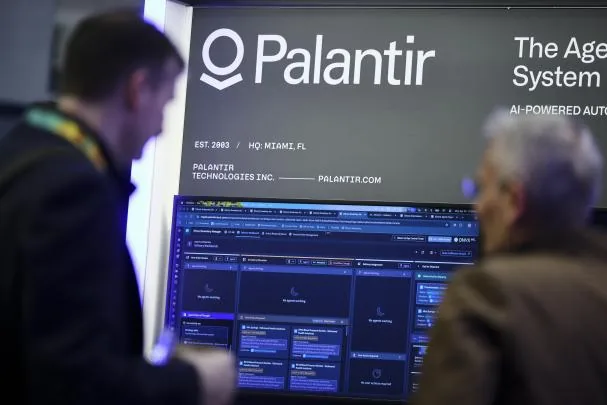
Human rights associations have long warned that Palantir’s products are often used to violate the most basic civil liberties, but this has not dented the company’s activity. What’s more, the tech company boasts of its stark vision of the world: last weekend, it published a manifesto on its social media that summarizes its ideology, and which seems designed to stir up controversy.
The text, structured in 22 points, is based on the book The Technology Republic, published last year by the company’s CEO, Alex Karp; and advocates for greater involvement of Silicon Valley in the US military industry. Enough of just manufacturing consumer products: it’s time to take responsibility for national defense. “If a Marine asks for a better rifle, we have to build it, and the same goes for software,” the document reads, also calling for embracing “hard power” based on new technologies. “The atomic age is ending, and a new era of deterrence built on AI is about to begin,” Palantir asserts.
Likewise, the manifesto demands that the US Government re-establish compulsory military service, and calls for an end to “the post-war neutralization of Germany and Japan.” Another provocative point is the one urging the West to abandon the idea of inclusion: “We must resist the superficial temptation of an empty and hollow pluralism,” states the company, which in the past has proudly claimed to be “completely anti-woke.”
Since it began circulating online, the manifesto has received furious criticism from the most varied quarters. From the left, former Greek Finance Minister Yanis Varoufakis said: “If evil could tweet, this is what it would do”; and from the right, American political scientist Richard Haniana wondered: “Who the hell do they think they are?” For his part, Belgian philosopher Mark Coeckelbergh described Palantir’s text as an “example of technofascism,” while French entrepreneur and geopolitical analyst Arnaud Bertrand spoke of a dangerous “ideological agenda” that promotes the “clash of civilizations.” Even Alexander Dugin, the Kremlin’s ideological guru, expressed his displeasure, asserting that the manifesto was “illiberal” and “anti-humanist.”
And among all the reactions, a more skeptical reading: that of British MP Martin Wrigley, of the Liberal Democrat Party, who declared that the document “is either a parody of a Robocop movie, or a disturbing narcissistic rant from an arrogant organization.”
Palantir thrives on the noise: presenting itself as a company capable of pulling the world’s strings helps it attract new clients and, above all, boost its stock market valuation. In the last week, its share price has risen by more than 10%. All publicity is welcome.
Read more The PP votes against the “national priority” promoted by Vox in Congress