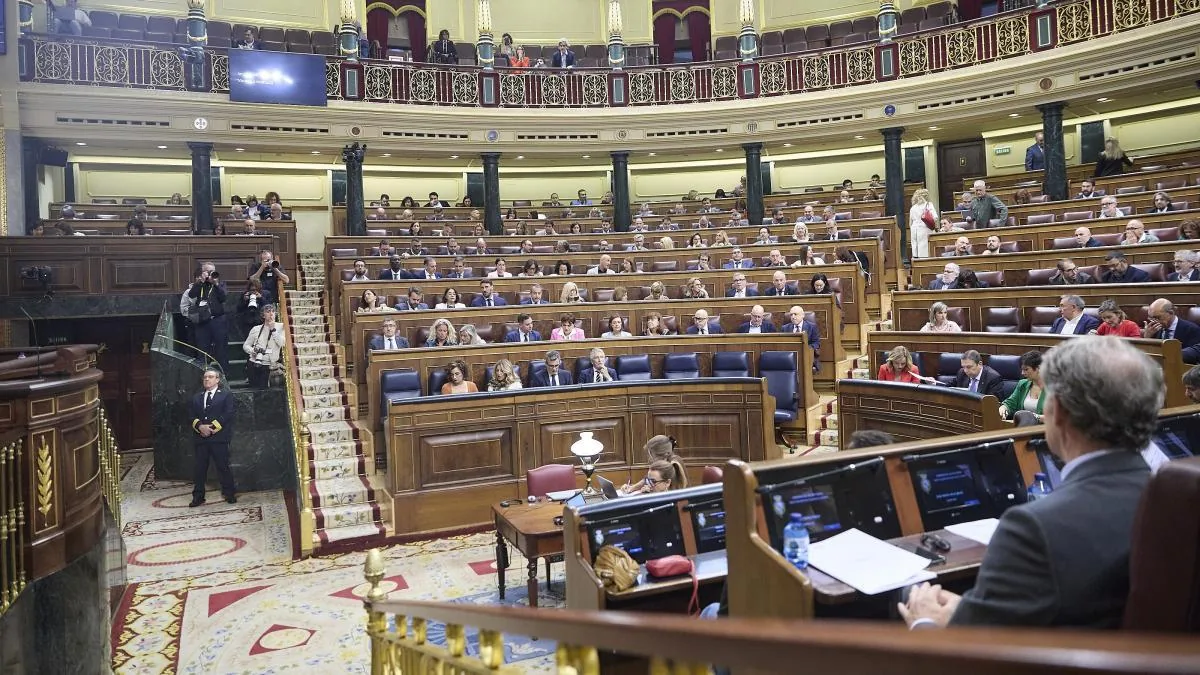
“Where does lobbying end and influence peddling begin?”. Gabriel Rufián brought this Wednesday to the Congress of Deputies one of those questions that have hovered over Spanish politics for years and that the Zapatero case has brought back to the forefront. The difficulty in delimiting the boundary between legitimate influence and opaque practices. An activity that in Spain continues to move in a wide gray area. The question, addressed to Pedro Sánchez in the control session, was not only seeking an answer from the president of the Government, but also to point out one of the great regulatory gaps in the Spanish political system. For this reason, the president of the Government chose to respond by recovering the lobbying law that the Congress has been processing for months.
It is an old promise of democratic regeneration that, however, chains delays not only in this legislature, evidencing the resistance generated in Spanish politics by the will to regulate this area.
It is not the first time that Congress has tried to address this regulation. Already in 2021 a similar initiative was registered, also promoted by the PSOE, which was admitted for processing but ended up stuck in parliamentary debate. The 2023 early election definitively left it in the drawer of unfinished projects without the amendment work prospering.
Four years later, in 2025, it was again the PSOE who reactivated the proposal, resuming a reform that is part of the Government’s democratic regeneration package. This time, the initiative passed the first parliamentary examination with the support of the entire investiture bloc, although not without nuances. The Government partners supported its consideration, but criticized its lack of ambition and demanded that the regulation go further in limiting revolving doors.
Nothing to do with much of the right-wing. In the vote, PP and UPN abstained, while Vox voted against, in a parliamentary snapshot that reflects sufficient support for processing but no political consensus on the real scope of the reform.
Going into details, the bill to which Sánchez appealed seeks precisely to organize that diffuse territory. The regulation, in parliamentary processing, would for the first time require the registration of so-called interest groups – companies, consultancies, professional offices or associations – that try to influence public decisions. It would also impose the publicity of contacts they maintain with senior officials and deputies, with the aim of recording who meets with whom and to discuss what matters.
The core of the reform is not only in the registry, but in the traceability of influence. Each legislative initiative should incorporate a so-called “legislative footprint,” a report in which the contributions received during its processing and the modifications introduced based on them are reflected. The idea is simple conceptually, but ambitious politically as it aims for the lawmaking process to cease being opaque and become traceable.
The proposed text does not regulate former presidents of the Government
Sources familiar with the processing of the bill told La Vanguardia that, even if the reform were accelerated in Congress, its current wording would not have prevented situations like those being investigated around former president José Luis Rodríguez Zapatero. According to these same sources, the text does not include a specific section regulating the activities of former presidents of the Government, so its eventual application would not substantially alter that specific area.
It is in this context that the spokesperson for Justice and Interior of Sumar in Congress, Enrique Santiago (United Left), stated this Wednesday, after the judicial order became known, that it is necessary to “properly regulate all activities” of former presidents of the Government, decisively closing that “getting paid for political dealings is a crime.”
Limitations and sanctions
The regulation also incorporates restrictions for former senior officials, preventing them from working as lobbyists for two years after leaving public responsibilities. And it establishes a sanctioning regime both for unregistered interest groups and for public officials who do not disclose their contacts. A legal framework that tries to close, at least partially, the revolving door between politics and private influence. However, the initiative’s progress explains as much as its content. Congress already took a first step by rejecting the total amendment, but the law remains in the committee and negotiation phase, trapped in a long process and exposed to substantial changes.
In this framework, the debate opened by Rufián connects with a question more uncomfortable than legal. Even if the law were in force in its current terms, the activity under scrutiny in the Zapatero case would not automatically be illegal. The text does not prohibit influence or intermediation, but aims to make that relationship visible, documented, and traceable. The boundary, therefore, shifts less to the criminal field and more to transparency.