Jordi Pujol i Soley will be condemned by history or time, but not by the courts. The National Court decided this morning that the former president of the Generalitat, 95 years old, is not in a condition to be tried, given the cognitive deterioration he suffers.
Read more How Vox plays with the PP
In a brief appearance, and with the assistance of two judicial forensic doctors, the court that has been judging him since November 24 has estimated that Pujol is not capable of answering everything he is asked and thus defending himself against accusations that could lead to up to nine years in prison.
Jordi Pujol i Soley has expressed to the forensic doctors his intention to testify in the trial, but the court leaves him out
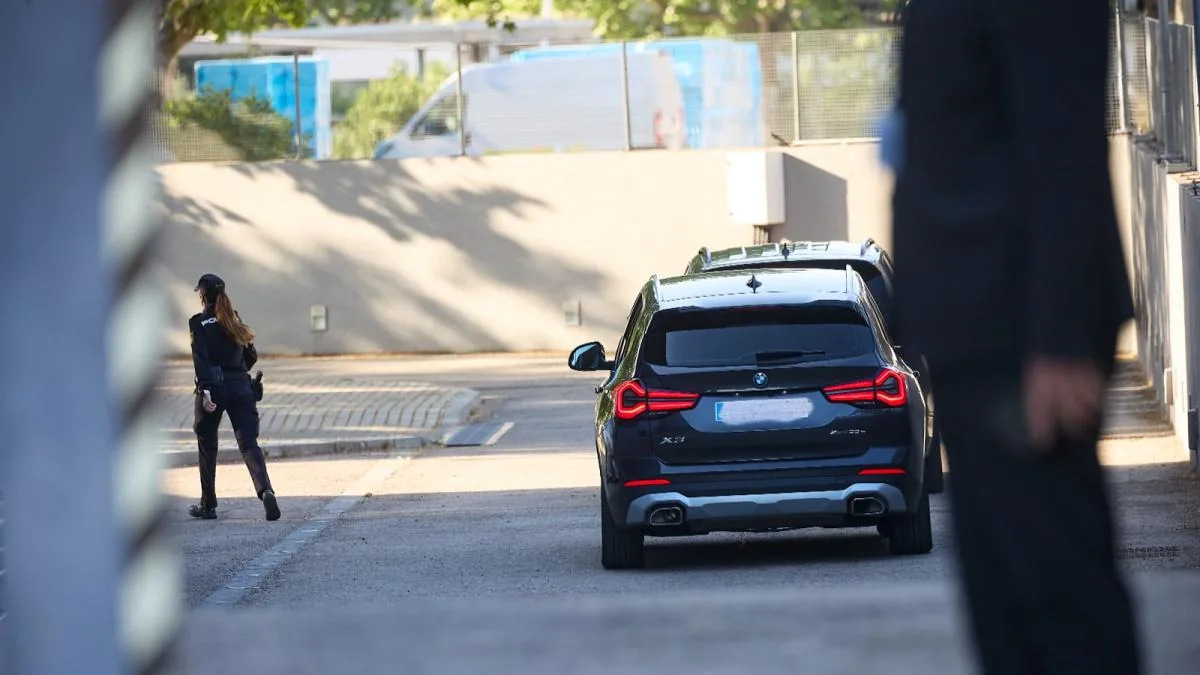
Pujol was summoned with the judicial forensic doctors and the members of the court at 9:30 am.
In an oral communication at the beginning of the session, at 10:52 am, the president of the court, José Ricardo de Prada, announced the medical and judicial diagnosis, all in one. Pujol cannot be tried. Technically, the case for Pujol is dismissed, or archived. This will be stated in the sentence, the court explained.
De Prada justified summoning Pujol by stating his “very special interest” in having a personal interview. Such a decision “cannot be inferred” to forensic doctors, De Prada said.
During the examination, Pujol had expressed to the doctors his interest in testifying.
No one in his circle, nor people who have treated him in recent weeks, believe that Pujol is now capable of coherently recounting events from decades ago
At the start of the trial, on November 24, Pujol’s medical review was carried out remotely, with a doctor at his home and another at the National Court, before deciding whether to archive the case due to the cognitive deterioration he suffers. A few days earlier he had been admitted for pneumonia, and his lawyers had presented reports on his neurological state. He showed signs of Alzheimer’s.
At the beginning of last Friday’s session, although before the public hearing, De Prada had announced Jordi Pujol’s in-person appointment today, noting that the court did not want to fall into “ageism” and limit his right to defense without seeing him live. “Pujol i Soley’s presence or departure from the procedure requires physical presence so that the court can appreciate it,” De Prada said.
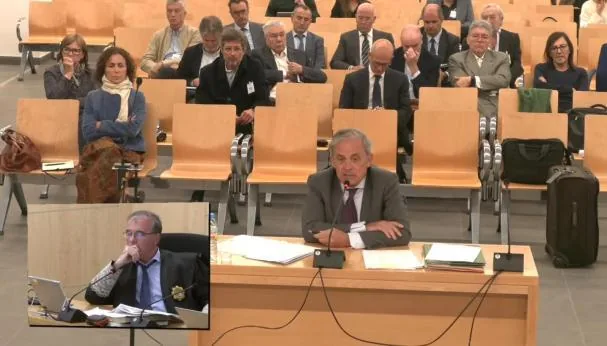
If the court opted for his permanence as an accused, Pujol could choose what he considered, “in one way or another: to testify, not to testify, as he deemed convenient,” the magistrate added.
In this case, the court admitted that he could testify by videoconference if he wished, which entailed a logistical contradiction: if Pujol is this morning at the San Fernando de Henares headquarters of the National Court, on the outskirts of Madrid, he could hardly answer the interrogation by videoconference, given that his home is about six hours away by car.
Sources close to Pujol, in any case, explained to La Vanguardia that the intention was to invoke his right not to speak, given his neurological conditions. No one in his circle, nor people who have treated him in recent weeks, believe that he is now capable of coherently remembering and recounting events from decades ago.
The Anti-Corruption Prosecutor’s Office accuses the former president of the alleged crimes of illicit association and money laundering. Accused, in fact, because from this moment he is out of the procedure.
The police investigation, during the years of the procés, maintained that the Pujol family amassed a fortune thanks to commissions paid to them by various businessmen in exchange for the Generalitat granting them public works.
Throughout the trial, no concrete evidence has emerged that this was the case.
At the beginning of the hearing, Pujol’s desire was, beyond medical and reality criteria, to offer his version of events. He wanted to testify and for justice to acquit him and for his political legacy to remain intact. This will not be the case, there will be no judicial exculpation. Nor condemnation. After repudiating him in the first moments of the scandal, his political heirs, Junts, have been resurrecting and rehabilitating Pujol’s figure.
Read more The end of the world party
The family asked that there be no political rally in support at the doors of the National Court in San Fernando de Henares
The family asked on Friday, when the in-person summons became known, that there be no rally in support at the doors of the National Court.
With Pujol ruled out, the trial continued with the testimony of Jordi Pujol i Ferrusola, the main accused. The prosecution is asking for 29 years in prison for him.
In an interrogation – unfinished, it will continue this Tuesday – which lasted almost three and a half hours, he explained that his businesses were based on the use of “privileged information” and trust, and that explains why many of them have no paper or contract.
As an example, he explained the business of the expansion of the Cartagena refinery, which he learned about through Ricard Fornesa, who was president of La Caixa and Aguas de Barcelona and vice president of Repsol. His management was to put Repsol in contact with the construction company Copisa, with whom he had business on other fronts.
The prosecutor’s interrogation was very detailed, with questions about dozens of operations, for which the accused gave complete explanations.
At one point, the prosecutor inquired about a business, whose owners Pujol did not want to name: “I am not going to say the name because this is a shredder and everyone is destroyed, we have been like this for fifteen years,” he criticized.
“I am not going to say the name because this is a shredder and everyone is destroyed, we have been like this for fifteen years,” criticizes Jordi Pujol Ferrusola
He also denied that his divorce agreement with his wife, Mercè Gironès, was a maneuver to hide his assets when, in 2014, he was already under judicial investigation.
Shortly after Franco’s death, around 1976 or 77, the eldest son detailed, grandfather Florenci had told him that the family would not lack “anything,” and there he already knew that he would leave them money. In 1990, Joaquim Pujol Figa, cousin of former president Pujol, gathered the family and explained to them that since 1980 he had been the one who had managed grandfather Florenci’s inheritance, but that from that moment on Jordi Pujol Ferrusola would do so. Jordi Pujol i Soley was not at that meeting, according to his son. Pujol i Figa transferred the management to the children at the moment he was appointed secretary general of the Presidency of the Generalitat de Catalunya, replacing Lluís Prenafeta.
The accused wanted to offer a bit of historical context of the moment when the grandfather left them the inheritance. He explained that his two grandparents, separately, had explained to them how one could flee to France from Darnius and from Queralbs, where they had houses. “He did not trust the country, he had lived through the war and the situation in Spain was not stabilized,” he explained. “In the coup d’état [of 1981] we remembered him a lot,” he added.
For all these reasons, the inheritance left no documentary trace. “Tax-opaque money never leaves a record,” he said.
Pujol i Ferrusola agreed to testify in Spanish if his “Catalanisms,” he joked, were not going to harm him. “If we do it with translation, we’ll never finish,” he said.
After two in the afternoon, his defense lawyer, Cristóbal Martell, suggested that the accused was tired and asked for an interruption to be considered. The prosecutor announced that the next block of questions would be about the accounts in Andorra, to which the accused joked: “Better leave it, he’s going to beat me up.”
Read more Rajoy and Cospedal deny the Kitchen to save Fernández Díaz, one of their own