



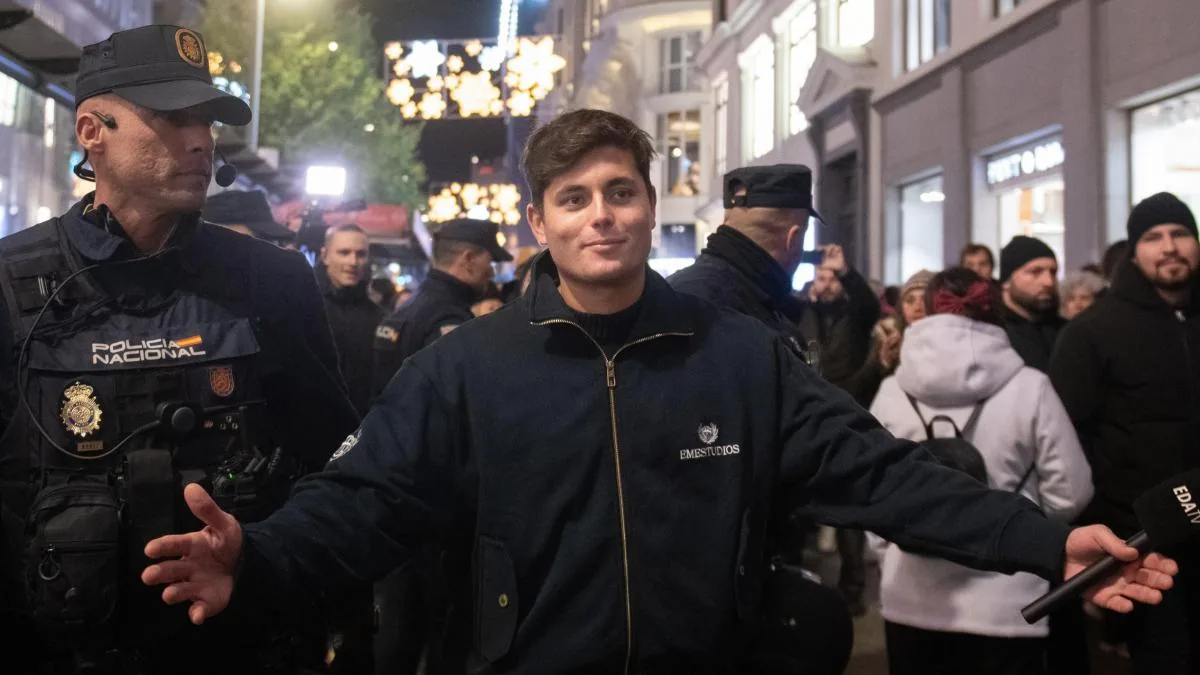
Vito Quiles is now formally the first ultra agitator sanctioned by the Congress of Deputies after months of files, complaints, and altercations accumulated in parliamentary premises. The Lower House has decided to withdraw his parliamentary accreditation for three months due to his repeated irregular practices, provocations, unauthorized recordings, and interruptions to deputies and journalists. The decision, adopted with the votes of PSOE and Sumar, has also represented a further step in the practical application of the regulation reform promoted last summer to try to contain this type of behavior.
Read more Zapatero asks to postpone his statement before the National Court in the Plus Ultra case
The sanction against Quiles came after the Board had provisionally suspended his accreditation on May 13 along with that of Bertrand Ndongo, an unprecedented decision adopted after months of complaints, files, and altercations accumulated in parliamentary premises. The governing body of the Chamber then justified the measure due to the “notable deterioration of coexistence” in the press rooms and the need to protect both deputies and accredited journalists.
The paradox is that both agitators have been invited by Vox to participate on June 1 in a conference on freedom of expression organized in Congress. Parliamentary sources admit, however, that the withdrawal of their accreditations could ultimately prevent their access to the Chamber.
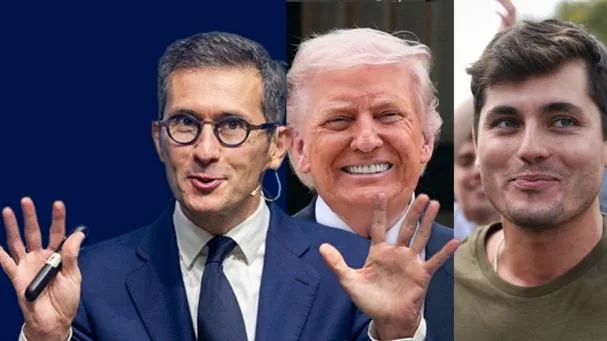
Trump, Vito Quiles and the new informational chaos in politics | Pablo Foncillas
In Quiles’ case, the resolution was mainly based on an episode that occurred last December, when he recorded and disseminated a video of former Prime Minister José Luis Rodríguez Zapatero in an area of Congress where reporters are not allowed to capture images. According to the report prepared by the Chamber’s legal advisors, Quiles then committed two serious infractions: the recording and the subsequent dissemination of the video on social networks. Both behaviors were typified after the regulatory reform approved last summer, specifically designed to strengthen control over accredited individuals who disrupted parliamentary work or violated the Chamber’s internal rules.
The Board finally opted for the maximum penalty provided – three months of accreditation withdrawal – also relying on the opinion of the Parliamentary Communication Advisory Council, which considers that Quiles’ actions caused “serious harm” to the institution, violated the decorum of the Chamber, and harmed both the normal parliamentary functioning and the work of accredited journalists. This decision also makes definitive the provisional suspension that had already been imposed on Quiles since May 13 and will come into effect once it is formally notified to him.
The resolution has also closed another of the complaints filed against the ultra agitator for some images recorded of the Prime Minister, Pedro Sánchez, although in this case the legal services did not find sufficient evidence to prove that he was the one who made the recording.
Also read
The situation of Bertrand Ndongo remains, for now, pending final resolution. The Board has also proposed a three-month suspension for him for interrupting a press conference of the parliamentary spokesperson of Sumar, Verónica Martínez Barbero, although the legal advisors have considered a possible mitigating factor by considering that the appearance could continue after the incident. Therefore, the governing body of Congress has granted him a new period of ten days to submit allegations before making a firm decision, although his accreditation remains temporarily suspended.
The sanction against Quiles has also highlighted the growing discomfort among parliamentary groups and much of the accredited press due to the direction taken by some ultra profiles present in Congress. For months, deputies and journalists have reported episodes of verbal intimidation, hostile recordings, repeated altercations, and subsequent campaigns of targeting on social networks. Parliamentary sources already admitted last week that the situation had become “unsustainable.” Tuesday’s decision has thus represented the first real test of the new disciplinary framework approved by the Chamber to try to stop this escalation.
Both Quiles and Ndongo also have several disciplinary files still pending resolution. Parliamentary sources assume that, as these procedures are resolved and new sanctions are specified, both could chain several more months without the possibility of recovering their accreditations.
Read more The heatwave wreaks havoc in Europe: alert in France due to several deaths at sporting events