An effective and minimally invasive surgery that facilitates the fastest and least painful recovery possible is the wish of every patient who has to undergo a surgical intervention. Medicine advances every day, and what years ago was faced with more aggressive procedures is now approached in a way that is more respectful to the body. Also in the safest possible way. In the case of abdominal, colorectal, and digestive surgeries, progress has been especially noticeable in recent years. These interventions have evolved from classic open surgery to current minimally invasive techniques.
Read more Norway celebrates its big day amid the absence of Ingrid Alexandra and the fragility of Mette-Marit
In the abdominal specialty, the team of Dr. Ginestà at the Sanitas Provença medical center in Barcelona has extensive experience in inguinal, umbilical, and hiatal hernia surgery, although inguinal hernia pathology by laparoscopy is a common technique performed by many surgeons at the center.
For many years, hernias have been operated on through open surgery, “an effective, safe surgery with good long-term results. It has been, and continues to be, a very good solution, especially in older patients or in specific cases,” explains Dr. César Ginestà, a specialist in General and Digestive System Surgery. Its main limitation is that, by working from the outside, tissues are manipulated more, which can translate into more postoperative pain and a somewhat slower recovery for the patient.
Laparoscopic surgery and, specifically, the TEP approach guarantee less pain, less inflammation, and a much faster return to normal activity
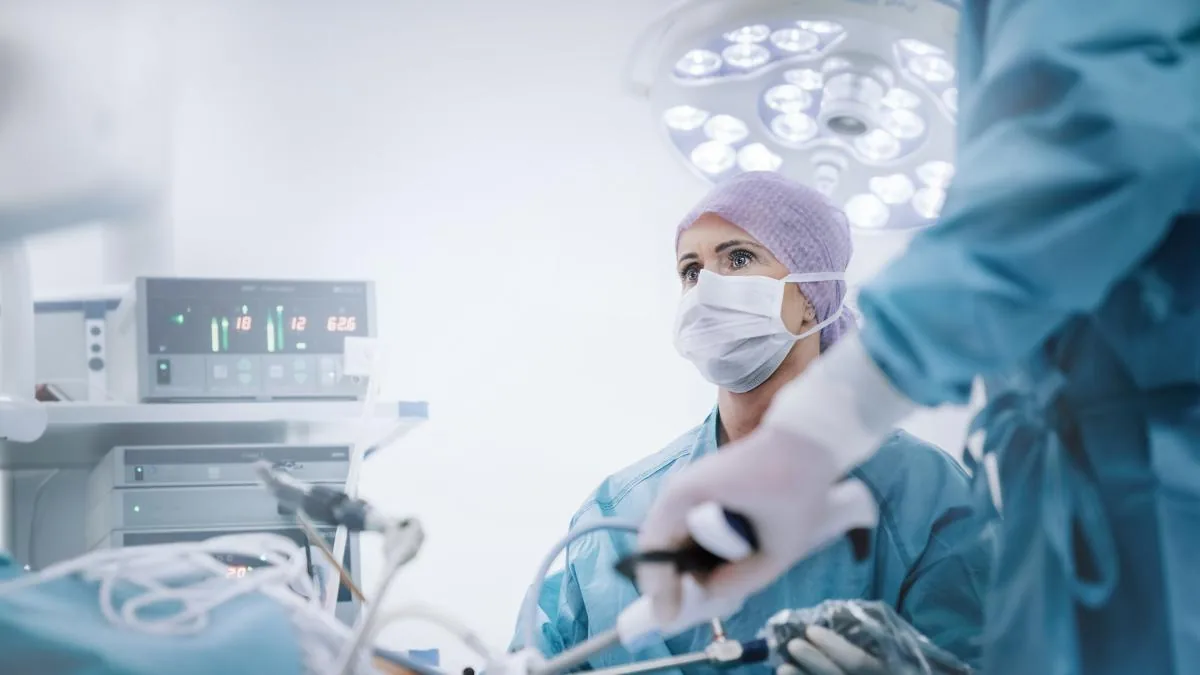
Less pain, less inflammation, and a much faster return to normal activity are what laparoscopic surgery and, specifically, the TEP approach guarantee. “A significant change. Instead of entering through the groin, the hernia is accessed from the back of the abdominal wall without opening the abdomen, which allows the mesh to be placed in a more anatomical plane with minimal incisions,” explains Dr. Ginestà.
For more than 15 years, at the Sanitas CIMA Hospital, there have been colorectal surgery units led by Dr. José Luis Michi; thyroid pathology, headed by Dr. Alejandro Flor; hepatobiliopancreatic, led by Dr. Cristina Dopazo; and esophagogastric, managed by Dr. Lluís Aguilar, along with the recent addition of Dr. Pablo López and Dr. Clemente Nappi.
The hospital center has the most advanced and innovative technologies, such as robotic surgery, 3D laparoscopy, and precise marking of hard-to-reach tumors by nuclear medicine with the ROLL technique and sentinel lymph node, to ensure patient safety and faster recovery.
One step further: robotic surgery
The natural evolution of procedures, increasingly less invasive, does not stop here, and robotic surgery has allowed a further step in precision and personalization, addressing cases with greater safety. The procedure allows for finer dissection, maximum nerve preservation, and very precise mesh placement.
More than 900 interventions per year have been performed applying a laparoscopic TEP approach for over 15 years at Sanitas CIMA Hospital
Surgical innovation with laparoscopy is a daily practice at Sanitas CIMA Hospital. Although it is based on the same concept as laparoscopy, this technique adds three-dimensional vision and much greater precision in movements. For the patient, the benefit is clear: less pain, very rapid recovery, and even more personalized surgery, especially useful in complex or recurrent hernias.
Read more The unknown butterfly discovered in Barcelona
Other advantages offered by Sanitas CIMA Hospital in the field of abdominal surgery include the use of indocyanine green to ensure proper tissue vascularization and identification of tumors and bile ducts; hepatobiliopancreatic surgery; the use of slow-absorption meshes in hiatal hernia surgery; and the incorporation of microfoams in hemorrhoid treatment. Dr. Lluís Aguilar adds that “the use of the most advanced laparoscopic techniques and slow-absorption meshes reduces postoperative complications.”
Surgical innovation in the colorectal field is also a daily practice at Sanitas. Specifically, at the Sanitas Robresa and Sanitas Sabadell medical centers, both in Barcelona, where doctors César Calzadilla Narváez and Juan Luís Ney, general surgeons with extensive experience in advanced coloproctology, have developed a specialized unit in colorectal surgery and minimally invasive digestive surgery.
A new perspective
The unit combines surgical experience, cutting-edge technology, and innovative techniques aimed at reducing postoperative pain, shortening recovery times, and preserving function, especially in complex anal pathologies. “Many digestive and anal diseases not only generate physical symptoms but also concern and impact quality of life. Therefore, treatment is approached from a comprehensive, close, and personalized perspective,” say the surgeons, pioneers in the endoscopic treatment of pilonidal sinus.
The unit is a reference in the EPSiT technique, which allows treating pilonidal sinus through an endoscopic approach, avoiding large incisions, reducing pain, and promoting faster recovery. It is also specialized in advanced techniques such as VAAFT and FiLaC, which allow treating complex anal fistulas while preserving the sphincter muscles and reducing the risk of incontinence, always prioritizing patient safety and quality of life.
Surgical treatment is carried out in coordination with other involved medical specialties
Colorectal oncological surgery at the Sanitas CIMA center is coordinated through a digestive system tumor oncology committee made up of oncologists, radiotherapists, radiologists, nurses, pathologists, and the presence of Dr. Michi, Dr. Dopazo, and Dr. Aguilar. It is also addressed multidisciplinary at the Sanitas Robresa and Sanitas Sabadell centers. The latest standards and international guidelines are followed, applying current surgical techniques and minimally invasive approaches when indicated, with the aim of offering the best oncological and functional results.
This specialized unit in colorectal and digestive surgery also offers minimally invasive treatment of biliary pathology, including laparoscopic cholecystectomy; abdominal and inguinal hernias through laparoscopic approach; diverticular disease; hemorrhoids and anal fissure, as well as other surgical digestive pathologies. Always prioritizing techniques that reduce surgical impact, minimize scars, and allow a faster and more comfortable recovery. “Modern surgery must not only cure the disease but do so with precision, safety, and the utmost respect for function and the patient’s quality of life,” the doctors emphasize.
Read more Maldives: three Finnish divers will help rescue the bodies of the missing Italians