Two weeks ago, the owner of the historic Soriano flower shop on Gaudí Avenue received the latest offer to leave and make way for another store crowded with souvenirs. His gladioli enjoy privileged views of the Sagrada Família temple. “And this time it really was a good offer – admits Xavier Soriano himself –. The truth is that I have been holding on for a few years now for my father and grandfather, because my father and grandfather dedicated their lives to this flower shop, because my family has been here since 1940. But for a long time now I have been making a living with other businesses, because it makes little sense to sell flowers here, everything on this avenue is problems… I would have accepted this offer, I admit it, and let them start selling souvenirs, but…”.
Read more Moreno, with the businessmen, advocates for reducing unemployment
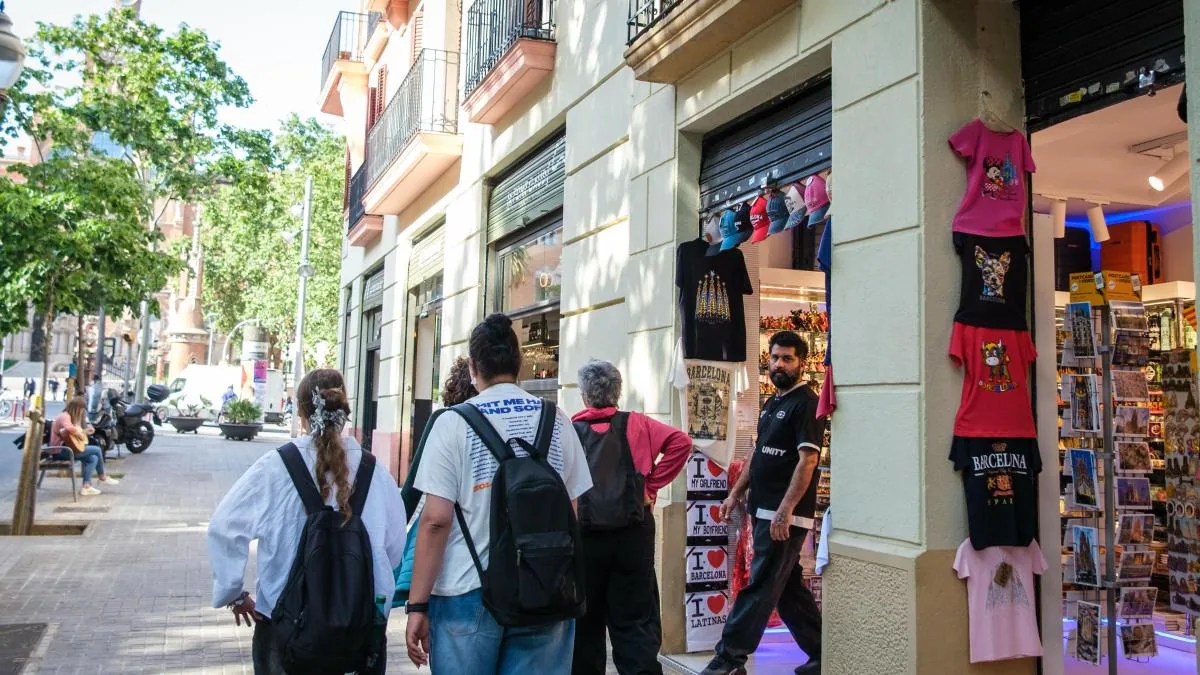
The Gaudí Shopping merchants’ association denounces that, despite municipal restrictions, stores crowded with panties that illustrate the sexual tastes of those who wear them, Gaudí-style bullfighting figures, and children’s Real Madrid t-shirts for 40 euros continue to sprout on this side of the Eixample, where at least half a dozen businesses aimed mainly at occasional visitors opened on this axis in the last year alone, and in recent years this commercial replacement process has already led to the opening of about twenty of these businesses and the loss of a third of the traditional commerce, including many shirt shops, haberdasheries, queviures… “Wasn’t it supposed that no more souvenir shops could open around here?”.
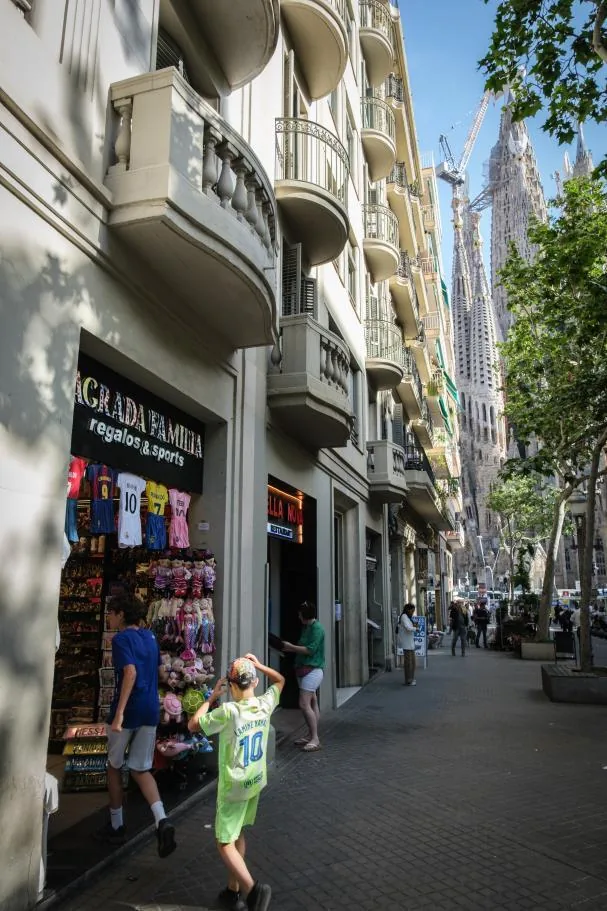
And although most are rather informal, Soriano the florist is not the only one who occasionally receives offers to leave. On Gaudí Avenue, if you hang a seasonal clearance sign, the person selling magnets across the street immediately comes over to ask how much you want for the transfer. “Also, currently – add the Gaudí Shopping association – we have six vacant premises on the axis, and we fear they will soon meet the same fate.” In one of them, they say a Vietnamese-style nail grooming shop will soon be installed.
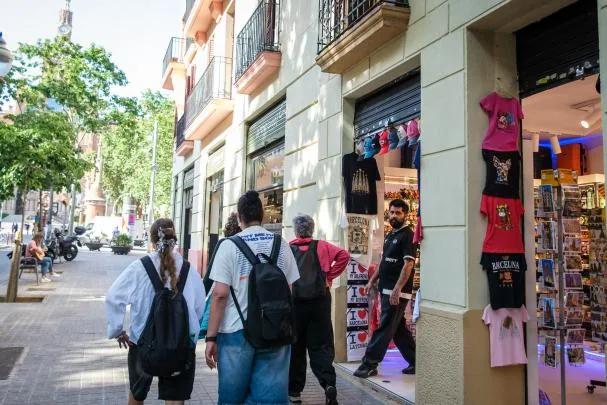
“It’s just that little by little we lost the regular clientele – resumes Soriano the florist –. The children had to leave the neighborhood, and tourists continuously come down, from Sant Pau to the Sagrada Família. And what do tourists buy? Little by little the offer on the axis is impoverishing, and the people of the city turn their backs on it. Also, rental prices do not help local commerce.” The situation here is not as serious as on the streets surrounding the temple. Not all is lost. There is still a neighborhood life worth trying to preserve. This axis has 112 premises. About twenty house bars, ice cream shops, and restaurants mainly aimed at tourists. Their waiters try to seduce them by waving their menus. But there are also clothing, jewelry, bag, and shoe stores run by their owners, and some cafes where locals still have coffee, two hardware stores, an orthopedics, and even a philately shop. Also, soon, Sant Pau will host the presentation of the Tour de France teams. Then its members will pedal along the avenue to the Sagrada Família. It will be an event of international interest.
Barcelona has been trying in vain for years to curb the growth of these businesses
For this reason, many believe the City Council must act. But relations with the City Council here are tense. “My problem is that I have one of those 70s-style shop windows that the City Council made illegal decades later – says Soriano the florist –. I have to do work costing at least 40,000 euros. Until then, the owner won’t let me transfer the lease. In the end, we will do the renovation and a transfer, so we don’t leave with nothing. Here, some of us have the City Council very much on our backs, and others…” Yes, many feel that breaking the rules is more beneficial than following them. “There shouldn’t be more than one store of this type in each section of the axis – add the association –. We need effective moratoriums, a usage plan that protects local commerce, support for entrepreneurs…”.
Read more “More than 90% of our research is already based on precision medicine”
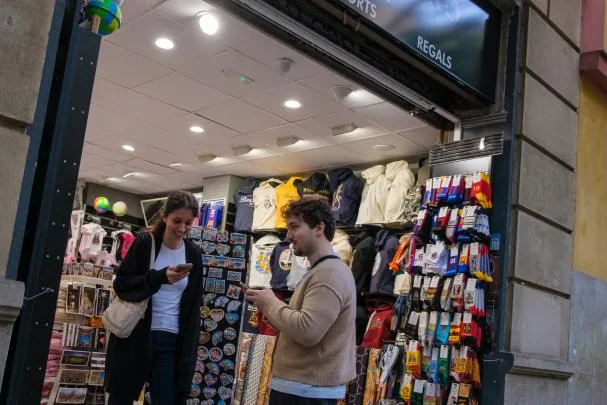
At the end of 2024, the government of Mayor Jaume Collboni presented a special plan for the neighborhood: 37 actions in three years with 15 million euros to boost commercial diversity, reduce the impact of tourism, recover neighborhood spaces… In truth, Barcelona has been trying for years to curb the growth of businesses mainly dedicated to selling souvenirs. However, the measures never gave the expected result, as evidenced by a few walks through the Gòtic, the Sagrada Família, the surroundings of Park Güell… Faced with the continuous growth of visitors and their inconveniences, such as the loss of local commerce, the City Council approved in 2018 the modification of the 2008 plan regulating souvenir shops. This involved, among other things, extending the ban on opening these businesses around the Sagrada Família along Gaudí Avenue and other blocks.
The problem is that one can open a store with up to 17 categories, such as textiles, crafts, toys… and dedicate 20% of the premises to other products not listed in their categories, as long as they are at the back. Therefore, most of the many disguised souvenir shops around the Sagrada Família, Gaudí Avenue, and many places display Pablo Escobar t-shirts on their facades. Is this narco a memory of the city? The Gaudí-inspired flamenco dancers are always a few shelves further back.
Also read
“So many restrictions even violate European law – says Alok Lahad, from the Associació de Negocis Turístics de Catalunya, an entity that groups about 300 businesses on this side of the Eixample, the Rambla, the surroundings of Park Güell… – Where in the world does the City Council tell you where you have to put your items? Municipal technicians have even told us to put souvenirs behind a screen or curtain. Whatever they say, the fines are continuous, and several thousand euros each. These rules have never been able to stop the growth of these businesses. As long as tourists come, they will open anyway, as bazaars, clothing stores, gift shops…”.
Not all is lost here: there is still a neighborhood life worth trying to preserve
“What we need – emphasizes Lahad – is for souvenir shops to be truly recognized and for a specific regulation to be approved under proper conditions. It makes no sense for the inspector to be the one to decide what is or isn’t a souvenir. We are willing to sit down with the City Council and work on it. This lack of control is not convenient for us either. But there is no way to talk to the City Council. It seems their goal is to leave us there anyway so they can fine us.”
Read more Bezos yes, Mamdani no Who cares about the Met Gala?