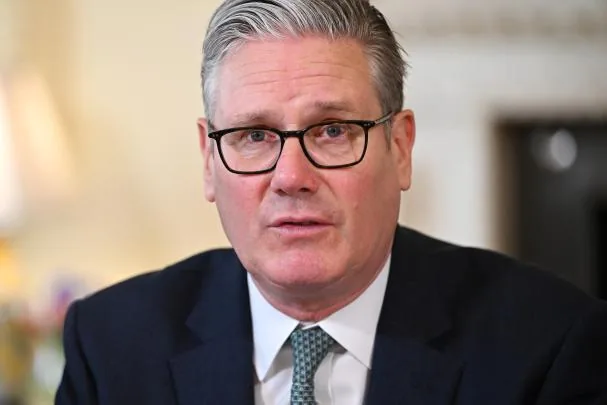
The seppuku of the Japanese samurai (a painful cut in the abdomen with a dagger, dressed in white ritual clothes and writing a farewell poem) was not just any way to take one’s life, but an honorable death to avoid being taken prisoner, pay for failure, demonstrate loyalty, bravery, and self-control. It was banned at the end of the 19th century but even if it weren’t, and despite its romanticism, there is nothing further from the will of British Prime Minister Keir Starmer than to commit harakiri.
Read more SpaceX, Anthropic and OpenAI will go public without being profitable
More than like a medieval Japanese warrior, Starmer responds to mistakes, mishaps, crises, and setbacks like Felipito Takatún, a clumsy but likable character created by Argentine humorist Joe Rigoli in Spain’s transition period, who used to say “I carry on” as a catchphrase every time he messed up, and the phrase became a cultural phenomenon to express the determination to keep going against all odds without being intimidated.
Starmer was elected Prime Minister of the United Kingdom with an absolute majority less than two years ago, but he has spent almost all the time saying “I carry on” amid an unprecedented collapse in popularity, facing voter anger, fierce criticism from the press (both conservative and progressive), and the stalking of his rivals for the throne. His plan is to say it again on Friday, when he will have no choice but to sing mea culpa for what are expected to be catastrophic results for Labour in the regional and municipal elections.
Thursday’s story is a novel in three chapters, with a prologue and epilogue. The prologue is the collapse of Labour since it won the July 2024 elections (the so-called “majority without love”), because it was the vehicle the British had at hand to get rid of the Conservatives after fourteen years marked by austerity, the civil war that was Brexit, the exacerbation of nationalism, corruption, sexual and financial scandals, illegal pandemic parties, public spending chaos, and economic stagnation. After characters as bland as David Cameron and Theresa May, as chaotic as Liz Truss, as eccentric as Boris Johnson, and as transitional as Rishi Sunak, voters threw themselves into Starmer’s arms thinking things couldn’t get worse.
Polls indicate that Labour will lose three out of every four municipal councilors across England
But in two years they have been just as bad or worse, starting with the absurd decision to cut heating subsidies for pensioners (a gesture aimed at the markets that barely contributed anything to the public coffers) to the appointment of the controversial former minister Peter Mandelson to flatter Trump, a cross Starmer carries and that can still play a big role. All this wrapped in small corruptions like accepting tickets and gifts, stumbles, countless backtracks, internal divisions, and an absolute lack of vision and messaging.
Thus the Starmer government arrives at next Thursday’s elections, with its three chapters. The first is the municipal elections in England, where polls suggest it will lose three-quarters of the councilors it has to the far right (Reform UK), the left (Greens), and the center (Liberal Democrats), but not to the Conservatives, as sunk as Labour and who under Kemi Badenoch’s leadership cannot recover. Their sins have been too grave to be forgiven with an Our Father and two Hail Marys.
Read more Trump announces an operation to free the ships stranded in the Strait of Hormuz
The second chapter of the saga is Wales, where Labour has been the majority party for a century and has won all elections since autonomy in 1999. It would be a disaster—and it could easily happen—if the Plaid Cymru nationalists become the most voted group and govern in coalition, aiming to hold an independence referendum within five years. Wales feels ignored by London, which gives it the money it wants, has the worst education, poverty rates, and public health in the UK, and Labour has lost the tribal loyalty of coal miners and steelworkers. A cold technocrat like Starmer arouses no passion. When what is promised is only good management, if it is not, there is a problem.
Also read
The third chapter is Scotland, where the SNP, despite all its problems (financial scandals, Nicola Sturgeon’s resignation, the dead-end of independence…) and the inevitable wear of three decades in power, is the big favorite to win a fifth consecutive election taking advantage of Labour’s collapse and the division of the unionist vote with the emergence of the far right (Reform), which out of nowhere could move to second place and take up to 20% of the vote with an anti-immigration message that resonates in Glasgow’s urban ghettos.
The SNP is favored in Scotland and Labour could lose an election in Wales for the first time in a century
The epilogue will be what happens with Starmer and whether saying “I carry on” will be enough, and that the current context of war and global economic crisis is not the best time to change leader. Labour came to power promising a professional and mature driver after the Conservative craziness at the wheel, but its vehicle has stalled on the roadside, smoking from the engine, with flat tires and broken windows. It needs its battery to be jump-started with a big splash (a campaign to return to the EU, the introduction of proportional representation, welfare state reform…) but Starmer is too timid for that. All kinds of rumors circulate about an attempted coup to make him accept an expiration date and an orderly transition if the results are as bad as expected.
The dinosaurs went extinct 66 million years ago when an asteroid hit the Yucatán and caused a nuclear winter that blocked sunlight and collapsed the food chain. Labour (and also the tories) face this week not only an electoral defeat but the end of bipartisanship and the danger of extinction.
Also read