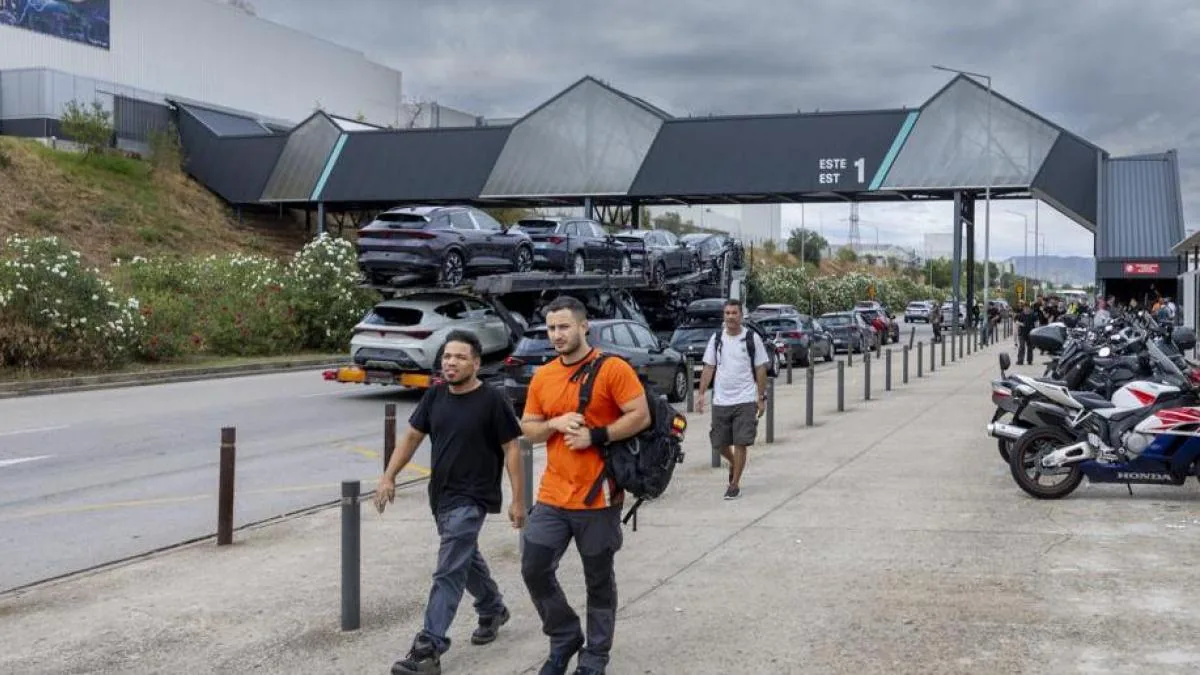
The survival of the Seat brand beyond 2030 “is still being analyzed” and there are “several scenarios” on the table. “The continuity of the Seat brand will be evaluated based on how regulations evolve, customer demand, and market conditions,” the company explained in a statement released this Friday. “No decision has been made yet,” the statement insists, and all options remain open.
The note comes after the approval of the Volkswagen Group’s global adjustment plan, owner of Seat, which proposed the need to simplify its structure and after internal group documents leaked yesterday suggesting eliminating Seat to integrate it into Cupra by the end of 2029 at the latest.
The CEO of Volkswagen Group, Oliver Blume, assures that “Seat S.A. – parent company of Seat and Cupra – has an important role to play in the future of the group.” The German acknowledges “the capacity for transformation” it has shown, with a “solid base” at the Martorell plant and “the unstoppable growth of Cupra.” “This gives me a lot of confidence for the future,” he adds. “We are committed to continuing to build on this base and to create conditions for Seat S.A. and Cupra to keep growing,” Blume states. But then he explains that “at the same time, we must remain flexible and adapt our brand and product strategies to regulations, market conditions, and what our customers demand,” he points out.
Blume talks about supporting the growth of Seat S.A., the parent company and owner of the Martorell plant, and Cupra. The statement emphasizes that Seat S.A. “has a solid future,” following the assignment of the Cupra Raval and Volkswagen ID.Polo models within Volkswagen Group’s accessible electrification. This adds more weight within the group by increasing industrial responsibilities and will generate more employment. “This is a story of transformation, with Cupra as a key driver of our future growth and profitability,” explains Markus Haupt, CEO of Seat and Cupra.
Read more The Trump ‘think tank’ comes to the defense of Spanish sovereignty over Ceuta at a Vox event
Securing the future of the facilities also involves a potential second platform to manufacture larger and higher-margin electric vehicles, as combustion models, on which the Seat brand is focused, disappear on the horizon.
Cupra has been steadily gaining ground on Seat. The brand born in 2018 has outperformed its older sister with higher-cost and sportier design models, which yield better margins. In 2025, for the first time, it sold more than Seat, with 328,000 units and 33% growth. Seat, meanwhile, fell 17% to 257,400. The primacy continues this year. In Spain, however, Seat leads. It is the third best-selling brand and has the Ibiza and Arona among the best-selling models.
The possible disappearance has mobilized the authorities. The president of the Generalitat, Salvador Illa, said today that he will do “everything in his power” to preserve jobs at Seat and the Catalan industry. In a similar tone, the Minister of Enterprise, Miquel Sàmper, points out that he “will closely follow all decisions affecting the company.”
Read more Illa announces in Kyiv a forum of Catalan and Ukrainian entrepreneurs in Barcelona this autumn