
According to most indicators, China’s manufacturing sector is the largest in the world and has grown faster than that of any other major economy over the past 25 years. The manufacturing sector has generated a total of about 5 trillion dollars in added value; and in 2024 it employed about 70 million workers in manufacturing enterprises above a certain size. China’s share in the global manufacturing industry has seen strong increases: it rose from 6% in 2000 to 26% in 2015; and, despite the ups and downs of some years, it approached 30% in 2024.
Read more Why the internet has become a more unstable and dangerous place
After rapid economic development with entry into the WTO, the country recorded decisive growth in manufacturing trade and went from exporting 0.18 trillion dollars to 2.17 trillion between 2000 and 2015 thanks to increased global demand for Chinese products during this period. At the same time, its share of global exports rose from 4.19% to 13.80%. Between 2015 and 2024, however, the share of global exports experienced slow growth, rising from 13.80% to 14.64%, despite export volume increasing by 57.60%, reaching 3.42 trillion dollars in 2024.
In 2000, China’s trade surplus was only 24.11 billion dollars, but it grew from 593.9 billion to 992.58 billion between 2015 and 2024, so the trade surplus may reflect overall economic forces. The trade surplus facilitates income for future generations, who enjoy economic well-being, and becomes potential investment funds for the accumulation of physical and human capital, with the consequent effect of long-term Chinese economic growth.
There has been gradual growth in the technology sector and an increase in its share; and on the other hand slow growth in production and contraction of low-tech sectors
The country’s achievements in manufacturing production and exports have been praised by developed and developing economies alike. China’s progress in the manufacturing sector is undoubtedly significant, but there are a couple of points that must be mentioned when considering the restructuring achieved over the past decades and, in particular, the last ten years.
This article offers a better perspective, calculated in US dollars, of manufacturing production performance relative to the rest of the economy. The data show that the share of China’s manufacturing sector GDP declined notably from 28.43% in 2015 to 25.55% in 2024, although with a clear increase in the technology sector.
A. Towards manufacturing sophistication
As an economic principle, the average sophistication of production increases nationally with per capita income. China’s per capita GDP rose from 960 dollars in 2000 to 8,174 dollars in 2015, and reached 13,445 dollars in 2024, suggesting that the economy overall would have been driven by changes in labor productivity. Some will rightly point out that labor productivity is a ratio between a measure of the amount of output and a measure of the amount of labor input. Generally, the output measure is value added or gross output (business revenue), and the amount of labor input is a related employment measure. There is widespread consensus on the importance of productivity for living standards and economic vitality.
China’s manufacturing revenue in industrial enterprises above a certain size increased slightly by 6.53% between 2015 and 2024, reaching 16.98 trillion dollars; at the same time, sector employment fell by 20.5% to 69.26 million, which meant per capita revenue rose by 34% to 245,163 dollars. During this period, almost all sectors experienced productivity growth at different rates.
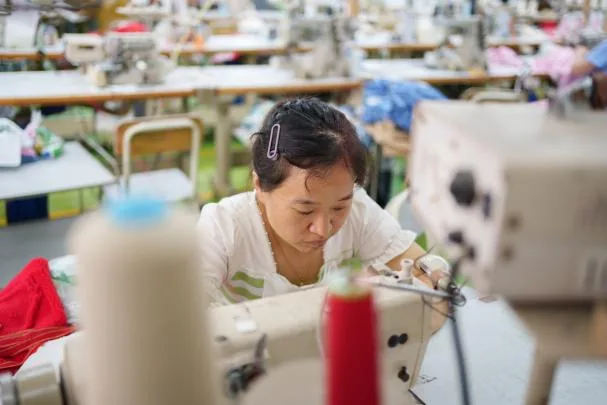
The most striking aspect of manufacturing industry development was not the slow pace of global production growth, but the internal transition of the manufacturing structure. The sophistication of China’s manufacturing structure has progressed considerably year after year. There are clear differences in structural change patterns between fast-growing and slow-growing sectors. The results indicate that expanding the industrial base and advancing product sophistication are important drivers of the country’s industrialization. The classification of manufacturing activities by production generally aligns with the more restrictive classification of industrial activities into low-tech and medium- and high-tech categories.
Initially, in a comparison between low-tech and medium- and high-tech sectors over the last decade, the different structural change patterns are clearly seen. Low-tech sectors suffered a decline in their share of manufacturing production, losing 10 percentage points, falling from 31.89% to 21.04%, while medium- and high-tech sectors recorded a notable increase, rising from 57.50% to 74.19%, gaining nearly 17 percentage points.
Productivity growth has impacted the decline in manufacturing employment. Its role has been greater than previously thought, especially in technology sectors
Secondly, the period shows the trajectory of manufacturing sophistication, which made the effect on the sector more pronounced. For example, the three largest contributors to manufacturing revenue are the computer and electronics sector (13.57%), electrical equipment (9.17%), and automotive (8.89%), with a combined share expanding to 31.63% in 2024, up from 23.36% in 2015, an increase of 8 percentage points. Revenue growth in these three main sectors accounted for 68.18% of Chinese manufacturing growth, despite employment in them increasing by only 1.25%, reaching 20.37 million. In the same period, the textile sector’s share fell from 4.03% to 1.98%, and apparel from 2.24% to 1.04%.
In summary, the assessment of manufacturing trends shows that the outlook has relatively improved; that is, on one hand, gradual growth of the technology sector and an increase in its share; and on the other, slow production growth and contraction of the share in low-tech sectors.
B. Employment in complex sectors
As the largest developing economy, China has generated massive employment in manufacturing; and employment in industrial enterprises above a certain size has seen strong improvement, rising from 50 million to a peak of 90 million jobs between 2000 and 2014, an increase of about 80%. However, manufacturing employment has declined sharply since 2015. Apparently, productivity gains have outpaced growth in demand for manufactured products. In fact, job losses in China’s manufacturing industry are simply the result of productivity-driven restructuring. Let us now analyze some important structural changes occurring in employment. Growth behavior is measured by relative numbers of each sector. It shows the proportion of workers employed in sectors as a percentage of average total manufacturing employment over the last ten years.
On one hand, change in employment is calculated for 12 low-tech sectors, such as food processing, textiles, apparel, leather products, furniture, and paper manufacturing, whose workforce shrank by 37.81%, to 24.34 million in 2024. Specifically, employment share contracted most drastically in the textile and apparel manufacturing sectors, falling from 10.49% to 6.76%, with a loss of 4.46 million jobs. Low-tech sectors show a downward trend in total manufacturing employment, but their decline is inevitable and consistent with what is happening in developed countries.
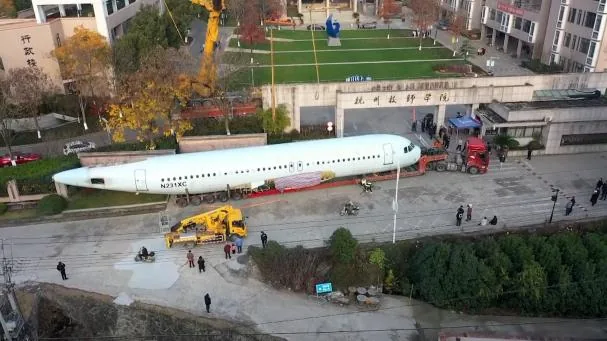
On the other hand, the proportion of employment in 12 complex (medium- and high-tech) sectors, such as machinery, automotive, chemicals, pharmaceuticals, electrical equipment, and computer and electronics products, relative to total manufacturing has increased significantly between 2015 and 2024. First, employment in these sectors fell by 9.21%, to 44.45 million, compared to a -36.36% rate in the low-tech sector. It is especially impressive that employment in the computer and electronics sector rose by 2.78%, to 9.35 million, while automotive employment increased by 2.38%, to 4.83 million. Second, these 12 complex sectors have captured a significant share of employment, spectacular in some cases from 56.21% to 64.04%, covering a wide range of technological activities; moreover, almost all technology sectors continue to show strong employment share growth. The greatest growth occurred in the computer and electronics sector, which increased its employment share from 10.44% to 13.49%. Meanwhile, the 12 low-tech sectors show a notable decline in employment intensity in production across all sectors, dropping from 40.58% to 32.48% over the same period.
While there is no doubt that productivity growth has played a major role in the decline of manufacturing employment, its role has been much greater than previously thought; especially in technology sectors. Therefore, it is possible that China will move up the value chain.
C. ‘Super-exporter’ of complex products
There is a two-way relationship between technological development and trade outcomes: technology drives trade, and trade is one of the factors shaping technological progress in China. The dynamics of manufacturing strength seem to have allowed Chinese exports to grow faster than manufacturing production. According to available data, manufactured product exports accounted for 20% of China’s manufacturing production in 2024, up from 14% in 2015. Going back to 2000, manufacturing exports accounted for only 3% of all Chinese manufacturing sales.
Since 2001, a more open economy has brought China to a position of greater competitive advantage. This openness has brought increased returns and more efficient use of various resources, such as labor. Chinese exports of manufactured products reached 3.42 trillion dollars in 2024, an increase of 90%. This increase exceeded the total reached in 2015 by 1.23 trillion dollars. It is clear that manufactured products constitute the majority of Chinese exports and accounted for between 90% and 95% of total exports between 2005 and 2024, with clear stability throughout the period. The manufacturing industry’s share in export activities has shown three characteristics that have influenced economic outcomes.
China’s manufacturing physical capital (plants, machinery, and equipment) grew spectacularly from 1.15 to 12.56 trillion dollars between 2001 and 2015, an increase of nearly tenfold
First, much of the export drive has shifted toward technology-intensive sectors, which play an increasingly prominent role. The share of complex products in total manufactured product exports has ranged between 52% and 56%.
Overall, export volume in this sector increased by 68.87%, reaching 1.79 trillion dollars. The novelty of China’s strong export growth is the increase in automobile export volume, which soared to 117.35 billion dollars, a ninefold increase.
Second, slow-growth sectors lagged behind more successful ones. In fact, exports of textiles and related items fell from 22.64% to 8.74% of total manufactured products, although the absolute volume of their exports grew by 9.11%, reaching 298.3 billion dollars during the same period.
Read more Police? Oh, heavens, how horrible!
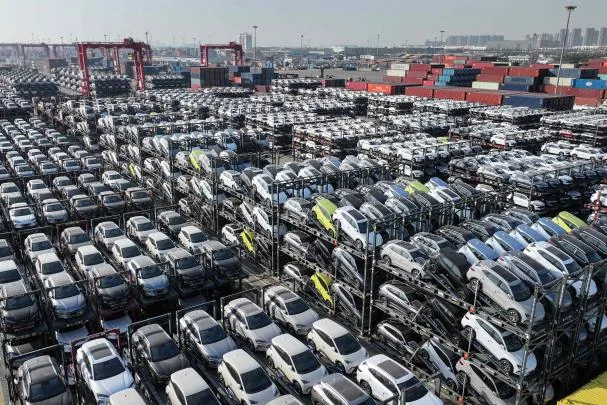
Third, China’s high-tech exports rose from 655.61 billion dollars in 2015 to 979.42 billion in 2021, and fell to 881.95 billion in 2024. There is no doubt that China has become one of the world’s high-tech exporters. Thus, exports of automatic data processing machines increased by 35.16%, reaching 205.86 billion dollars. In addition, lithium-ion battery exports reached 61.13 billion dollars in 2024. These high-tech products have recorded especially rapid growth over the past ten years.
From an objective point of view, the Chinese economy has benefited from trade competition, which has helped maintain the competitiveness of many manufacturing sectors. Strong global import competition has exerted extraordinary pressure on the modernization process of manufacturing industry development and, at the same time, has also affected advanced technology sectors worldwide. Imports of manufactured products increased unprecedentedly, rising from 0.18 trillion dollars in 2000 to 1.21 trillion in 2015 and then to 1.52 trillion in 2024. Over a total of ten years (2015-2024), China’s trade surplus in manufactured products recorded an increase of 12.60 trillion dollars.
During this structural transition, more resources were allocated to capital intensification activity; and the ability to transform export success into structural change in manufacturing may explain the super-exporter phenomenon. A more accurate assessment of China’s manufacturing production and exports indicates that productivity growth has been related to capital investment and innovative activity.
D. Rapid growth of physical capital
Investment in physical capital (such as plants, machinery, and equipment) transforms over time a relatively labor-intensive sector into a relatively capital-intensive one, as has happened in China. Over the last decade, manufacturing investment as a proportion of total investment has remained relatively stable, between 32.09% and 34.38%. It is reasonable to assume that it is difficult to generate superior productivity gains without a concomitant increase in total investment, which is further evidence of industrial competitiveness success. Investment data show the sums invested each year by manufacturers to add new plants and equipment. However, the most important measure is physical capital: the amount of capital in plants and equipment that manufacturers have and use in production.
China’s manufacturing physical capital (total assets) expanded at a spectacular rate, rising from 1.15 to 12.56 trillion dollars between 2001 and 2015, an increase of nearly tenfold. However, between 2015 and 2024, manufacturing physical capital increased by 53.66%, reaching 19.30 trillion dollars. In a different business environment, China’s manufacturing sectors should perform differently in capital accumulation over time. As noted earlier, this article attempts to measure real investment in two major manufacturing groups, and some views on manufacturing physical capital are presented below.
China has set the ambitious goal of increasing R&D spending to 3% of GDP by 2030, with two-thirds of that amount expected to come from the manufacturing sector
First, production technique differs from sector to sector: the growth rate of physical capital in the 12 low-tech sectors was only 16.51%, reaching 2.87 trillion dollars, well below the average of 53.66%, so the share dropped sharply from 19.77% to 14.86% in those low-tech sectors. The textile sector declined by 12.56%, to 341.21 billion dollars, while the absolute volume of physical capital in the apparel sector fell sharply by 26.8%, to 153.29 billion dollars.
Second, the 12 technology sectors advanced by 67.11%, well above the rate of low-tech sectors. Their share of manufacturing industry physical capital expanded to 75.50% in 2024, an increase of 7 percentage points. More detailed data show spectacular increases in physical capital in several technology sectors, with three big winners outperforming all manufacturing sectors: first is the computer and electronics sector, which mainly accumulated its capital to reach 2.94 trillion dollars, with an increase of 172.41%; second is electrical equipment, which doubled to 1.87 trillion dollars; and third is automotive, which rose 70.65% to 1.64 trillion dollars.
Third, and more significantly, capital intensification in manufacturing has increased markedly over the past 25 years, if physical capital per worker is taken as an indicator. It is argued that physical capital per worker should have a different preference in low- and high-tech sectors. Our analysis shows that physical capital per worker rose 83.70%, reaching 327,182 dollars in capital-intensive sectors between 2015 and 2024; and that physical capital per worker in labor-intensive industries also grew to 161,316 dollars, an increase of 93.12%, a rate slightly higher than that of capital-intensive sectors. However, compared to average growth rates, the textile and apparel sectors showed a relatively slower pace, with 58.99% and 54.75%, respectively.
Today almost all Chinese manufacturing sectors have more machinery and equipment than a decade ago, although some, such as textiles, apparel, and leather products, have declined in absolute terms in physical capital share, though with a higher figure per worker in 2024.
E. More R&D for manufacturing innovation
Data on research and development (R&D) investment can also be used to assess the growth of China’s manufacturing industry. These related indicators are as robust as capital investment data in determining competitiveness. Equally important is the proportion of Chinese production reinvested in R&D, as this ratio is an indicator of a future economy’s commitment to competition based on new technologies. Currently, all countries recognize the role of R&D in the relationship between technology, economic growth, and job creation. This dynamic is reflected in the strong growth of R&D spending in the Chinese economy. In this regard, China’s R&D intensity has grown rapidly, rising from 1% in 2000 to 2.06% in 2015, and is expected to reach 2.69% in 2024; meanwhile, R&D investment in most developing economies has not changed much during the same period. Interestingly, China has set the ambitious goal of increasing R&D spending to 3% of GDP by 2030, with two-thirds of that amount coming from the manufacturing sector. Therefore, the reality is that R&D, innovation, and manufacturing go hand in hand. It is important to highlight that R&D spending in China’s manufacturing sector has nearly doubled to reach 304.8 billion dollars in the last ten years.

When examined by industrial groups, there is great variety in R&D performance in China’s manufacturing sector. On one hand, R&D spending is dominated by six technology-intensive sectors, with a doubling pace between 2015 and 2024. This is partly due to strong R&D growth in the computer and electronics sector, which accounted for 22% in 2024. The next two best-performing sectors in terms of growth and amount are electrical equipment and automotive, which in 2024 accounted for 11.69% and 9.37%, respectively. Fourth is the machinery sector, with 12.29%. In addition, the chemical sector ranked fifth, with 5.56%. And, most interestingly, the pharmaceutical industry increased by 126.95%, with a share of 5.28% during that period and a growth rate above the average of high-tech sectors. These six technology sectors accounted for 66.16% in 2024, up from 61.66% in 2015.
Meanwhile, low-tech sectors experienced slight growth in R&D investment, with a growth rate of 22.80% in textiles and 10.10% in apparel, which is insignificant.
When examined more closely, we see that the manufacturing orientation of the last decade has shifted China’s industry toward generating high-tech technological products, crucial for building its economy. A major change in R&D funding patterns in technology has led to widespread dispersion of technology worldwide. For example, R&D spending per worker in manufacturing increased by 146.78%, reaching 4,400 dollars. Similar trends are observed in the computer and electronics sector, where R&D spending per worker rose 152.14%, reaching 7,176 dollars, while in electrical equipment it rose 122.66%, reaching 5,749 dollars, and in automotive the growth rate nearly doubled, reaching 5,907 dollars per worker. In addition, the pharmaceutical sector experienced a growth rate of 151.87%, reaching 7,745 dollars per worker. In stark contrast, the textile sector only rose to 1,306 dollars, with a slow pace of 29.56% during that period.
The message is very clear: in manufacturing, production and R&D are inseparable, closely linked. The proximity between deepening R&D and manufacturing industry transition is very important for the field of cutting-edge technology. Through persistent investment in R&D activities, Chinese manufacturing companies at the forefront of science and technology quickly transmit new knowledge and technological insights to high-value products and services. To fully harness industrial potential, China’s manufacturing industry will maintain a dynamic force in growing R&D spending.
F. Looking to the future
A strong manufacturing industry is indispensable for the health of China’s economy. China’s case shows that manufacturing is necessary to develop higher productivity sectors and move from low-tech to medium- and high-tech sectors. In fact, China lost jobs in low-tech manufacturing sectors and lower-skilled jobs in all manufacturing sectors, but offset those losses with gains in high-value jobs in technology-intensive sectors.
In the coming years, massive industrialization in many provinces will absolutely and definitively expand China’s manufacturing capacity in emerging strategic technology sectors, which may have a multiplier effect on productivity growth nationally.
China arrived late to the global manufacturing environment and, now that it is highly exposed to international competition, we will see if it will have difficulties maintaining its strong pace in the technology race.
Xingmin Yin is a professor at Fudan University (Shanghai)
How to read Vanguardia Dossier
PRINT VERSION
• Purchase a copy. The printed edition of VANGUARDIA DOSSIER can be purchased at usual newsstands and bookstores for 12 euros.
• Subscription. Request your subscription by calling 933481482 and you will receive VANGUARDIA DOSSIER comfortably at your home.
DIGITAL VERSION
• Purchase a copy. The digital edition of VANGUARDIA DOSSIER is available for free in the “Vanguardia Dossier” app for iOS (App Store) and Android (Google Play Store). Each issue costs 8 euros.
• Subscription. Subscribe to La Vanguardia Premium and get unlimited access to all content from La Vanguardia and VANGUARDIA DOSSIER in its digital version.
Read more Oil surpasses $125 due to fears of a prolonged closure of the Strait of Hormuz