The great wars of history have always led to a restructuring of the international order. Let us think of the Peace of Westphalia in 1648, the Congress of Vienna in 1815, the two world wars and the Cold War, which led to the liberal order, the rise of globalization and American unipolar hegemony. Now, the Iran war, rather than giving rise to a new order of things, merely reaffirms the disorder that preceded it: a shaky liberal system, the deterioration of globalization as a consequence of trade wars, a disagreement within the Western alliance and a desperate search for strategic and technological autonomy on the part of Europe, while China positions itself as a force for stability against the American strategy of chaos.
Read more Brussels will coordinate energy reserves to avoid supply problems in Europe
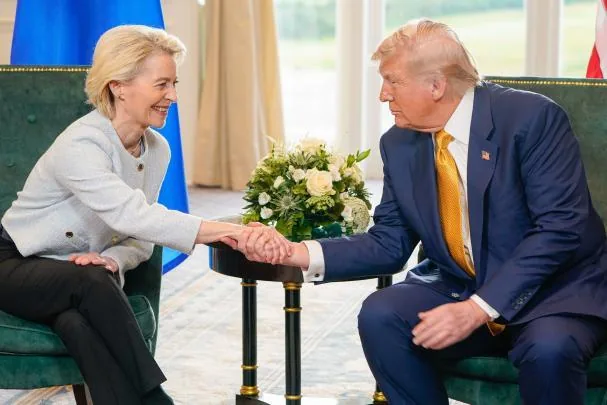
The Iran war broke out when the schism between the United States and Europe had already led to a civilizational conflict in which Americans accused Europe of being “unrecognizable” due to the “civilizational erasure” caused by the invasion of Muslim immigrants. Trumpian Christian nationalism is inherently anti-European, but it is also on the same side as Putin’s Russia in the cultural war declared by the American president against Europe. European fetishism for international law, almost a religious substitute, is another element of discord, as already happened in George W. Bush’s Iraq war, which Europe firmly opposed as illegal. Trump has ridiculed Europeans for their “cowardice,” a rather vulgar way of expressing himself that contrasts with the more civilized distinction made by Robert Kagan on the occasion of the Iraq war: “Europe is from Venus and the United States is from Mars.”
The transatlantic alliance has never been the natural order of things
Analyzed from a broad historical perspective, the transatlantic alliance has never been the natural order of things. The current schism is alarming, but not unprecedented. Trump follows old patterns of isolationism and protectionism rooted in American history. Woodrow Wilson’s withdrawal in 1919 from the League of Nations and from any commitment to guarantee Europe’s security was no less momentous than Trump’s brutal disengagement from Europe. The result of Wilson’s decision was the rise of Hitler and the outbreak of the Second World War.
Obama avoided mobilizing NATO and sent a message to Putin giving him free rein with harassment
Barack Obama, initially adored in Europe, systematically avoided mobilizing NATO to curb Moscow’s abuses against Ukraine. The message to Putin was that he had a free hand to continue the harassment. With his “reset” campaign for relations with Moscow in 2009, Obama abruptly abandoned the plan to deploy a ballistic missile shield in Eastern Europe, which Poland and the Czech Republic had joined at great political risk. At the same time, Robert Gates, his Secretary of Defense, delivered a speech (“Reflections on the State and Future of the Transatlantic Alliance”) in which he railed against European NATO members for condemning the alliance to “collective military irrelevance” as a consequence of their inability to be “serious and capable partners in their own defense.”
The Iran war has made even clearer what we already knew: a fundamental difference within the Western alliance regarding the role of force in international affairs. When the United States looks at Russia, China, or Iran, it sees adversaries seeking to gain advantages and testing the ability to achieve them. When many European countries look at these same actors, they see risks that need to be managed and compartmentalized. The result is a divergence in which one side prepares for a world defined by resistance and imposition, while the other remains oriented towards maintaining the balance of a system it hopes to stabilize.
These are times for reflection for Europe, which has outsourced its defense
These are times for reflection for a Europe that has outsourced its defense to the American savior and adopted international law as the fundamental compass of its foreign policy. In his Elogio dell’America, Mario Andrea Rigoni described Europe as “an old lady who, after having allowed herself all liberties and a great many horrors, expects us to confront her poisonous heritage in accordance with her own need for repentance and moderation.” Europe needed an infinite number of religious wars, two world wars, including the destruction of the European Jewish community, to resolve endemic disputes over borders, nationalism, and hegemonic ambitions; and now it is surprised that the barbarians of the Middle East face the vicissitudes of their history with the same recourse to war that the great Christian civilizations resorted to, resulting in hundreds of millions of deaths.
European neo-Gaullism, like the original, will have to adopt nuclear deterrence
In its reflection, Europe has had a Damascene conversion to Gaullism and has begun to consider strategic autonomy as a structural requirement in a world dominated by competition among great powers, under the shadow of the nuclear threat. What De Gaulle, contrary to German unification, would not have imagined even in his worst nightmares is that Germany, with its plan to allocate one trillion euros to defense spending, would be the engine of such a conversion. European neo-Gaullism, like the original, will also be forced to adopt nuclear deterrence; especially now that Putin threatens the use of nuclear weapons, Trump has disregarded the need to renew the SALT agreements that limit strategic nuclear weapons, and China has undertaken a significant upgrade of its nuclear capabilities.
What was true before the Iran war is even truer now. Europe needs to take charge of its own defense, surely led by a core group of countries including France, the United Kingdom, Germany, and Poland. This will involve creating a common voice on security and a unified defense market, as well as a unique and coherent training language. The possible emergence of a European NATO, as we witness the United States shifting towards coalitions of volunteers, is not the ideal scenario, but it is a scenario that Europe must consider.
Read more Three ships attacked in Hormuz despite extension of ceasefire with Iran
Europe must not imitate US gestures. War must be the last resort
That does not mean that Europe should imitate American ways. Military force should always be the last resort, and deterrence consists precisely in having that force without needing to use it. Donald Trump disdained the teachings of George Kennan, who, instead of calling for an apocalyptic war against the Soviet Union, established the rules of containment that ultimately led to its collapse. It was the same doctrine of containment that shaped the Truman Doctrine, the Marshall Plan, and the NATO alliance.
The wars in Gaza and Iran have shown that, when facing ideological systems, neither the value of economic considerations nor the effect of destroying military capabilities are decisive elements. What determines the outcome of the conflict is the enemy’s ability to withstand economic chaos and casualties. A country that sacrificed the lives of 750,000 people, including thousands of children, in its war with Iraq in the 1980s has always had a formidable advantage against enemies who collapse under the emotional impact of a few dozen bodies returning home in bags. A regime that last January murdered tens of thousands of its own citizens in barely forty-eight hours was not going to be intimidated two months later by threats made against the civilian population.
Iran is more a cause than a state. It is difficult to break the will of ideological states
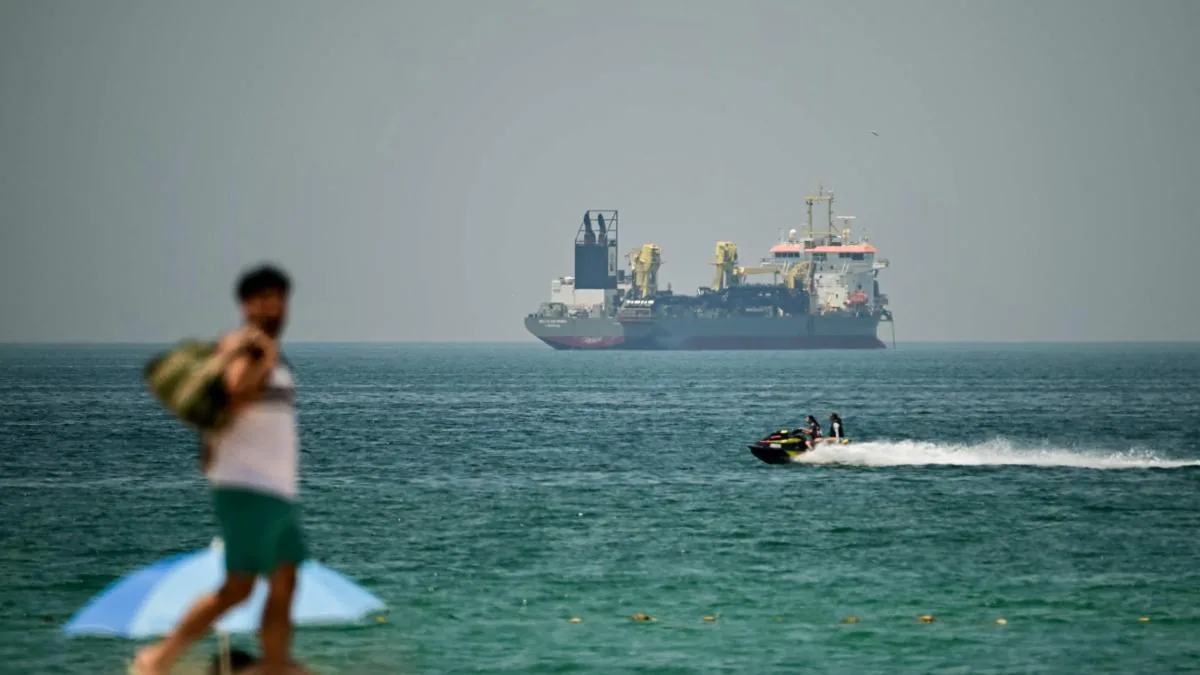
Iran is more a cause than a state. It is difficult to break the iron will of ideological states, no matter how great the pain inflicted. The foundational narrative of the Islamic Republic emphasizes survival in the face of overwhelming obstacles. The revolutionary generation endured institutional chaos, purges, urban combat, tribal uprisings, and Saddam Hussein’s devastating invasion… and emerged unscathed. The calamitous misreading by the United States of the simple truth about the resilience of ideological states when cornered has historically determined its interventions in Vietnam and the Middle East. The country won all battles but lost all wars due to its inability to convert tactical prowess into strategic victories. The extravagant planning and shifting explanations of the Trump administration in this conflict constitute a problem that also determined previous US wars, including those in Iraq, Afghanistan, and Vietnam. This is a problem inherent in American military and political thought. Iran has taught that, in asymmetric wars, geography matters as much as technology. Iranian control of the Strait of Hormuz and the control of the Bab el Mandeb Strait at the entrance to the Red Sea by its Houthi allies have been a decisive element in this war.
Of all the consequences, the most lasting may be the return of oil geopolitics
Of all the consequences, the most lasting may be the return of oil geopolitics and the impact of the war on great power competition. The conflict has shifted the relationship between Russia and China from cautious coordination to structured alignment. The war has also shown the Global South that the US-led order cannot guarantee the stability of global common goods. The closure of Hormuz, the US inability to compel its allies to help reopen the strait, and the spectacle of developing countries struggling to secure energy and fertilizer supplies while Washington pursues its war of choice are all factors that fuel a narrative of US overreach and diminishing systemic reliability.
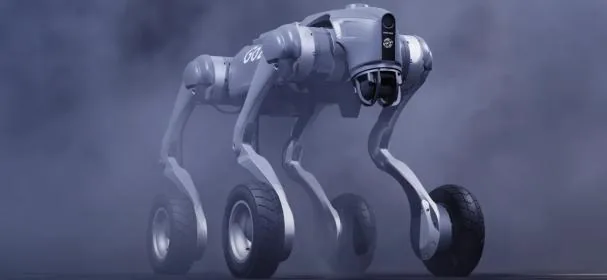
If the Iran war has not turned into a full-blown world war, it is thanks to China’s restraint in the use of force and to the realistic calculation it has made, according to which the United States will lose its wars of attrition in the Middle East; wars, moreover, that divert American attention from the strategic theater that really matters to China: East Asia and the Indo-Pacific.
Europe must not harbor illusions about China. It is not an alternative to the American challenge
Unfortunately, while leaning towards a closer relationship with China, European leaders should not harbor illusions. China’s behavior not only does not include provisions to help countries in distress (something that the best side of the United States does have), but it also does not constitute any alternative to the American challenge to international norms and law. China is one of the main perpetrators of human rights abuses and perpetrates a cultural genocide against its Muslim population. “You don’t mess with your banker,” Hilary Clinton replied in 2010 when asked why she had not raised human rights issues during a visit to Beijing. That is exactly the lesson European prime ministers are drawing from their pilgrimage to China: if you want us to be a more reliable trading partner, don’t even think about mentioning human rights issues or talking about our aggressive policies in the South China Sea, which flagrantly contravene international law.
Read more Mbappé and Vinícius do not falter in a season finale that will be ‘molto longo’
Translation: Juan Gabriel López Guix