







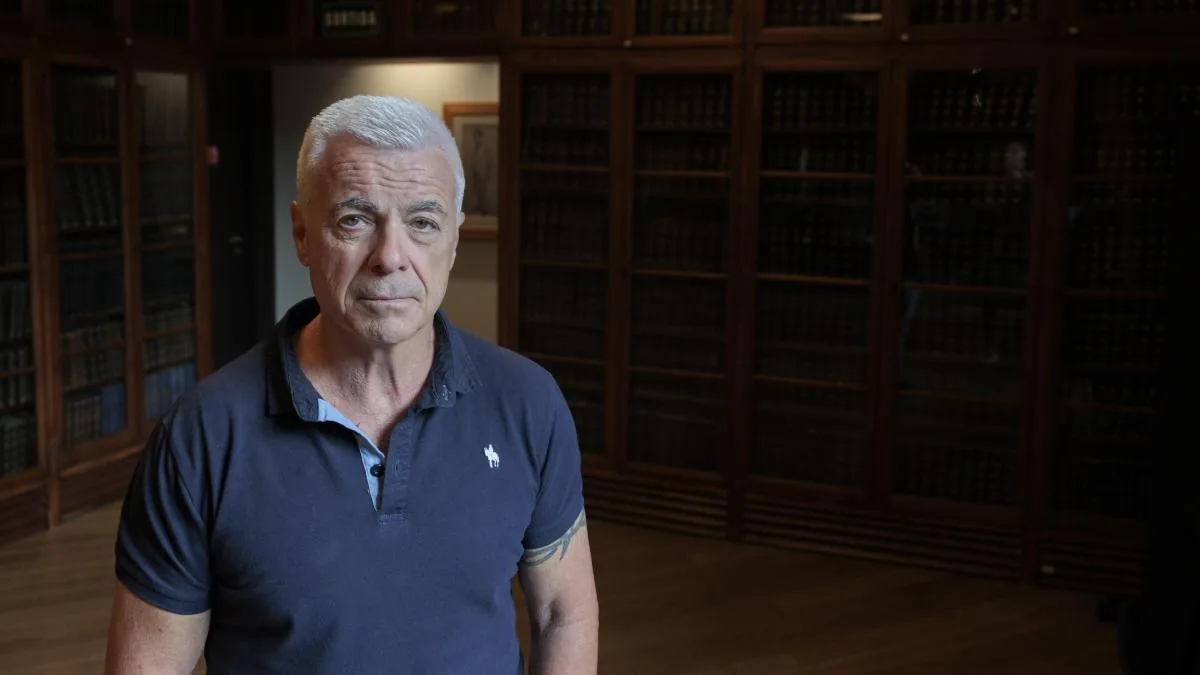
Javier (Calatayud, 1962) has experienced countless depressive episodes. His first was at age 40, and he has just been discharged from the last one – he is now 63 years old. However, although he admits he will live with the condition all his life, he is somewhat more optimistic today than he was some time ago. The reason? The recent treatment he received at the resistant depression unit of Parc Sanitari Sant Joan de Déu (SJD), which offers more personalized treatments.
Read more The mess of Feijóo and Sánchez’s mistake
“There has to be a paradigm shift in the treatment of depression,” argues psychiatrist Salvatore Aguilar-Ortiz, head of the SJD unit. “We have to move from trial-and-error to precision medicine,” he adds.
“There has to be a paradigm shift in the treatment of depression”
Salvatore Aguilar-Ortiz
Psychiatrist at Parc Sanitari SJD
That is precisely – he assures – what they try to do in his unit. He believes it no longer makes sense to keep trying one antidepressant after another until finding one that works – “when the patient does not respond to the first and second drug, there is a high chance they won’t respond to the third either,” he argues – but rather to apply what each patient requires. “Depression is a heterogeneous disease, it manifests differently in each person,” he maintains.
In his unit, they treat treatment-resistant depressions (TRD), that is, those that have not responded to at least one pharmacotherapy and one psychotherapy, or where more than two antidepressants have failed when tried at adequate doses and durations. It is estimated that between 35% and 37% of depression cases are treatment-resistant, and that 37% of people with major depressive disorder do not improve with available therapies.

That is what was happening to Javier, diagnosed with TRD. Hence his primary care doctor referred him to this SJD unit, where they applied a novel treatment with intranasal esketamine, one of the two most frequently used in the unit. Administered in controlled sessions, this ketamine derivative acts quickly on brain circuits involved in depression and is especially useful in cases where conventional antidepressants have not worked.
And today depression is no longer confined – as has long been believed – to a lack of serotonin, but to the loss of synchrony in neural networks. “It is the disease of neuroplasticity,” argues Aguilar-Ortiz.
Read more Smash-and-grab robbery at a technology store
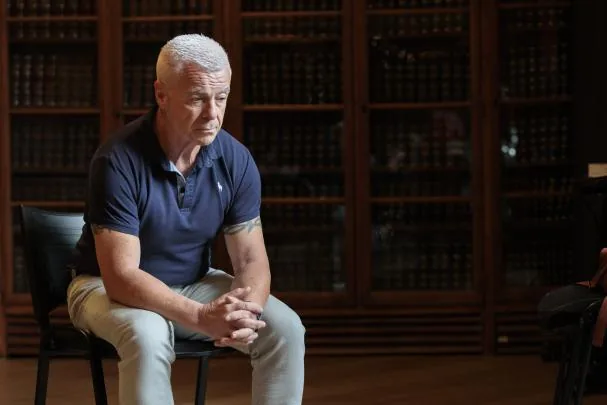
Combined with lithium, the esketamine treatment worked for Javier, to the point that he was discharged. And not only him. 82% of patients treated in the unit with this molecule showed improvement, and in one out of four (as in Javier’s case) the episode remitted. He knows, however, that there may be more in the future, as it is a highly recurrent condition. “I believe depression will accompany me all my life. Mine is chronic, I have accepted it.”
Other treatments, such as electroconvulsive therapy (ECT), have also shown great effectiveness, achieving a symptom reduction of almost 90%. The problem is that both this therapy and esketamine have limitations: the latter due to its high economic cost (Social Security covers a limited number of sessions); and the former – also covered by public health – due to lack of availability, which limits access. And of course, many patients relapse when they stop receiving them. “There are patients who would need monthly ECT and, not having it, you know they will relapse,” reasons Aguilar-Ortiz.
“There are patients who would need monthly ECT and, not having it, you know they will relapse”
Salvatore Aguilar-Ortiz
Psychiatrist at Parc Sanitari SJD
That is why this psychiatrist calls for better use of resources and, especially, correct diagnoses. He regrets that on many occasions the word depression “is used very lightly” and that this leads to “cases being medicalized that are not compatible with depression and others that do correspond being left untreated due to the trivialization of the term.”
However, he clarifies that not everything is solved with resources. He recalls that depression has multiple causes and impacts all spheres of life, which is why professionals work within a bio-psycho-social model that integrates brain function, the person’s life history, and their social and family environment.
Read more Madrid doctors begin their fourth week of strike for their own collective agreement