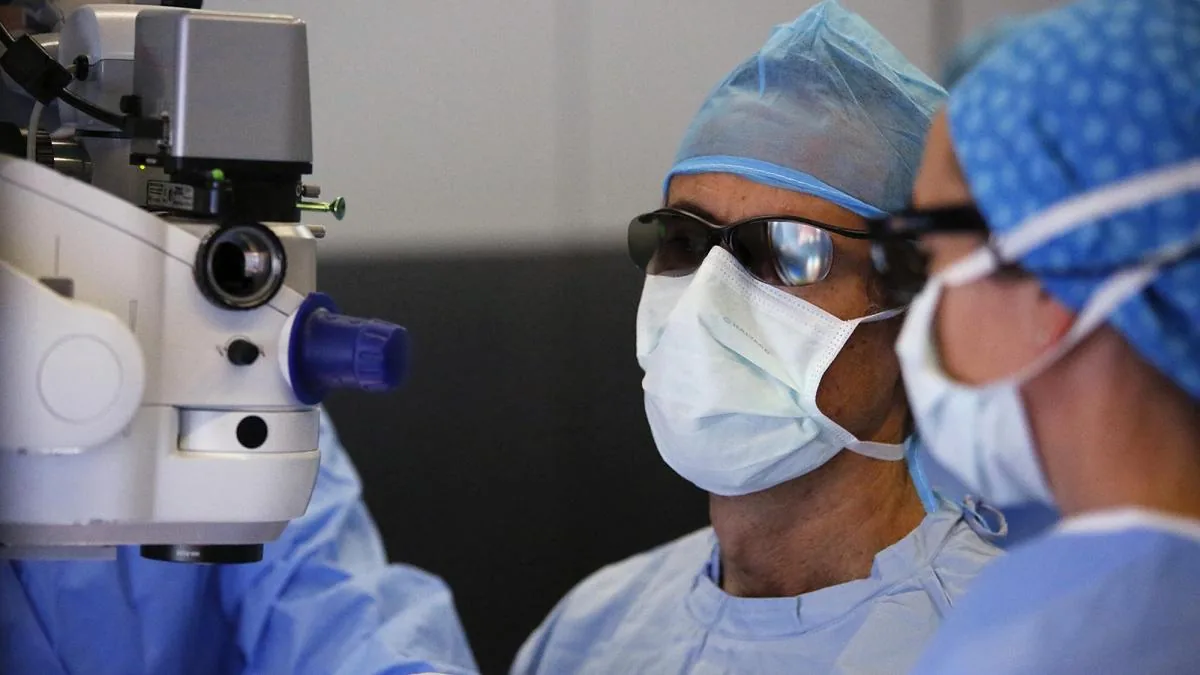
Diseases affecting the retina, the part of the eye responsible for vision, can significantly impact quality of life, causing everything from visual distortions to severe vision loss if not treated in time. Among the most common are age-related macular degeneration (AMD), diabetic retinopathy, and retinal detachment. In this context, advances are changing the approach to these pathologies and improving their prognosis, as explained by Dr. José García-Arumí, ophthalmologist at IMO Grupo Miranza.
Diagnostic Technology and AI
The best approach starts with early diagnosis, as many of these diseases do not present symptoms in their initial stages. Therefore, regular eye check-ups are essential. Technology has revolutionized this field: “techniques such as OCT allow detecting alterations, evaluating treatment response, and performing precise follow-up, while Angio-OCT analyzes blood flow in the different ocular layers quickly and non-invasively.” Additionally, artificial intelligence is beginning to be implemented in ophthalmology for early detection and monitoring of various retinal pathologies, facilitating more accurate diagnoses even before symptoms are noticeable to the patient. “In the near future, tests such as OCT, wide-field retinographies, and angiographies will be integrated, and AI will help assess and guide both diagnosis and treatment.”
Intraocular Injections
Regarding treatment, intraocular injections have consolidated as one of the most effective options, as they allow administering drugs directly inside the eye and help preserve or improve the patient’s vision. They are used to address diseases of the retina and macula, such as AMD or diabetic retinopathy (the main ocular complication of diabetes).
“These advances are especially relevant in highly prevalent pathologies associated with aging, such as wet AMD. Having more potent and longer-lasting drugs represents a significant improvement in patients’ quality of life and reduces the need for recurrent treatments,” explains the specialist. In this regard, he reveals that numerous studies are underway to develop new and improved drugs.
Dr. José García-Arumí, New Full Member of the Royal Academy of Medicine of Catalonia
In recognition of his career in the field of the retina, Dr. José García-Arumí has been appointed a full member of the Royal Academy of Medicine of Catalonia (RAMC), a milestone of great relevance in the medical field. The RAMC has only 60 full members from different specialties, elected by vote among its own members.
The specialist has also led the Spanish Society of Retina and Vitreous and the Catalan Society of Ophthalmology, among other distinctions throughout his career.
This appointment adds to that made in 2017 to Dr. Borja Corcóstegui, co-founder of IMO Grupo Miranza and with whom Dr. García-Arumí helped to promote the center, a benchmark in ophthalmology in Barcelona. It is the first time that two ophthalmologists are part of the full members of the institution, reflecting the relevance of specialists in the medical field.

Surgical Advances
When surgery is necessary, such as in cases of retinal detachment, significant advances have also been made. New surgical platforms offer greater precision and safety, with more exact control of intraocular pressure and better visualization of the internal structures of the eye.
Furthermore, according to Dr. García-Arumí, “surgical instruments are now finer and more precise, which has expanded treatment possibilities even in complex cases, such as ocular pathology associated with diabetes, where abnormal tissue can grow on the retina, which was previously difficult to resolve. Thanks to these advances and the experience of specialized teams, success rates have increased significantly.”
This is complemented by the incorporation of digital visualization in the operating room. Notably, 3D surgery, pioneered at IMO Grupo Miranza, allows viewing ocular structures on high-resolution screens instead of the traditional microscope, providing greater precision and control during the intervention.
Gene Therapies
Finally, research continues to open new avenues for incurable diseases. This is the case with gene therapies, which seek to offer longer-lasting treatments by modifying ocular cells, especially in pathologies that still lack effective options, such as dry-type AMD or hereditary retinal dystrophies.
In this regard, Dr. García-Arumí highlights that “the future is hopeful for continuing to improve current treatments and develop new options that allow offering better results to patients.”
More information:
www.imo.es
Tel. 934 000 700