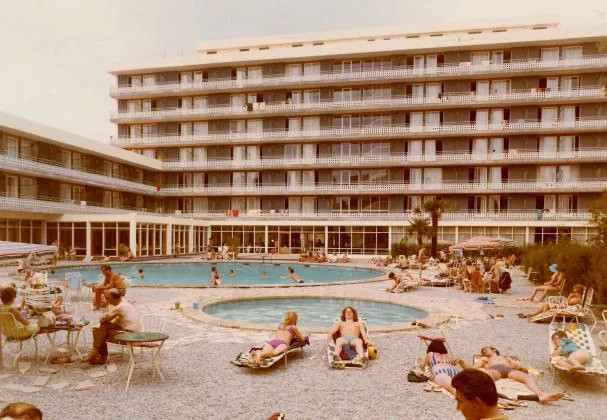
It is hard to imagine today that Just Marlès Avenue in Lloret de Mar, popularly known as the riera and which concentrates much of the nightlife and an important hotel offer, was decades ago a wild place. In the 1960s, the riverbed had not yet been paved and the sand reached the doors of the first hotels that were located there. Back then, that space which today is the core, was the outskirts.
Read more An RNA therapy reduces cholesterol durably with a single dose
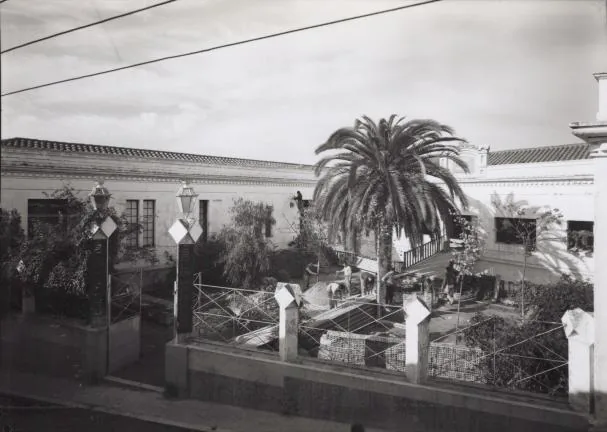
“So that customers could cross the riera and reach the hotel, we put a wooden footbridge, they found it very funny to cross it,” explains Josep Martí, second generation in charge of Xaine Park, opened in 1964. The Catalan water agency at the time was less amused and fined the hotel for building that unauthorized bridge. At that time, with a precarious electrical network, there were always candelabras with candles in each room in case the power went out.
Between 1950 and 1969, the municipality went from having only nine establishments to a total of 230
The 1960s was the boom of tourism in Lloret de Mar and by extension on the coast, which translated into a frantic construction pace. “Hotels and annexes proliferated everywhere,” says archivist Joaquim Daban. Between 1950 and 1969, the municipality went from having only nine establishments including hotels, inns, and boarding houses to 230. This means that, on average, twelve new establishments were built each year. Now there are 121 hotels, totaling nearly 30,000 beds.
Also read
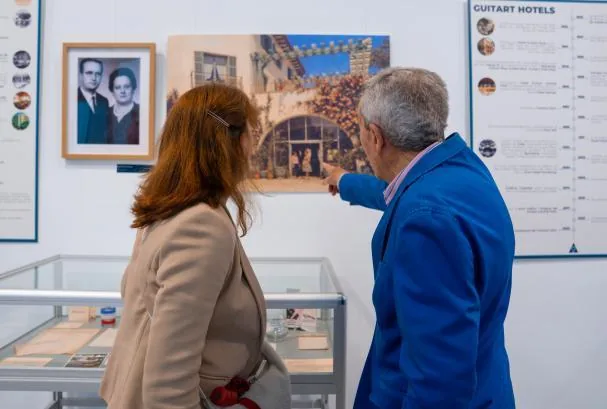
The Lloret City Council wanted to pay tribute to those first hoteliers who helped put the municipality on the tourist map with an exhibition at the Casa de la Cultura that collects photographs, historical documents, objects, and testimonies from a generation that saw tourism as a future opportunity.
Some, like the Portavella family from Barcelona, anticipated the tourism boom. In 1945 they sold the Negresco bar to buy the Excelsior hotel and a chalet with eight rooms, explains Àlex Portavella, third generation of Rosamar.
He recalls that in the early days tourists, mostly French, English, and Germans, booked by letter, traveled by car, and stayed between fifteen days and a month. At first, the chalet’s catering was transported in a cart pulled by a bike.
Some of those families were textile industrialists from Barcelona who changed sectors
At a time when everything was to be done, many saw tourism as an opportunity despite not having much knowledge of the trade. The Noguera-Batlló family, from the textile sector in Barcelona, converted the summer house they had inherited into a hotel in 1958.
Read more Disagreement blocks 9.1 billion in aid to reduce CO2 in transport and housing
Andrea Noguera, third generation in charge of Santa Marta, explains that her grandmother was clear when the first summer at the house, located in a privileged spot in front of Santa Cristina beach, she kept receiving visits from friends and family. “But that looks like a hotel!” she exclaimed. Said and done.
The Garriga family, also from the textile sector, sold bedding and home textiles in Calella. They saw that running a hotel would be a good business when a client to whom they supplied bedding and who had no money to pay the first year, promised they would be paid in full on August 1 of the following year.
“It was so and my father was impressed. He thought, that man who had no money… now I know how he does it. And then the idea of building a hotel came to his mind,” explains Josep Maria Garriga. With other partners, he bought land where a textile factory had been for 1.5 million pesetas in 1960 to build the La Palmera hotel.
Entrepreneur Vicenç Font was a barber in the Vic area when in the mid-1960s he got involved in the tourism adventure. “I did my military service in Roses and I already started to see the potential of the Costa Brava,” he explains. In 1965 he arrived in Lloret where he met his future wife, Maria Rosa Taulina, with whom he opened the Acapulco hotel in 1970. She, who had worked in her parents’ boarding house, spoke broken German, the origin of 80% of the tourists they had in the early days. “It was an adventure, another time, the customers were friends,” they say.
Being a hotelier then was an adventure, another time, the customers were friends
Rosa Maria Taulina
Hotel Acapulco
Not everything was smooth sailing. The Anabel hotel, which builder Joan Gallart made with the help of the English operator Clarkson’s in 1970, lost customers overnight in 1975 when the tour operator went bankrupt. “The agreement was that they would pay part of the hotel in exchange for the first five years only bringing their clients,” says Anna Maria Gallart.
The hotel survived this crisis and was able to maintain activity thanks to travel agencies that brought buses of Germans and to individual French customers. It was the first shock of a sector that hit bottom with the coronavirus. Six years have passed, but many are still paying the consequences to the banks.
Read more Mango reorganizes its powers and strengthens internal controls