The Dutch have historically played a much more significant role than one would expect given the size of their country in the technological transfers that have shaped the modern world. In the 17th century, their financial and agricultural innovations spread to Great Britain, driving the Industrial Revolution and the expansion of the British Empire. In the 18th century, Russian Tsar Peter the Great studied Dutch shipbuilding techniques to create the fleet that would turn Russia into a maritime power. And in the 1970s, Pakistani scientist Abdul Qadeer Khan stole blueprints from a Dutch laboratory to launch his country’s nuclear weapons program and later contribute to similar initiatives in North Korea, Iran, and Libya.
Read more Clash between Cambra and Pimec over silver chairs // El Cercle seeks venue for its Annual Meeting
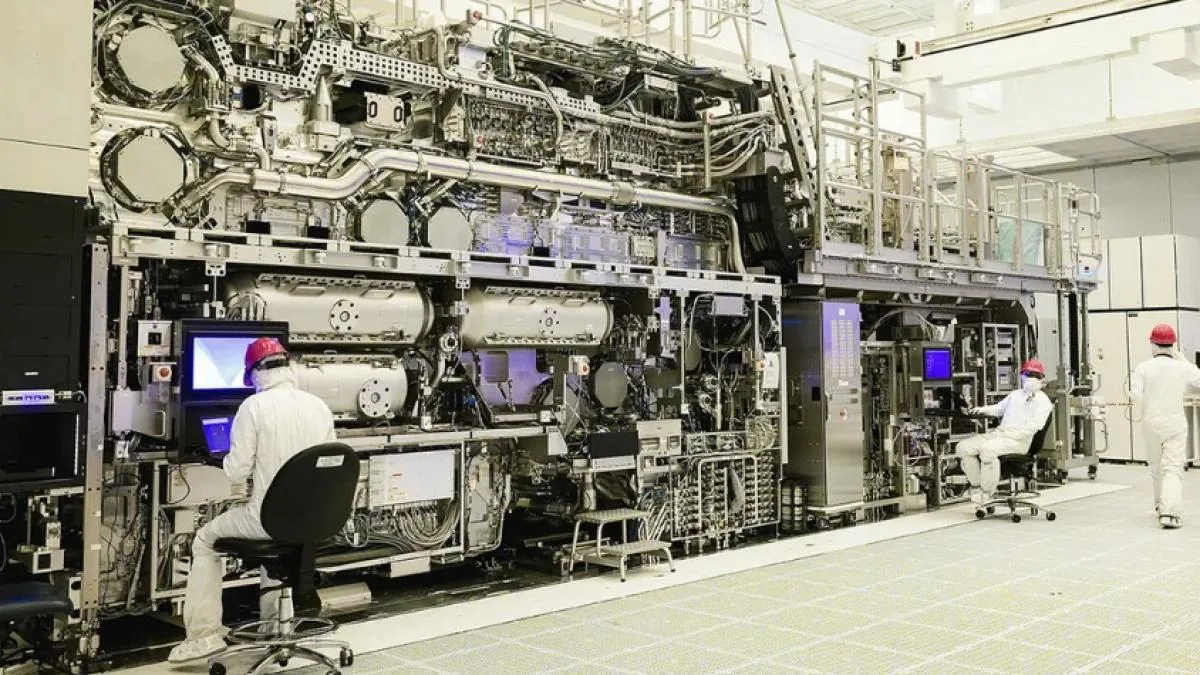
Could Dutch technological knowledge now have once again altered the global balance of power? That is what the Trump Administration claims. Since 2019, the United States has blocked the export to China of extreme ultraviolet (EUV) lithography machines, essential for manufacturing the world’s most advanced semiconductors. These machines, whose chips power the most powerful artificial intelligence models, are only manufactured by ASML, a Dutch company. However, in recent weeks, U.S. Secretary of Commerce Howard Lutnick has plunged the company into a crisis by communicating his suspicions that one of these machines may have ended up in China.
“Impossible,” ASML responds. Europe’s most valuable company has assured U.S. authorities that it knows the exact location of the 340 EUV machines it has manufactured, including 26 already retired from service. None of them are in China, the company maintains. Furthermore, it emphasizes that only ASML can transport these extremely sensitive machines, which it monitors online continuously, and that all components it ships are installed and handled exclusively by its own engineers at its customers’ factories.
“ASML has never shipped an EUV machine to China, nor any component, module, or equipment specifically designed for use in an EUV machine,” the company states. It adds that, despite repeated requests, it has yet to receive any evidence supporting the accusations made by Lutnick.
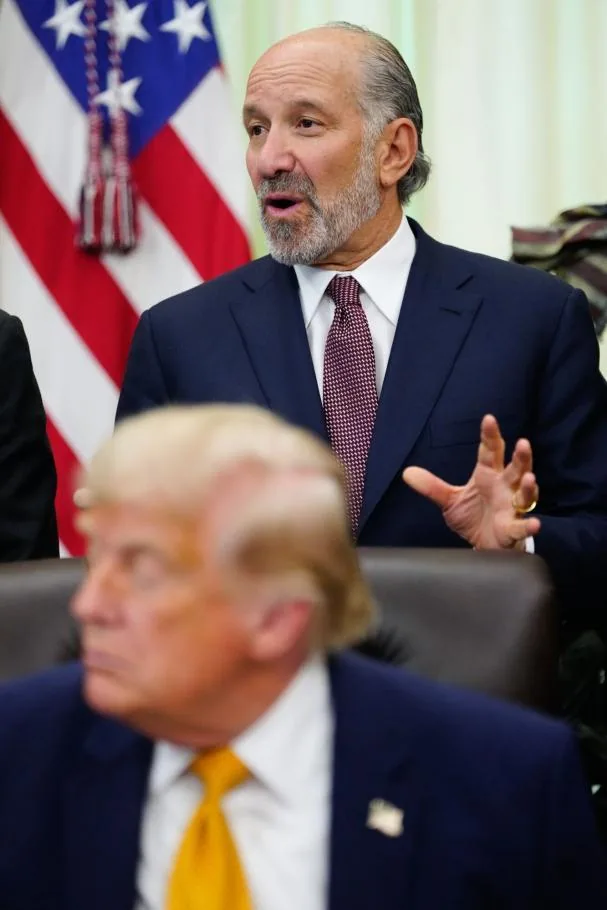
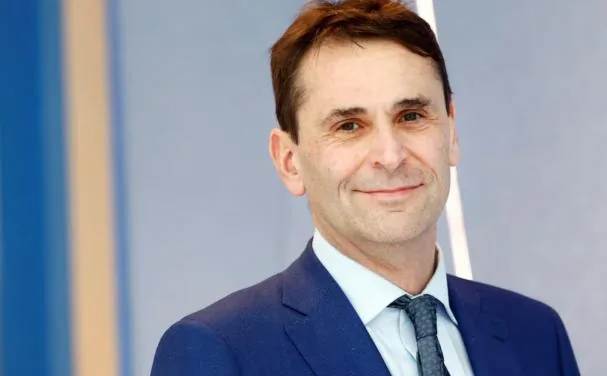
The Dutch government, while assuring it takes the U.S. claims seriously, also questions them. During a visit to Washington at the end of June, the Dutch Minister of Commerce, Sjoerd Sjoerdsma, tried to convince Lutnick, other administration members, and congressmen that The Hague strictly enforces its export controls, including those related to EUV technology.
In statements to The Economist on July 2, Sjoerdsma avoided giving details about those conversations but assured that, for now, the Dutch government is not investigating the U.S. accusations. “If there were issues to investigate or even prosecute, of course we would,” he said.
The controversy revolves around whether there is any basis for Lutnick’s accusations. Although no evidence has been made public, some people informed about the matter describe the information as “unverified,” though “not unfounded.” Many industry experts consider it extremely unlikely that a complete ASML EUV machine has reached China. However, some believe it possible that certain related components have been sent, perhaps through ASML’s own suppliers or third parties.
Economic dispute
ASML claims to know the exact location of the 340 EUV machines it has manufactured and maintains that none are in China
Others consider it more likely that the real focus of the debate is the exports to China of deep ultraviolet (DUV) lithography machines, an earlier technology, as well as their parts, services, and technical support, most of which are not subject to export controls. Sales related to DUV technology accounted for approximately one-third of ASML’s revenue in 2025.
Behind this controversy lie much deeper disagreements about China’s technological advancement and how Western governments should respond. It also highlights growing frictions between the Trump Administration and many of its allies.
Some U.S. officials believe Europe maintains too soft a stance toward China. Many European governments, on the contrary, believe the Trump Administration is harming their economic and security interests while trying to close preferential deals with Beijing. Some European politicians and executives also suspect that Washington is pressuring ASML and other related companies to move a greater part of their activity to the United States to strengthen the semiconductor industry there.
One key issue is how far China has advanced in developing its own EUV machine. Reuters reported in December that a team of former ASML engineers in China had completed a prototype in 2025 and was testing it in a high-security laboratory located in Shenzhen.
ASML points out that it cannot control where its former employees work, although it reminds that they are subject to confidentiality agreements and that, in some cases, the company has successfully taken legal action for industrial espionage.
According to Reuters, the prototype had not yet produced functional chips, although the Chinese government has set a goal to achieve this before 2028. Most experts consider this timeline unrealistic and believe China will still take about a decade to have a fully operational EUV machine. However, they acknowledge that the country is progressing faster than expected both in this technology and in some alternatives.
Read more The defense of Jonathan Andic rejects that another Mossos unit analyzes the evidence of the case
Another major concern of the United States is the innovative use China is making of DUV technology. Manufacturers like SMIC and Huawei have pushed to the limit a technique known as multi-patterning, which allows them to use DUV machines to manufacture logic chips with processes below seven nanometers, very close to the sector’s technological frontier. Until recently, this type of chip could only be produced using EUV machines.
Although this technique is more expensive and generates a higher number of defects, some U.S. experts believe it could allow China to manufacture millions of advanced chips and reduce the U.S. lead in the race for supremacy in artificial intelligence. In Europe, many believe these risks must be balanced with the need to protect and expand ASML’s revenues and the industrial ecosystem that depends on it, while avoiding retaliation from China.
One of the pillars of the U.S. strategy is the creation of a new alliance among countries integrated into Western supply chains for artificial intelligence. Called Pax Silica, it aims to promote cooperation and regulatory harmonization in areas ranging from energy and critical minerals to advanced manufacturing and AI models. So far, it has the support of 24 signatories, including the European Union and the Netherlands, which joined last June during the visit of its Minister of Commerce. The goal is to facilitate the exchange of cutting-edge technology among like-minded countries and coordinate export controls related to EUV systems.
Much deeper differences
Some European politicians and executives suspect Washington is pressuring ASML to move a greater part of its activity to the U.S.
The U.S. initiative generating the greatest division is, however, the so-called MATCH Act, introduced in April with both Republican and Democratic support. The proposal would not only ban the sale of DUV machines to China but also restrict ASML’s supply of maintenance, spare parts, and software updates for the hundreds of DUV machines already operating in the country.
Additionally, it would give the Netherlands and other allies 150 days to harmonize their controls with those of the United States or face the application of the so-called Foreign Direct Product Rule, which extends U.S. export controls to products manufactured in third countries when they incorporate U.S.-origin technology. In ASML’s case, this would force the company to comply with U.S. regulations under threat of heavy fines and other sanctions.
Supporters of the measure argue that these restrictions are essential for national security reasons. “I am not in favor of politely asking companies to stop. I am in favor of making it illegal,” says Gregory Allen, former strategy director of the Pentagon’s Joint Artificial Intelligence Center and current head of a consulting firm.
A fundamental technology
EUV machines are essential for manufacturing the most advanced semiconductors, the basis of the most powerful artificial intelligence models
The Dutch, and other countries, disagree. For Sjoerdsma, the MATCH Act is “really unfortunate” from the Netherlands’ perspective. The minister is especially concerned about the possibility of the extraterritorial application of U.S. legislation to Dutch and other allied companies.
“We believe that each country should decide for itself what technology its companies develop and what security risks it does or does not imply,” he says.
The Dutch government also sees a contradiction between the U.S. demand to restrict exports of DUV technology and the Trump Administration’s decision to authorize the sale to China of Nvidia’s H200 artificial intelligence chips, whose manufacture precisely requires some of the most advanced EUV machines.
Sjoerdsma faced equally delicate negotiations during his visit to China this week. Beijing has condemned the MATCH Act and approved regulations authorizing sanctions against foreign companies that comply with U.S. sanctions or export controls.
The imminent future
The dispute over ASML is only the first episode in the battle for control of AI’s technological bottlenecks
The Netherlands is already suffering the consequences of the decision made in September to intervene in Nexperia, a Dutch semiconductor manufacturer controlled by Chinese capital, to prevent the relocation of part of its operations to China. In response, Beijing blocked Nexperia exports from Chinese territory, causing serious disruptions for European and Japanese car manufacturers.
The controversy sparked by Lutnick’s accusations could deflate, especially if the United States does not provide evidence. However, it is only one of the first episodes of a much broader battle to control the technological bottlenecks of artificial intelligence. And it is unlikely to be the last time ASML and its technology get caught in the crossfire.
Read more Laporta lands at the World Cup: sends a message to Atlético about Julián and confirms Adeyemi
© 2026 The Economist Newspaper Limited. All rights reserved.