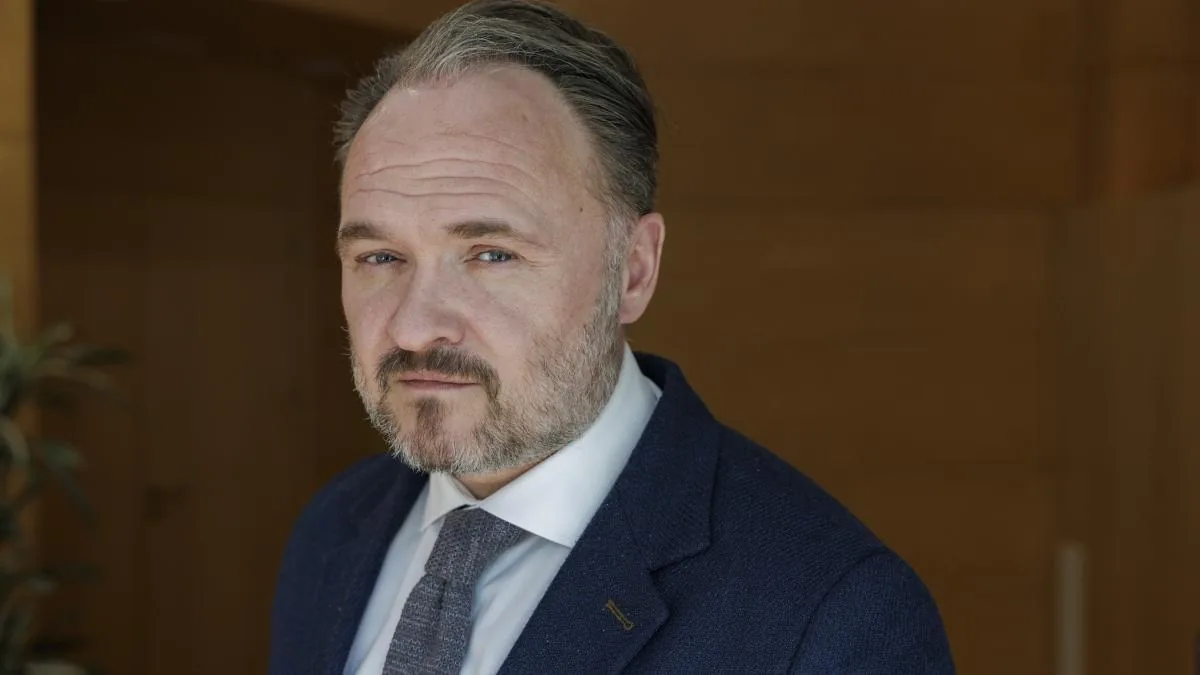
Dan Jørgensen (Odense, 1975) is the European Commissioner in charge of one of the most sensitive portfolios amidst a global crisis, which is shaking oil and gas markets in the wake of the Iran war. The Commissioner for Energy, who also leads the community’s housing strategy, visited Barcelona yesterday to explore solutions to this other major emergency: housing. Nevertheless, current events dictate, and questions focused on the European response to mitigate the inflationary effects of the conflict in the Middle East.
Read more Trump’s Labor Secretary resigns amid misconduct allegations
Where do we stand?
We are in a very serious situation, and I want to make it very clear that, unfortunately, it is very likely to get worse. I don’t want to be alarmist. According to our analyses, even if peace is declared tomorrow, difficult weeks, months, and even years await us regarding energy prices. The natural gas infrastructure in the region, especially Qatar’s, has suffered such a setback that it will take years to recover. This, of course, will also result in prices remaining high for quite some time.
And in the case of oil?
The situation is somewhat different. Production can recover more quickly, so it will be a matter of weeks. But a few weeks can be crucial if we run out of jet fuel or diesel. Or if we have supply problems.
Tourism
“Flying will be more expensive and, in some cases, we could even see cancellations”
The aviation industry is already giving warnings about kerosene supply.
The global market is under extreme pressure. In the best-case scenario, we must prepare for a rather tough summer. Flying will be more expensive and, in some cases, we could even see cancellations. This must be a big wake-up call. It must show us that the transition to renewable energy sources is absolutely necessary.
Has Europe learned its lesson since the last crisis?
Since 2022, we have deployed many more renewables. But it is still not enough. As long as we import more than 370 billion euros annually in fossil fuels, we will be too vulnerable. Since the war in Iran began, we have paid more than 20 billion euros extra for energy. Imagine if we had that money to invest in renewables.
How does the EU’s long-term strategy to reduce dependence on Russia stand?
The number of hours per day that the price of electricity depends on gas on average is now much lower than in 2022. We no longer depend completely on a single source, as before. It would be a fundamental mistake to buy energy from Russia again. Not a single molecule of gas or oil. We have seen how uncomfortable it is to depend on an enemy. Even if peace is achieved in Ukraine, we cannot afford to indirectly contribute to strengthening its military apparatus.
Read more How to end the war
Some of the measures they will propose to mitigate the impact of the crisis, such as one day of teleworking per week, have been leaked. Do you think they will have a real impact on demand?
I cannot comment on leaks, but I can answer in more general terms. We are aware that in Brussels we cannot propose very specific measures as a universal solution. That would not be prudent. Therefore, we will propose and recommend different measures that member states, if they consider them useful, can use. Although they may seem insignificant individually, when added up they make a real difference.
Why did they advise Spain against lowering fuel taxes to contain the impact of the war?
In a situation of product scarcity, the aim is to reduce its consumption, not the other way around. By supporting it, there is a risk of achieving the opposite. That is why we have said that, if it can be avoided, it should not be done. But it is not something we prohibit at a European level. If member states like Spain decide to do it anyway, and have their own national reasons, of course, we must accept it. Even so, it is probably not the best idea.
Read also
Could this crisis derail the EU’s climate goals?
No, our climate goals are the driving force behind many of the transitions we must undertake. Of course, I would have preferred that we were not in a crisis like the current one. But one of its positive effects is that you really discover what works and what doesn’t. Eliminating our dependence on fossil fuels benefits our security, our competitiveness, and decarbonization. Although it may seem like a paradox, the measures we must take now will allow us to achieve our goals in the fight against climate change.
Your visit has focused on how to resolve the housing crisis. Despite the EU’s limited competencies in this area, what possible solutions do you see?
First, we must address the supply problem. There are very few homes available. This can be solved in several ways: boosting more investment in the sector, helping to renovate and reuse existing buildings… There are also too many regulations that hinder and impede the construction of new homes or the rehabilitation of old ones. It is necessary for public funds to reach where the market does not work and to encourage greater private sector investment. Vacation rentals have also become a serious problem, as they displace residents from their homes and raise property prices.
Read more Iran and the U.S. reluctantly meet