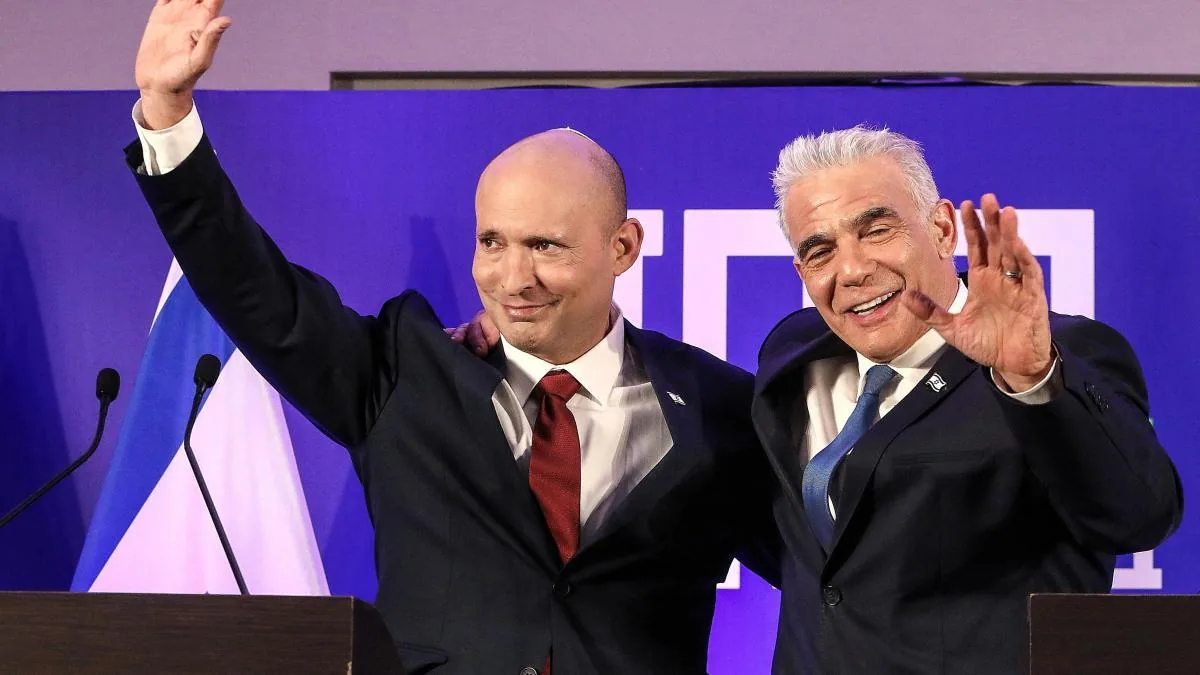
The Israeli opposition closes ranks to defeat Benjamin Netanyahu in the upcoming elections, scheduled for this October. Naftali Bennett and Yair Lapid, who have both held the position of Prime Minister of Israel, announced the merger of their parties, in a coalition that aims to surpass Netanyahu’s Likud party in the vote.
Read more Cole Allen, accused of «attempted assassination of President» Trump, could face life imprisonment
The party, called Together, will be led by Bennett, a former advocate of illegal settlements in the West Bank. Although he left politics after losing to Netanyahu in 2022, he is the current prime minister’s strongest rival, according to weekly polls.
Lapid, a centrist whose base is in secular Tel Aviv, currently leads the opposition through his Yesh Atid party. Both previously headed a broad government that managed to unseat Netanyahu, but which lasted little more than a year before losing to him in 2022.
Netanyahu then formed the most right-wing and religious government in the country’s history, which has promoted populist policies that his detractors describe as divisive and anti-democratic.
During the war with Iran, both Lapid and Bennett closed ranks with the current Executive and share the idea, widespread among the Israeli population, that the ayatollahs’ regime is an existential threat to their country. However, the ceasefire agreement drew criticism from the opposition: Lapid himself described the outcome of the offensive as one of the biggest “political mistakes” in the nation’s history.
Last weekend’s polls placed Bennett in a technical tie with Netanyahu, and if he adds Lapid’s projected seats, they could unseat him from power
A joint statement from Bennett and Lapid indicated that they were announcing “the first step in the healing process of the State of Israel: the merger of the Yesh Atid party and the Bennett 2026 party into a unified formation led by former Prime Minister Naftali Bennett.”
“This move unites the ‘reformist bloc,’ ends internal struggles, and allows all efforts to be concentrated on achieving a decisive victory in the upcoming elections and leading Israel towards the necessary reform,” according to the statement. In their previous agreement, both alternated as prime minister. The new pact does not include that formula.
Last weekend’s polls placed Bennett in a technical tie with Netanyahu. If he adds Lapid’s projected seats, they could form the largest party, which would give them the initiative to form the next government. The polls showed the opposition bloc —excluding Israeli Arabs— with 60 or 61 seats out of a total of 120, just enough to form a coalition.
Read more Put police in classrooms
Netanyahu, 76 years old and the country’s longest-serving prime minister, continues to gauge when to call elections, which must be held before the end of October.

Netanyahu also faces the debate over whether ultra-Orthodox men should perform military service. The Supreme Court holds that they must, but his religious coalition partners assure that they will not be part of any government that approves a law to that effect.
Recent conflicts have forced other Israelis to serve hundreds of days as reservists, at great social and economic cost, while the majority of the population believes that the ultra-Orthodox should serve and contribute to the country’s defense.
Bennett and Lapid support this conscription and, according to polls, would not need ultra-Orthodox parties to form a government. However, implementing such a law will be complicated, as hundreds of thousands of religious Israelis promise to oppose it.
38% of Israelis believe the country has been strengthened by the conflict with Iran, but a third think it has been weakened
Netanyahu, who is on trial for corruption, plans to focus his campaign on his long experience and his close relationship and collaboration with US President Donald Trump.
According to a new poll, about half of Israelis believe Iran has been weakened after the recent campaign, while almost a third perceive no changes and 15% believe it has been strengthened. Assessments of Israel’s position are equally divided: 38% believe the country has been strengthened, while approximately a third think it has been weakened.
“Lead Lebanon to catastrophe”
Israel threatens Hezbollah as attacks continue
Israeli Defense Minister Israel Katz warned that Hezbollah “will lead Lebanon to catastrophe” after its leader, Naim Qassem, refused to negotiate with Israel. In parallel, the Israeli Army today expanded its bombings to the Bekaa Valley – the first attack in this area since the truce on April 16 – and maintains incursions in the south, where clashes continue. Security sources place attacks near Nabi Chit, with no confirmed victims, while official Lebanese media report at least three injured in the south. Hezbollah claims to have attacked an Israeli tank with drones. More than 2,500 people have died in Lebanon since March 2. Israel demands the group be disarmed and warns that it will not accept a ceasefire with ongoing attacks.
Read more Pujol, exonerated 4,149 days later