Eating is the most important action of each day, and feeding society healthily is a huge responsibility. Even more so when local vegetable production in Catalonia has fallen by 74% in the last 25 years, while exports have tripled: the territory now functions more as a redistribution platform than as a garden.
Read more The Clínic of Barcelona receives accreditation as a comprehensive cancer care center
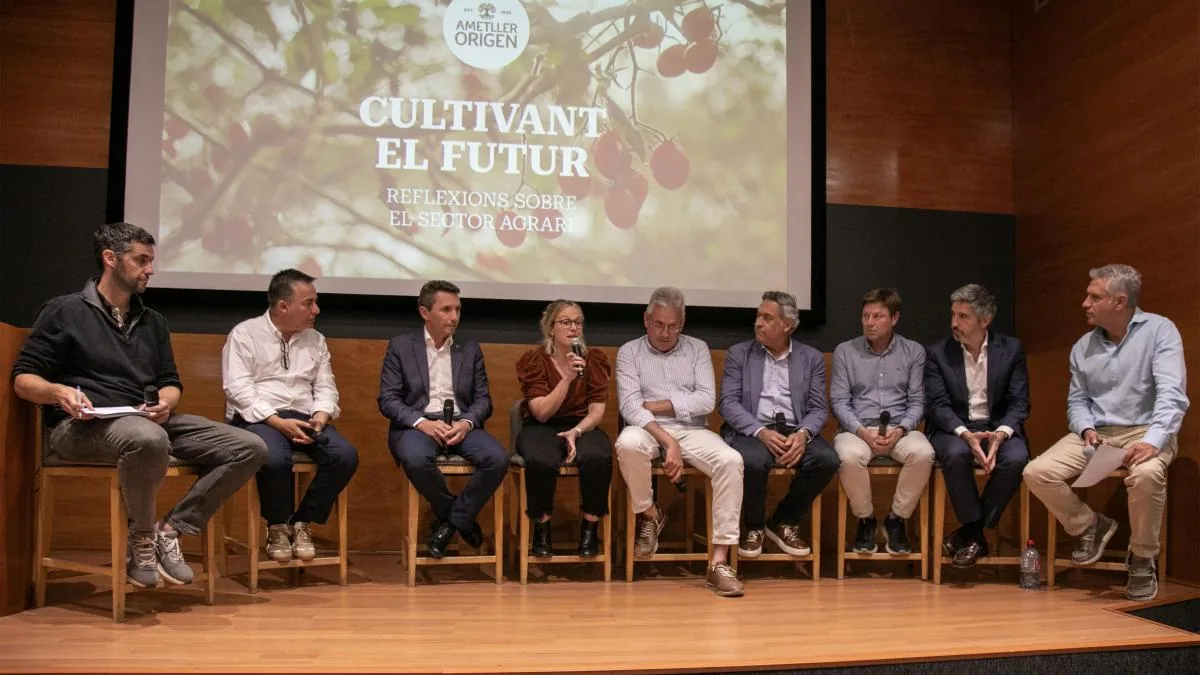
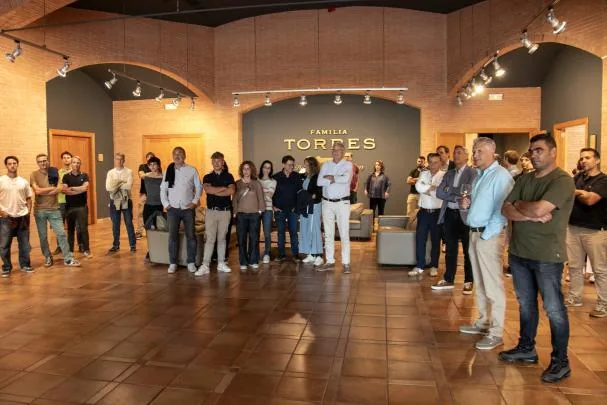
This was the paradoxical starting point of the round table organized by Ametller Origen to present the documentary “Cultivant el futur,” moderated by Josep Ametller, CEO and co-founder of Ametller Origen, and Joan Simó, general director of the company’s agricultural area. A day in which representatives from the public administration, executives from the agri-food sector, and research centers such as IRTA participated.
A new way of cultivating
Society wants to eat better and better, studies say. But to meet the population’s consumption needs, the governance model must change, proposed Jordi Ciuraneta, an agricultural entrepreneur, livestock farmer, and former Agriculture Minister of the Generalitat. “The challenge is to adapt to the reality of the present while envisioning the future, as there will increasingly be more scale and more technification, and therefore we have to change a governance model inherited from the 19th century,” he argued.
Producing food is the most beautiful thing in the world: the more local talent we have, the better we will eat and the better society we will be”
Joan Simó
General director of the agricultural area of Ametller Origen
Currently, conventional agriculture is safer than ever: there are more certifications, innovation, and environmental performance. One of the pending challenges, however, is to inform the customer about this transparency and emphasize the nutritional benefits of consuming fruit and vegetables. Joan Simó recalled that Ametller Origen is the supermarket best rated by the OCU in fruit and vegetables, thanks in part to its commitment to transparency and its mission to share the entire process with consumers through school visits to its greenhouses.
Sustainability and innovation
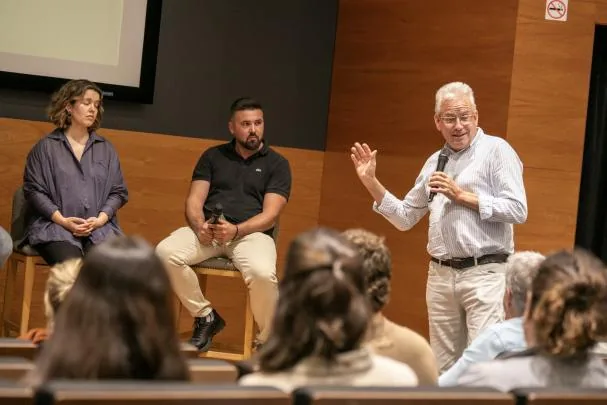
Agriculture will be sustainable if there is economic return for the sector, for the professionals who work it, and respect for the environment. On the social aspect, Montse Baró, commercial director of Greenfarmers and former president of Afrucat, pointed out the problem of the lack of generational renewal: “We have to be attractive to the coming generation, because if we are not able to attract talent to lead the changes the sector will experience, everything will be more complicated.”
One of the challenges posed by Oscar Caselles, operations director of Grup Català, is the use of technology to protect the sector from climate change and produce without the annual variability that affects supply. Juan Antonio Jiménez, production director of Primaflor, advocated industrializing agriculture to solve the shortage of labor and water: “Right now we have projects that eliminate herbicides with laser machines or driverless tractors. There is machinery and specialized engineers, and we have to delegate to them under our leadership.”
The future of the countryside is the people
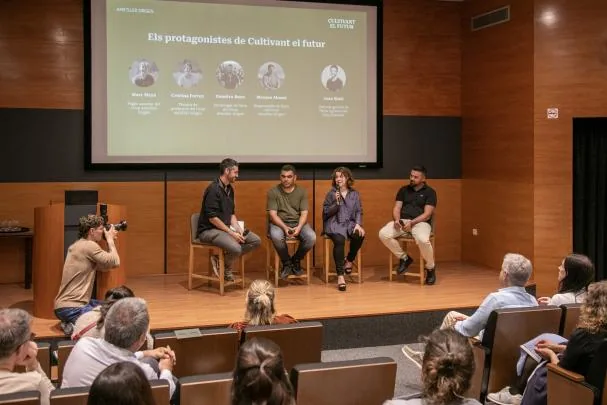
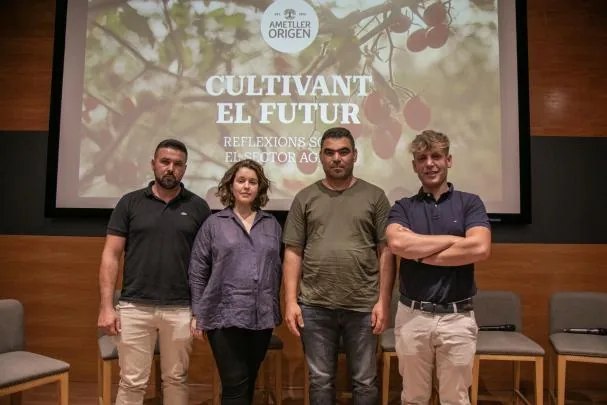
The protagonists of the documentary “Cultivant el futur” are Marc, Cristina, Moussa, and Dumitru. Four stories that pay tribute to all those who get their hands dirty with soil and reflect on how their work impacts people. The documentary can be seen on the Ametller Origen website.
The time is now
Once the product leaves the field, it enters an increasingly complex value chain, where the purchase decision, product selection, and quality criteria are decisive. What is the role of supermarkets? Montse Baró reflected on the need for a mindset change by the industry to pay for fruit with less waste, since that means it has been harvested greener and, therefore, has less flavor and lower nutritional content.
Read more Record of extreme temperatures in a May month in Catalonia: 39.5 ºC in Vinebre
“Paying for the nutrition of the product seems very far to me, but doing it for flavor or taste quality seems closer. And here I believe all the technology that is yet to come will help us a lot,” Baró reflected. Oscar Caselles added that there are already supermarkets that seek that flavor, demand varieties, and pay a fair price for the fruit. That is, he pointed out, the direction the entire sector must follow.
Filling the shopping basket
Thinking about the future and how to solve present challenges, David Monteiro, business director of fruits and vegetables at Sonae, stated that the sector must think long-term and invest in another type of agriculture that solves present challenges. He specifically spoke about regenerative agriculture: “A fair price must be paid, but food will never be cheap again. We must cultivate seeking that exceptional product so that the customer enjoys and buys more.”
Ferran Huguet, general director of fruit and vegetable purchasing and planning at Ametller Origen, insisted that cultivation must seek excellence: “We are facing a great opportunity. Each of us is part of a great project and we must be able to communicate it, because the change is really very important.”
A pantry that is emptying
– 74% · Production in decline
Local vegetable production has gone from 535,000 tons in 1999 to less than 140,000 in 2024.
97% · External dependence
Catalonia covers practically all its internal consumption of fruits and vegetables with imports.
−52.5% · Fewer crops
Between 1999 and 2009, more than half of the specialized horticultural farms in Catalonia were lost.
Jiménez sent a message of unity so that all involved agents commit to the same strategy: “Right now there are 15 different paths and we have to agree on one. Farmers must be proud to be farmers, that this is a profession we can boast about.”
Jordi Ametller, CEO of agrarias and co-founder of Ametller Origen, closed the day by recalling that vegetable production in Catalonia has fallen by 74% in 25 years, from 535,000 tons in 1999 to less than 140,000 in 2024. For him, the solution lies in regenerative agriculture and having professionals expert in regenerating the land: “As a leading company, we have the obligation to cultivate the future thinking of an agriculture that cannot stop advancing in this direction, but with great caution at the same time.”
Read more A judge halts the creation of Trump’s $1.8 billion fund to compensate coup plotters