The streams of Maresme face a critical future. The Master Plan for Actions for the Integrated Management of the Streams, funded with European Next Generation funds, was approved in February 2026 by the county council and outlines a critical scenario, both due to the number of people exposed to flood risk – about 104,000 residents – and the losses, which could exceed 3.4 billion in cases of extreme events.
Read more Álex Remiro, the desired goalkeeper for Barça
The strategic document, prepared based on criteria from the Ministry for the Ecological Transition, sets a horizon until 2050 and an estimated investment of 685.4 million euros. It is the result of the most thorough diagnosis carried out so far on the 65 streams in the region. Apart from the hazard classification, the plan builds a sophisticated technical model that integrates multiple variables, from hydraulic capacity and bed condition to the vulnerability and exposure of the population and economic activity.
The result is a list that allows prioritizing actions, among which stands out the Arenys stream, which crosses the municipalities of Arenys de Munt and Arenys de Mar, considered the most dangerous in the entire region, despite being channeled in much of its urban stretch. “We are facing a ticking time bomb,” warns the county councilor for the environment, Marta Gómez, who insists on changing the management model.
Several factors converge in the current diagnosis. On one hand, the very nature of the territory, a region with abrupt orography, with short basins and steep slopes that favor sudden floods. On the other hand, the impact of intense urban development that has occupied natural drainage spaces and impermeabilized large surfaces, accelerating water runoff.
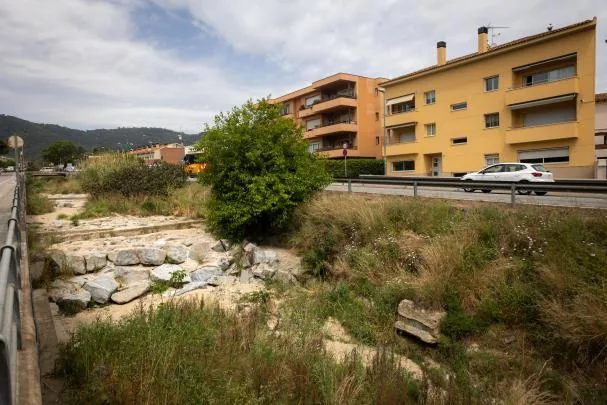
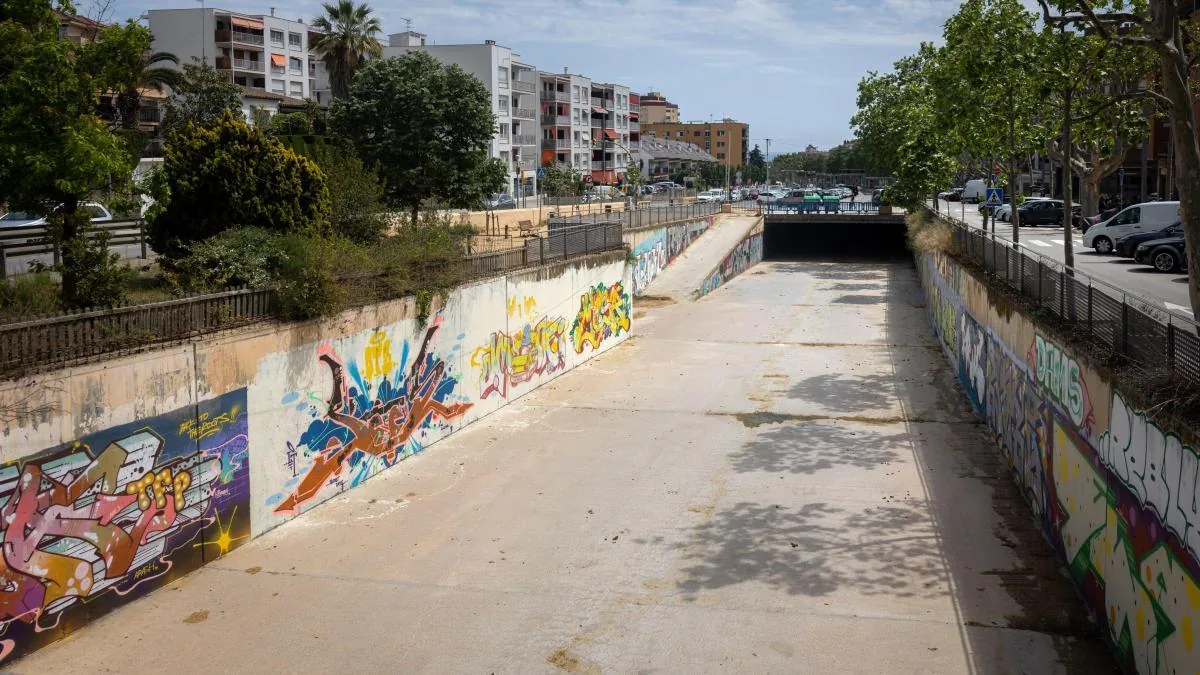
A key factor is added, such as the lack of maintenance of these hydraulic infrastructures, such as channels, underground passages, or retention basins, where sand and sediments accumulate. “We have infrastructures designed for conditions that no longer exist,” technical sources point out.
Climate change multiplies the risks. Episodes of torrential rains are more frequent and intense, which pushes a system that was already vulnerable to its limit. According to Gómez, “today it can rain in two months what used to happen in eight,” a pattern change that forces a complete rethink of the management of the Maresme streams.
The Arenys streams and the Rec Viver of Malgrat and Palafolls urgently require priority intervention
The plan has analyzed 254 kilometers of streams, of which almost half (121.9 kilometers) run through urban areas. A very relevant fact, since these stretches are where the risk is greatest for people.
Another critical element is the structural singular points (PSE), which include infrastructures such as bridges, viaducts, or underground passages that cross the streams. Up to 380 have been counted, and many of them act as bottlenecks that can cause overflows in case of large floods. The plan has also identified 285 areas with significant potential flood risk (ARPSI), which reinforces the idea of a structural and widespread problem.
Given the scenario presented, the document establishes a prioritization of the streams according to the degree of risk. Of the 65, there are 10 that require immediate actions: the Arenys stream, the Rec Viver in Malgrat and Palafolls, the Riera d’en Cintet in Vilassar de Mar, those of Cabrils, Premià, Malgrat, Argentona, Canet de Mar, Santa Susanna, and Calella.
The prioritization responds to hydrological criteria, but also to the potential impact on the population and economic activity. The degree of hazard is measured in the probability of floods and their consequences.
The effects of this situation have already become evident in recent episodes. In Arenys de Mar, for example, the accumulation of sediments at the stream’s mouth into the sea has generated risk situations. In Premià de Mar, storms have exposed the vulnerability of urban areas.
Environmental organizations have been warning about the problem for years and denounce actions that have altered the natural dynamics of the streams, such as the narrowing of mouths or construction in flood-prone areas. These organizations advocate for a profound change in the territorial model.
Read more Vallecas lives an unforgettable ‘nuit’ and is closer to its first European final
Of the 685 million quantified in the Master Plan for Streams, 500 must be assumed by the municipalities
In this regard, the master plan advocates a new way of managing the streams. Integrated management throughout the basin is essential, from the headwaters to the mouth. Currently, the competence is fragmented, municipalities manage urban stretches, while the Catalan Water Agency (ACA) is responsible for non-urban stretches. A situation that the report acknowledges generates uncoordinated actions that reduce the effectiveness of interventions.
“If you don’t act continuously, you don’t reduce the hazard,” explains Gómez. Hence the plan defends real coordination between administrations and the creation of a municipal management model that allows acting coherently.
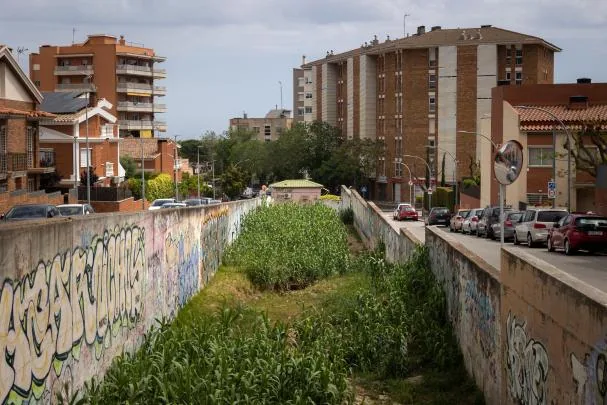
Regarding solutions, the document combines different actions. On one hand, structural measures such as the expansion of hydraulic sections, the construction of retention basins, or the improvement of existing infrastructures. On the other, nature-based solutions, such as the renaturalization of stretches or the recovery of native vegetation.
The dual strategy responds to the realization that for decades concrete channeling has not been enough. Moreover, in some cases it has contributed to worsening the problem, accelerating floods and reducing the territory’s absorption capacity.
The plan does not propose undoing existing infrastructures, but adapting and improving them, emphasizing avoiding new urban developments in risk areas, a key aspect in a region with high urban pressure.
Another central axis is maintenance. According to the councilor, many current problems stem from inadequate management over the years. The lack of investments in this area has led to a situation where many infrastructures do not function as they should.
The accumulation of sand and lack of maintenance choke drainage and generate more hazard
The plan therefore foresees not only large investments but continuous maintenance actions over the next 25 years. A long-term vision is one of the main strengths of the proposal, but also a challenge that all administrations must jointly assume.
Funding, as usual, is one of the main obstacles. Of the 685 million planned, more than 500 correspond to urban stretches, which are municipal responsibility. This poses difficulties for municipalities, which usually do not have the necessary resources.
The new plan in Maresme represents a turning point, since for the first time there is an integral tool that not only diagnoses the problem but provides concrete solutions and a long-term strategy. “We must not panic,” says Marta Gómez, “but we must take care because time is against us.” With climate change advancing and increasingly extreme weather events, the window of opportunity for action narrows. The master plan sets the strategy, but effectiveness, according to consensus from the Maresme County Council, will depend on the institutions’ capacity to take action.
Rial del Bareu, an example of inefficiency
The Rial del Bareu is one of the urban basins that generates the most danger in Arenys de Mar and increases potential risk due to its urban growth. The channeling project began in 2007 and has gone through several political vicissitudes until the Catalan Water Agency (ACA) drafted a project that seemed definitive. At the request of the City Council, the UPC studied the case and generated a digital flood simulation, detecting technical problems and major errors in the ACA project. The agency director, Daniel Meroño, even declared that, 24 years later, it is not ruled out that the channeling “is unfeasible.”
Read more Rosa Peral’s penitentiary itinerary: six prison transfers and three criminal cases