









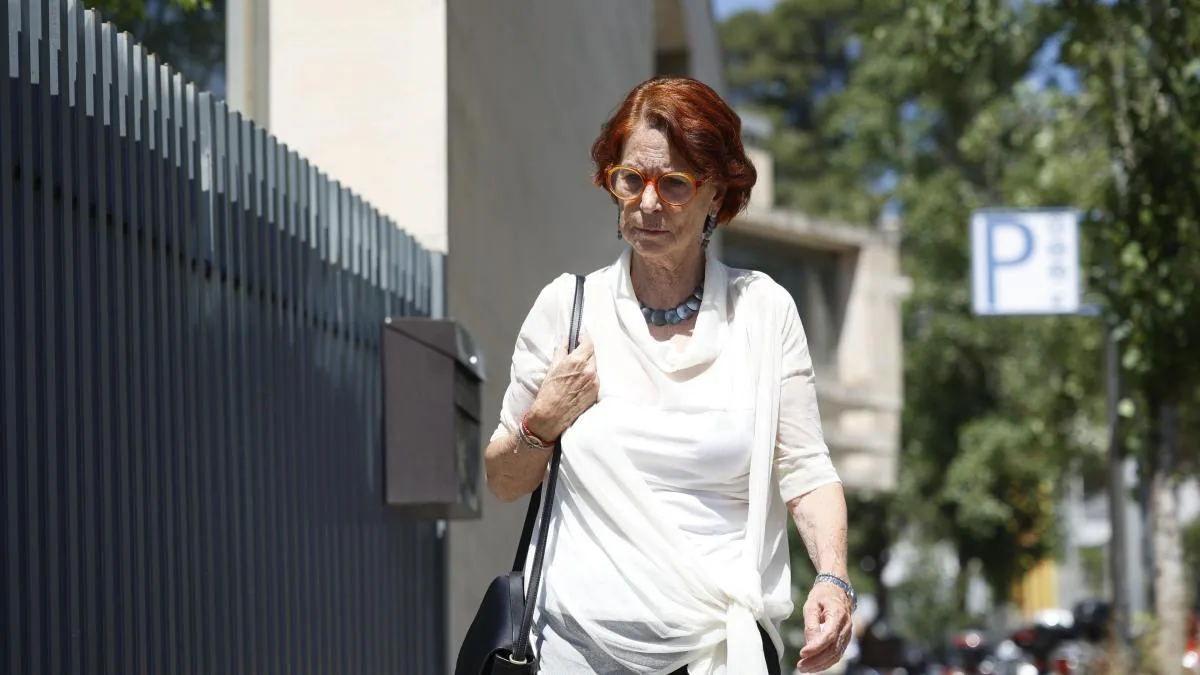
The Ombudswoman of Greuges, Esther Giménez-Salinas, has initiated an ex officio action following the incidents detected in the PISA 2025 tests in Catalonia. She considers it essential to clarify these incidents, which have led the Organisation for Economic Co-operation and Development (OECD) to assess that the results obtained are neither representative nor comparable with those of other territories nor with previous editions.
This action is opened in parallel to the confidential informative proceedings initiated by the Department of Education and Vocational Training in March of this year, after becoming aware of the facts.
Specifically, the institution has requested detailed information from the Department of Education about the 51 centers that were part of the sample, the characteristics of the exempt students, the accompaniment and supervision mechanisms applied by the participating centers, the subsequent verification of the criteria applied, and the causes explaining the detected error. It has also requested the documentation sent to the centers before the tests and a copy of the report prepared as a result of the informative proceedings opened to clarify the facts.
The Ombudswoman points out that the excluded students in other tests do not reach 23%, the PISA rate
In the statement published this afternoon, the Ombudswoman believes that the analysis of the facts must be “deepened,” especially considering the proportion of students excluded for reasons related to physical, cognitive, emotional, or behavioral disabilities, “much higher” than the prevalence of these profiles among 4th year ESO students.
According to available data, students with special educational needs represent approximately 5% of the total (severe disabilities). Additionally, about 10% of students have educational support needs derived from learning disorders or delays, although they do not have special educational needs.
Read more The assault on the Ceuta fence seen from mobile phone cameras
Among the hypotheses proposed by the Department is the possibility that some center applied the exemption criteria provided for the basic skills tests of 4th year ESO to the selection processes of the PISA tests. However, the institution notes that the percentage of exempt students in the basic skills tests, which were conducted in April 2025, like the PISA tests, was 9.7%, a figure considerably lower than the 23.2% recorded in the PISA tests. In fact, only in 2024 did the percentage of students who did not take the basic skills tests, either due to absence or exemption, exceed 10%.
The Ombudswoman also calls for ensuring that the selection and participation processes of students comply with the established criteria, with the highest guarantees of transparency and rigor. In this regard, she supports the central role that the Education Evaluation and Foresight Agency must have in managing the tests, which this Government precisely launched to guarantee the reliability of the data.
The Agency began operating in July 2025 and replaced the previous Higher Evaluation Council, which had already experienced a setback with PISA 2022, leading the republican councilor Anna Simó to dismiss its president.
Read more Italy considers suspending the Schengen agreement with Spain due to the migration crisis