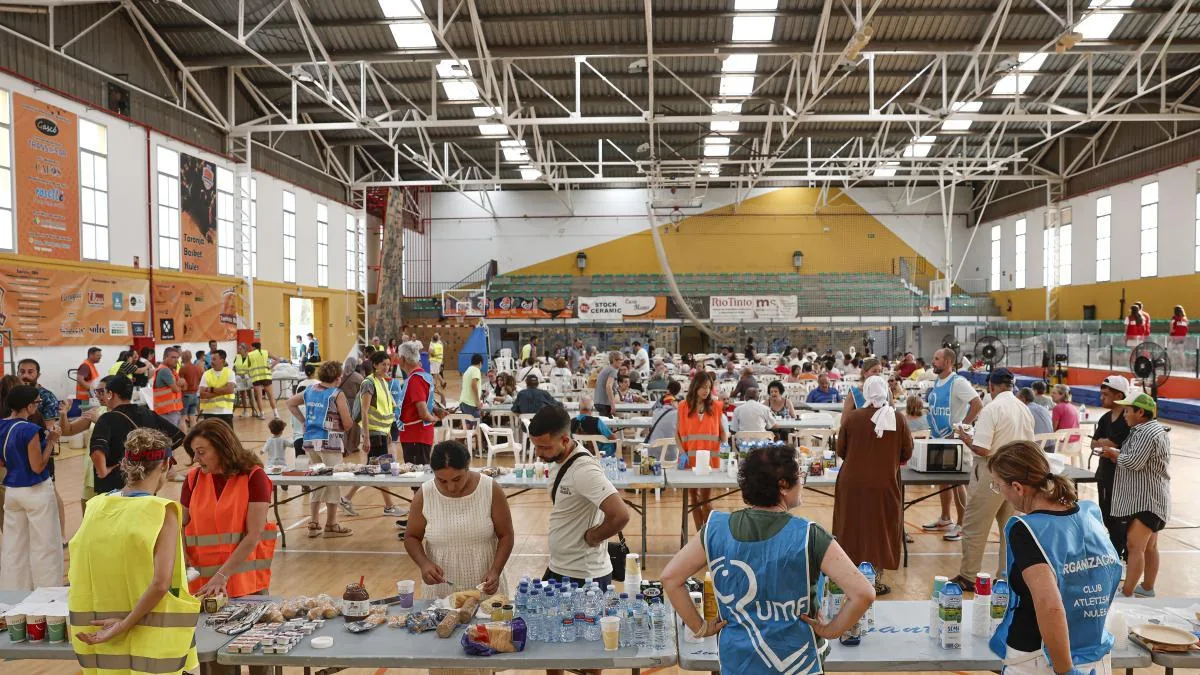
The extraordinary benefit for workers affected by the fires approved today by the Council of Ministers can be collected for four months, does not require a prior contribution period, and does not consume future benefits. In addition, the aid also extends to the families of those affected. These are the characteristics of this specific aid for those affected by the fires that are ravaging Spanish territory these days, especially Madrid, Toledo, and Ávila. These are measures for salaried workers, with similar ones for the self-employed, to whom it will be applied through cessation of activity, detailed in the royal decree law accessed by “La Vanguardia.”
Read more Sánchez: “More than 170,000 hectares have already burned and half of the summer is still ahead”
Yesterday, the Ministry of Labor already outlined the general lines of this new benefit, but after a night of negotiations, the final details were closed. The aid is intended to cover gaps in current labor legislation, which, while protecting in case the workplace is affected, as in the case of ERTEs due to force majeure, does not do so or only partially in the particular situation currently being experienced. Under the current circumstances, the workplace may be intact, but the employee has lost their home or has been evacuated and is in a provisional situation. This is where this benefit is directed.
Thus, the regulation specifies who can access the aid. They are those who cannot access their home due to evacuations or restrictions established by authorities and those who must carry out essential tasks of cleaning, moving, recovering belongings, or rebuilding the home. It also includes those who need to carry out administrative procedures in person arising from the emergency and, significantly, also those who must attend to caregiving responsibilities for family members affected by the fires.
In this last case, the royal decree law specifies that those who have “care duties arising from the fires regarding the spouse, domestic partner, or relative up to the second degree by consanguinity or affinity, including the consanguineous relative of the domestic partner, as well as any other person different from the above who lived with the worker in the same home” may access the benefit.
To facilitate access to the benefit, a very specific regime has been given: it does not require any minimum contribution period, equals 70% of the regulatory base, and does not consume accumulated contributions for future unemployment benefits. It is a benefit that those affected can maintain for a maximum period of four months.
Read more Sánchez reviews the political course
On the other hand, the decree incorporates extra guarantees to avoid harm to the worker. Specifically, any employer retaliation for exercising these rights will be considered null, according to sources from Labor. An extension of bereavement leave is also added, which is extended up to five working days after the funeral, both for salaried workers and cooperative members.
These measures apply retroactively from June 23 and will continue to apply as long as the circumstances that justify them persist, even if the fires have been extinguished. The application is temporary, for these fires. Although Labor wants to try to make it a structural, permanent measure, this is not the case for now. This would be left for a later negotiation.
In the case of the self-employed, the royal decree law specifies that they may apply for the cessation of activity benefit without needing to prove the existence of force majeure. The time during which cessation of activity benefits are received will not count towards future benefits, and the benefit may be extended until November 30, 2026. That is, a period equivalent to the four months also established for salaried workers.
Read more Fires in Spain: what do insurance policies cover and what public aid is available?