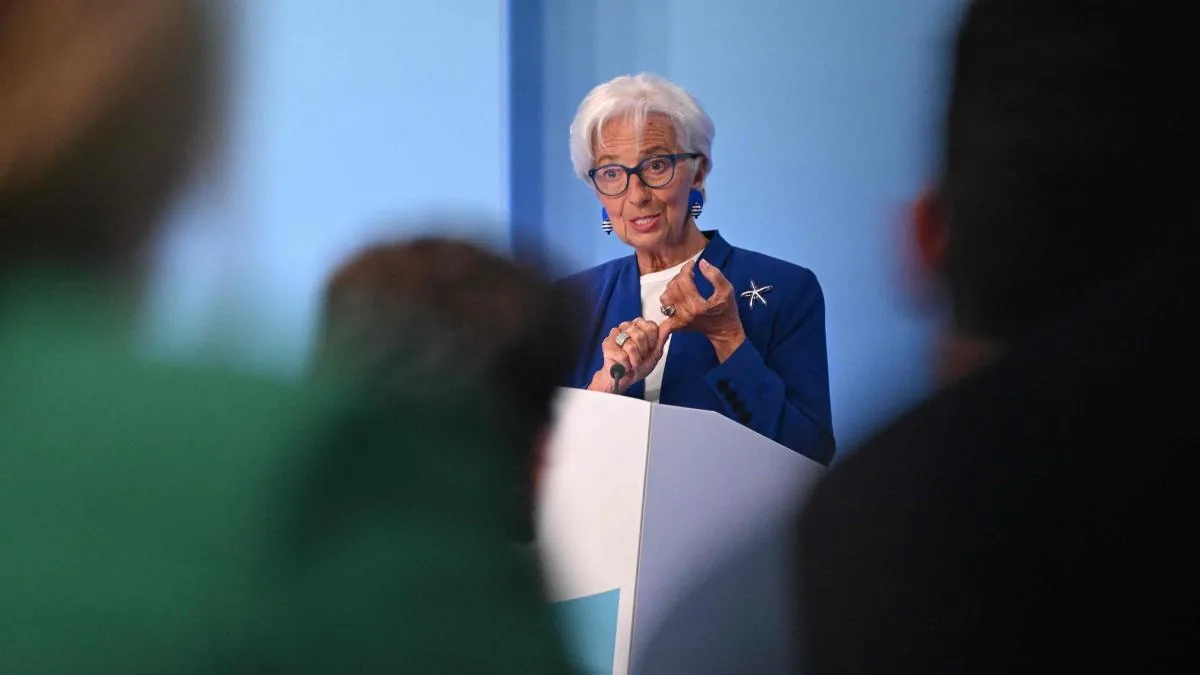
As expected, the European Central Bank (ECB) today Thursday kept interest rates at 2.5%, with an eye on the escalating conflict in the Middle East and the impact it may have on inflation.
June data points to a decrease in inflation, but the Iran war has reignited
The problem for the institution chaired by Christine Lagarde is the temporal measurement of the effects. After the previous truce announced a month ago between the US and Trump and the partial reopening of the Strait of Hormuz, there was a respite in price escalation, allowing eurozone inflation to fall to 2.8% in June and the underlying rate to recede to 2.4%, once again approaching the 2% target set by the European supervisor.
In September, a potential hike from the current 2.5% cannot be ruled out
However, this statistic reflects conditions that have changed in recent days, following new bombings and a rebound in oil prices in international markets, with Brent once again near the $100 barrier. Faced with these unknowns, the ECB has chosen to wait and see how the situation clears up after the holidays.
“Uncertainty remains high and the inflationary impact of the energy shock has not yet fully materialized. Therefore, the Governing Council is closely monitoring the intensity and duration of the shock, as well as its indirect and second-round effects,” the statement reads.
“The current rebound in inflation is mainly due to supply factors, such as geopolitical tensions in the Middle East and rising energy costs, so the ECB must avoid an overly aggressive response that could harm economic growth,” noted Natixis CIB analysts, who point to September, when macroeconomic forecasts will be updated, as a key moment for decision-making, in one direction or the other. A prolongation of the conflict in the Middle East could reignite inflationary pressures and reinforce a more restrictive bias on the part of the central bank.
Read more Imaz, “very concerned” about diesel and kerosene supply problems in the coming months in Europe
“Although inflation has temporarily moderated, the market continues to anticipate a scenario of elevated prices for longer,” warned Kevin Thozet, a member of Carmignac’s Investment Committee. From Ebury, they acknowledge that the scenario for the ECB is particularly uncomfortable. “If geopolitical pressure persists and continues to drive energy prices, a rate hike in September cannot be ruled out,” they believe.
Aside from monetary policy decisions, shadows loom over this meeting regarding Christine Lagarde’s succession. The Frenchwoman formally ends her term in October 2027. But rumors of a possible early departure are becoming increasingly persistent, to allow France to have influence over future candidacies for the highest seat in Frankfurt, before presidential elections are held in the Gallic country (April), in which Marine Le Pen leads the polls.
In recent days, voices have once again strongly suggested that the former Governor of the Bank of Spain and current General Manager of the Bank for International Settlements, Pablo Hernández de Cos, is among the favorites. The Spanish Executive has not officially proposed his name, but after Luis De Guindos’ departure from the vice-presidency, Spain aspires to have a representative in the ECB. Among the alternatives, the Dutchman Klaus Knot is also mentioned, publicly supported by Lagarde herself (“he has the intellect, resilience, and ability to connect with others”)”.