The French Parliament definitively approved on Tuesday the law prohibiting access to social media for minors under 15, a measure that makes France the first country in Europe to establish a general restriction of this type and which the Government aims to apply from the start of the next school year.
Read more How the ‘explosive’ diarrhea outbreak grows and evades U.S. health authorities
“France is paving the way in Europe to protect our children and teenagers. We are moving forward,” declared French President Emmanuel Macron in a video on his social media shortly after the definitive approval of the text, in which he celebrated the Parliament’s decision and recalled that it was one of his commitments, which sees the light in the final stretch of his second and last term.
“I committed to it and now it has been approved: social media will be prohibited for minors under 15 from the start of the school year,” he wrote when sharing the video on the social network X.
Some portals, such as online encyclopedias, are excluded from the prohibition
The head of state thanked the support of the parliamentarians and noted that it is now up to the Constitutional Council to rule on the law before its application. “Afterwards, it will be time to act to make this measure effective and protect our children online,” he added.
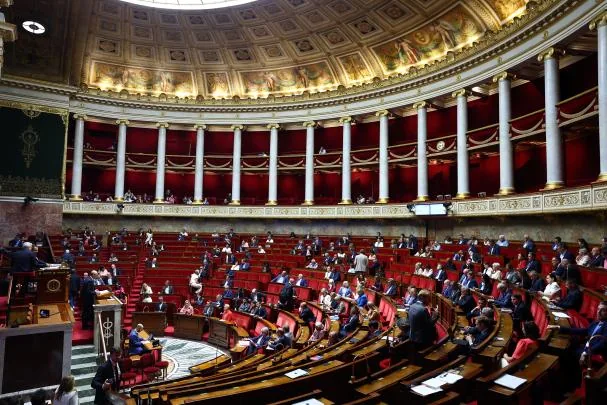
The text received the support of the Senate, which approved it by 243 votes in favor and two against, and hours later it was ratified by the National Assembly, with 279 in favor and 81 against, culminating several months of parliamentary processing.

The norm establishes that minors under 15 years of age will not be able to access social media services offered by digital platforms.
Certain portals are excluded from the prohibition, such as online encyclopedias like Wikipedia, as well as free software development and distribution platforms or open-source educational projects.
Read more Obesity War: Novo Nordisk (Ozempic) sues Eli Lilly for misleading advertising
The law does not establish a specific age verification system, so it will be up to platforms, such as Facebook or TikTok, to implement mechanisms to check the age of their users.
The text also extends the prohibition of mobile phone use to high schools
The text also extends the prohibition of mobile phone use to high schools, extending a restriction that until now applied to primary and secondary schools, although centers may consider exceptions in their internal regulations.
The Government expects the prohibition to come into force on September 1 for new accounts created on the affected platforms. For existing accounts, the measure will begin to apply after a transitional period of four months, starting on January 1, 2027.
The Minister Delegate for Digital Affairs, Anne Le Hénanff, stated before the Senate that France “is a pioneer in Europe” by establishing a digital majority of 15 years and assured that a coalition of fifteen European countries, including Spain, is studying incorporating similar regulation into their national legislations.
Australia was the first country in the world to approve a similar restriction, but in its case for minors under 16.
Read more Only six Spaniards are vying for a spot in the World Cup’s best XI, according to FIFA