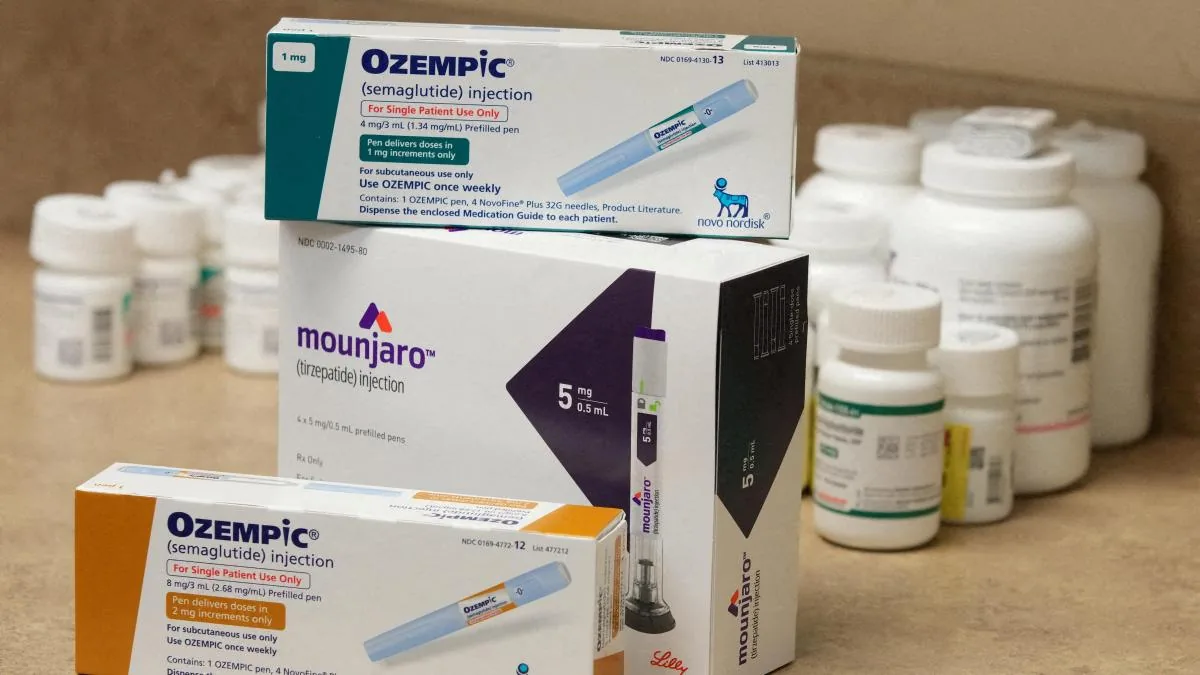
The battle to dominate the global market for obesity drugs has moved from laboratories to courts. Danish pharmaceutical company Novo Nordisk has sued Eli Lilly in the US for alleged misleading advertising, considering that its promotional campaigns present “false and materially misleading” comparisons between the treatments of both companies, to make it appear that its product yielded better results.
Read more Only six Spaniards are vying for a spot in the World Cup’s best XI, according to FIFA
The lawsuit, filed in the District Court of New Jersey, alleges that Lilly compared in its advertisements the results of the highest authorized doses of its drugs Zepbound, for obesity, and Mounjaro, for type 2 diabetes, with older, lower-dose versions of Wegovy and Ozempic, Novo Nordisk’s equivalent treatments. According to the Danish company, this comparison omits its recently approved new higher-dose formats, which offer better clinical results.
Novo Nordisk requests the withdrawal of advertising, a rectification campaign, and compensation for damages
“The advertisements are malicious and deceptively false, as Lilly knowingly cites outdated clinical trials comparing the highest doses of Lilly’s drugs with lower doses of Novo Nordisk’s drugs,” the pharmaceutical company states in its lawsuit. The United States is one of the few countries that allow pharmaceutical companies to promote drugs directly to consumers. Drug manufacturers spend millions of dollars each year on television advertising.
Novo Nordisk requests that the court compel its competitor to immediately withdraw the advertising campaigns and launch a rectification campaign. It also claims compensation for the damages suffered, including the profits that Eli Lilly would have obtained thanks to these advertisements.
The dispute comes after Novo sent a formal letter in April demanding the cessation of these campaigns. According to the company, Lilly did not respond, did not withdraw the advertisements, and only added a warning that it considers insufficient. The Danish pharmaceutical company assures that the campaign has reached hundreds of millions of American consumers.
Read more They arrest the alleged hitman who shot and killed a minor in Barcelona’s Pegaso park
The lawsuit comes amidst a race to lead one of the fastest-growing pharmaceutical markets in the world. Novo Nordisk was the first to commercialize a specific obesity treatment with Wegovy, but Eli Lilly managed to overtake it in sales thanks to the success of Zepbound. Both companies compete for a business that, according to Bloomberg estimates, will exceed 120 billion dollars annually before the end of the decade, about 105 billion euros.
The global market for obesity treatments could reach 120 billion dollars annually before 2030
“As new and more effective treatment options become available, people deserve accurate information that reflects the latest scientific evidence and helps them make informed decisions about their healthcare,” said John Kuckelman, senior vice president and general counsel for Novo Nordisk. So far, Eli Lilly has not publicly responded to the accusations contained in the lawsuit.
Weight-loss drugs are at a point of high relevance and in the spotlight of a social debate. Rebecca Diamond, an American economist and professor at Harvard University, states after recent research on the links of these drugs with the labor market, that for unemployed women, the chances of getting a job increase by 26.9 percentage points after a year and a half of treatment with a drug from this segment.