









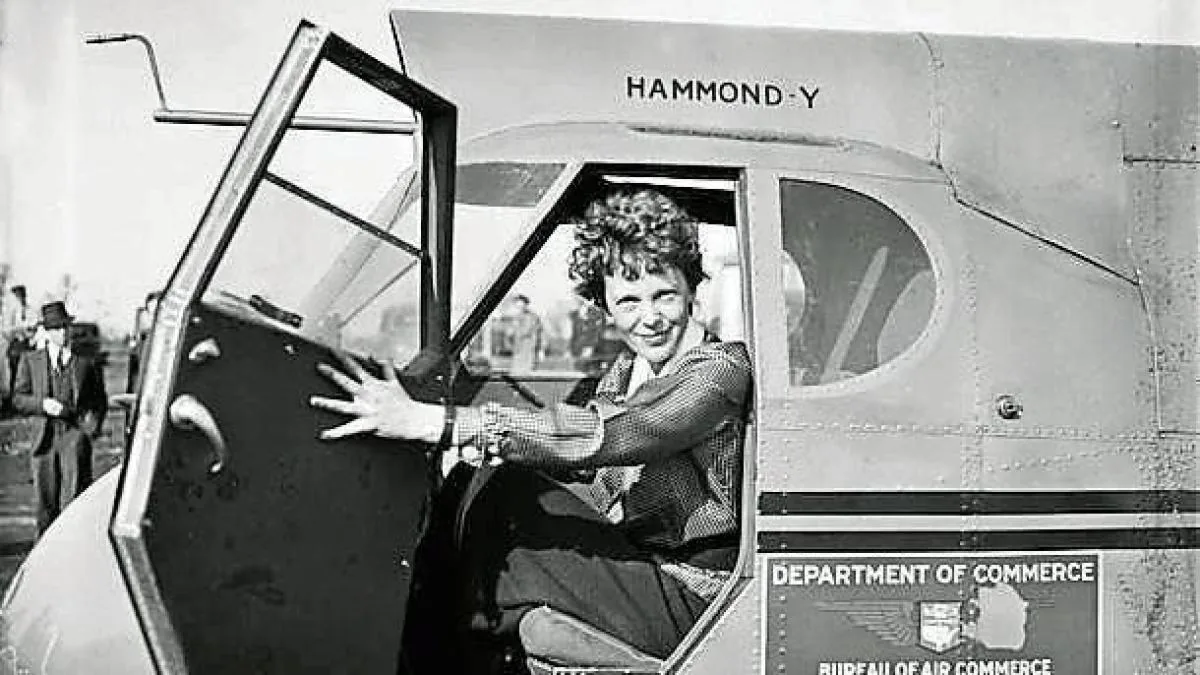
Her disappearance made her legend greater. She was an aviator who never declined, unlike pilot Charles Lindbergh, consumed by his far-right drift, or actor James Dean, turned into a myth for dying young with only three films made. Amelia Earhart built her myth and made good use of her success in life.
Read more Tricky (★★★★✩), a very loud silence and other albums of the week
This month marks another anniversary of her disappearance over the Pacific, on July 2, 1937, when she was trying to become the first woman to fly around the world as a pilot. The U.S. military mounted the largest search for a lost plane up to that time: a 16-day operation, nine ships, 66 aircraft, and nearly 4,000 personnel, finding nothing. George Putnam, her husband and publisher, continued funding her out of his own pocket until October, and it was not until 1939 that a Los Angeles court declared her legally dead.
She designed clothes and suitcases that were still sold in the nineties and are now collector’s items
Since then, her story has lived shrouded in mystery: theories of espionage, deserted islands where she might have survived, or ghost radio messages in which her voice was apparently heard. These are more or less far-fetched theories, although reducing her life to that enigma is to focus on the least interesting part.
Earhart was not just a record-breaking aviator: she was a true influencer long before the word existed, with a commercial instinct we would recognize immediately today. Amelia did not come to aviation out of early vocation: as a young woman she was a volunteer nurse in Toronto, a pre-med student at Columbia, and a social worker in Boston. Her interest in flying came almost by chance, first as a passenger in 1920 and then as a student of instructor Neta Snook. That erratic path forged a person who reinvented herself several times until becoming a pilot.
Her rise to fame was a stroke of luck well taken advantage of: in 1928 she was asked if she wanted to be the first woman to cross the Atlantic by plane, even as a passenger, without touching the controls. She accepted, and that accumulation of “firsts” (the Atlantic in 1928, solo in 1932, the Pacific in 1935, and later being the first female aviator to pilot an autogyro) was the raw material of her personal brand.
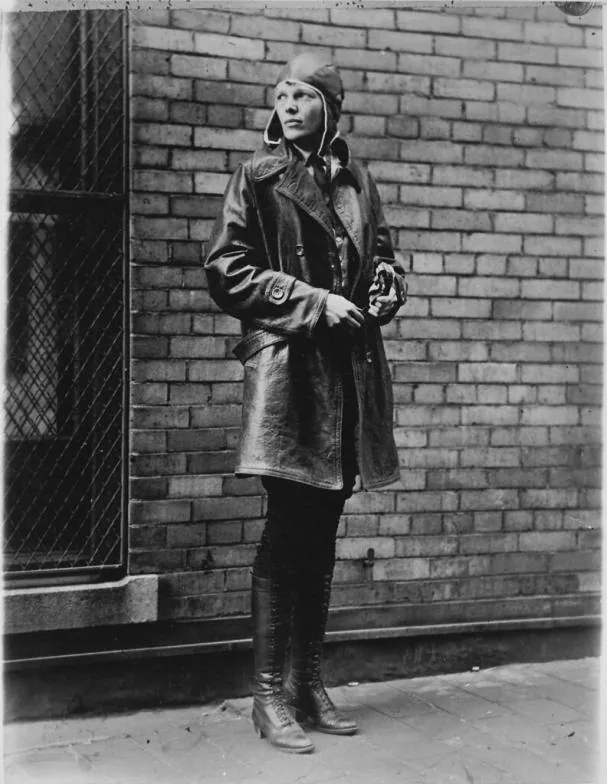
Amelia soon understood that her image, that of a woman with no limits other than technical ones, was an asset. She designed her own line of “functional” women’s clothing and modeled her designs herself in campaigns. In 1934 she opened her own fashion house inside the Macy’s department store; it worked well at first, although it closed before the year ended, proof that her ambition to diversify beyond aviation had its ups and downs. She also launched a line of plywood suitcases that sold until the nineties and are now collector’s items.
Read more The influencer Andrew Tate and his brother arrested in the United States
She wrote books about her flights, gave lectures, collaborated with Cosmopolitan and was a guest professor at Purdue, where she advised students. That campus later funded the Lockheed Electra twin-engine plane with which she would undertake her world tour.
Her disappearance, at age 40, is still a mystery
The aviator was not just a pilot who also sold things, but a woman who built a personal brand around a very specific message: ‘nothing is impossible’ in a practically male sector. That message was not just symbolic. Earhart campaigned for sexual and reproductive freedom, supported the presence of women in politics and business, and in 1929 founded the Ninety-Nines, the first organization of women pilots, of which she was the first president.
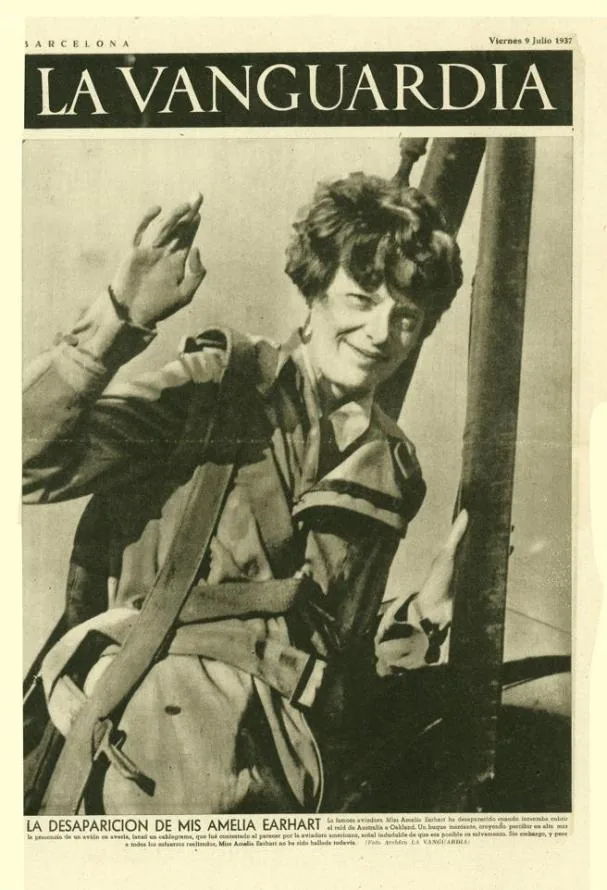
There is a difference with the two male myths she is usually compared to. Lindbergh ended up more associated with his closeness to ‘America First’ and Nazi Germany than with the feat of his solo transatlantic flight in 1927: his legend rusted in life. James Dean is the myth built the other way around: he died at 24, with only three films. His legend exists because time never wore it down, although dying young also limited it: we will never know what he would have done with thirty more years.
Earhart does not fit either mold: she did not live long enough for her legacy to deteriorate, like Lindbergh, but she also did not disappear as an incomplete promise, like Dean. When she was lost over the Pacific, on her second and final attempt to fly around the world, she was already an established figure: records, business, activism, and a consolidated personal discourse over almost a decade. Her last stretch was like a thriller: she had already completed 22,000 miles of flight, with her navigator Fred Noonan, when, after taking off from New Guinea heading to the tiny Howland Island, bad weather and radio problems made her lose contact with Itasca, the last ship she spoke to on July 2, 1937. Almost ninety years later, the mystery remains and some still search for clues of the plane of the first woman who understood that fame, well managed, could be a tool for change.