Christian had been calling himself Antonio for 20 years. Specifically, Antonio Iovanovic. He obtained a Croatian passport and made up that his family had died in the Balkan war to avoid giving explanations every time someone asked him about his origins.
Read more The creative Catalan Júlia Mas flourishes in Gucci’s garden
At 19, he arrived in Spain with his uncles and settled with them in Segur de Calafell. It was 2003 and, during the early days, he tried to go unnoticed. He didn’t talk to anyone and rarely left the family home, which was heavily secured with security cameras that his uncle had installed to detect any strange movement.
The Croatian national team visited his hotel, and the fugitive, who pretended to be from that country, said he didn’t like football
As the danger faded, he decided to build a new life away from his old world. He had no education, but he was hardworking. He started as a hotel bellboy, carrying luggage and politely greeting guests. As his Spanish improved, he moved up to the reception desk.
“When we found out who he really was, that’s when I started to realize that some of the things he did didn’t make sense,” says a colleague who worked with Antonio for five years and never suspected him. He was a man of few words, shy and discreet. Shy – or at least that’s what he said – whenever someone wanted to take a photo of him, even the typical ones with coworkers, he refused. “He always said he didn’t like photos and would step aside,” the colleague recalls.
One of the hotels he worked at was near the airport, the Renaissance Barcelona Airport Hotel. There he met his wife, who worked as a waitress. They got married, had two children, and settled in El Prat, her hometown, without the wife ever knowing who her husband really was. Maintaining the lie was not easy, and over the years he had to overcome more than one scare.
One day, the Croatian national football team stayed at his hotel, playing a World Cup qualifying match against Andorra, with Luka Modrić as the star. The employees were eager to take photos with the Balkan team stars, except Antonio, who didn’t even flinch.
“Come on, Antonio, say something, you’re Croatian! And go take a photo with them, please,” his coworkers encouraged him. “I don’t like football,” he replied sharply while hiding in the back room.
Read more Advances in oncology: how cancer treatment is changing at Sanitas CIMA
Until, in 2023, a review of an old case by the Mossos d’Esquadra – a process that sometimes allows reopening unsolved crimes – began to stir the past. They had on the table the murder, committed twenty years earlier, of a prostitute who was found in a ditch along the BV-6001 road in Malgrat de Mar. In November 2003, a local farmer found the lifeless body of the young woman, known to this day as “the woman of the road” because she has never been identified. In fact, the photograph of this woman is part of Identify Me, an international Interpol campaign to close cases of women found dead and unidentified in six European countries, aiming for someone to recognize them and give them a name and surname.
The Mossos reexamined the movements of the murdered woman and realized they had never identified the security guard of the brothel she left. Pulling on that thread, they saw his name was Valeri Ostas, he was Romanian, and had multiple criminal records.
Although he had nothing to do with the woman’s murder, French authorities were seeking him for another murder committed months earlier, in February 2003. The Mossos discovered he had taken refuge in Catalonia after killing a young man along with his nephew. The two killers fled to Segur de Calafell and pretended to be Croatian citizens. The nephew called himself Antonio, but his real name was Christian Rad. French justice was looking for them for the brutal murder of Philippe Charuel, a man who had bothered two prostitutes outside a venue in Gondreville, near Nancy. They kidnapped him, beat him, and attacked him with a Japanese saber. Then they abandoned the body on the side of a road. The autopsy revealed the victim received 23 stab wounds.
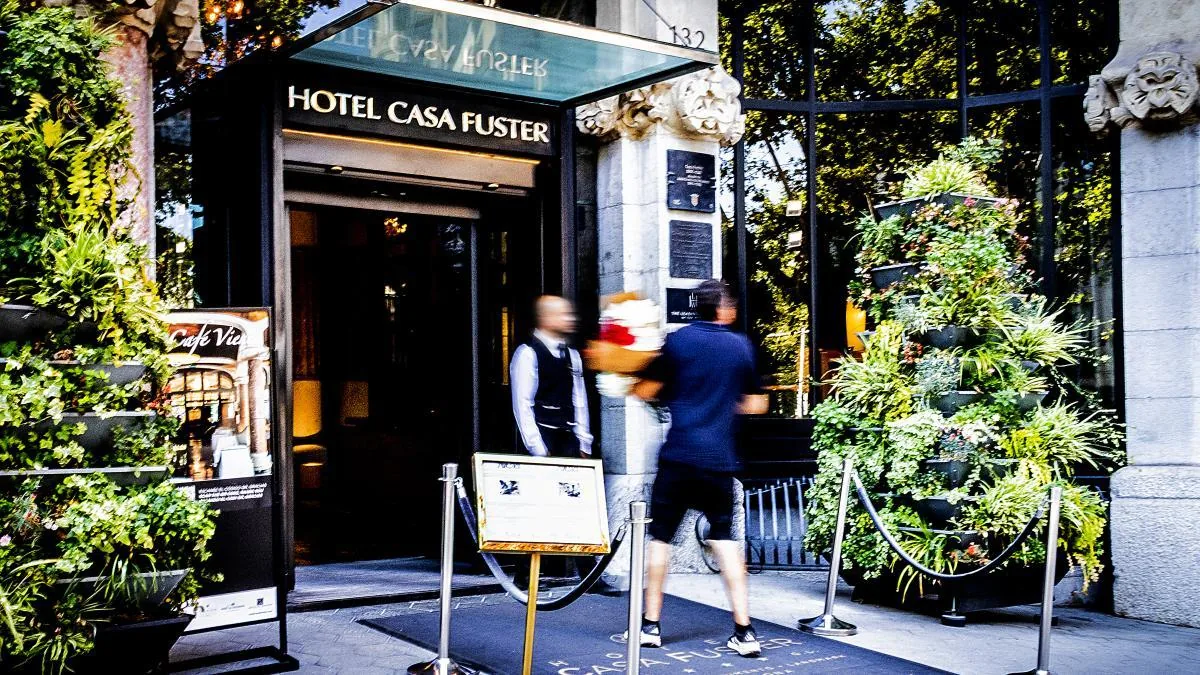
When arrested, Christian Rad was already Antonio, a new man, far from criminality. He came from a broken Romanian family and was raised by his uncle, a fearsome pimp. At the time of his arrest, Rad was the concierge of Casa Fuster. His colleagues at the luxury hotel on Passeig de Gràcia never suspected that the Croatian who refused to be photographed had been a pimp and accomplice to a crime.
In 2025, the criminal court of Meurthe-et-Moselle sentenced Rad – formerly Antonio – to 10 years in prison, and his uncle to 25, considering him the executor of the crime. During the trial, Rad admitted to having hit the victim “with his hands,” in the presence of the two women and his uncle. “I saw a lot of violence, it was also a shock for me; I thought a lot about Philippe Charuel’s family all night,” he declared.
The day of his arrest, when the Mossos entered his home in El Prat, he confessed: “Finally, I will be able to sleep peacefully.”
Read more U.S. attacks Iranian Revolutionary Guard in retaliation for the death of two soldiers in Jordan