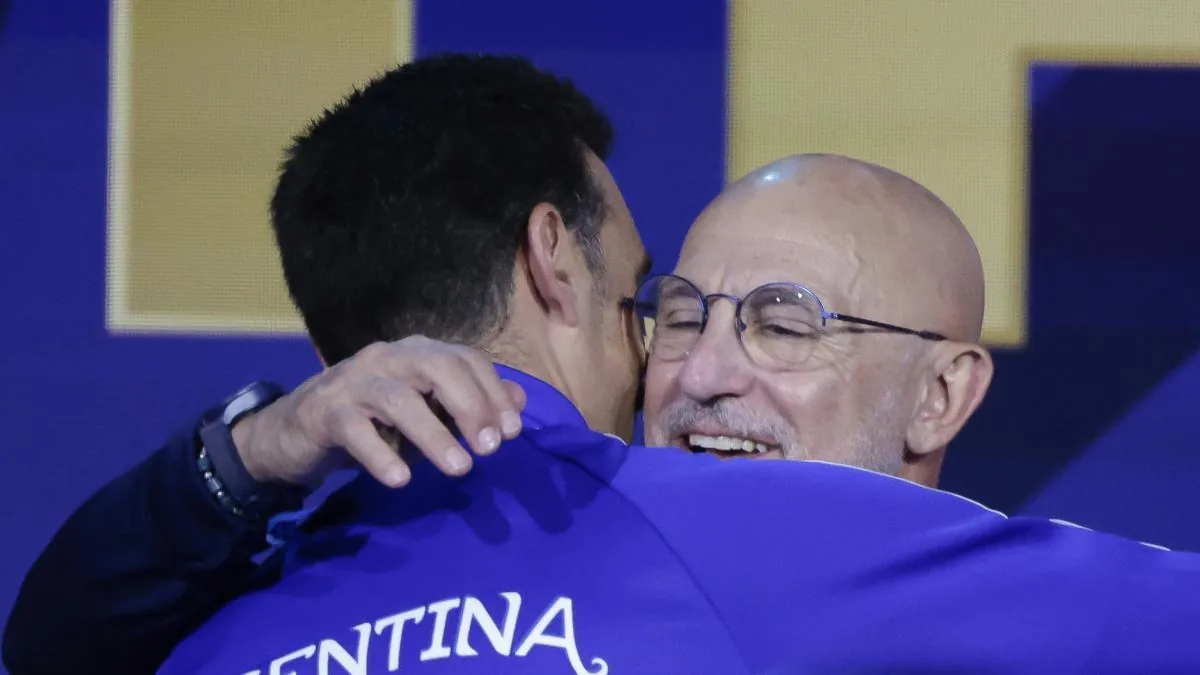
An unprecedented final will decide the world champion today. Argentina and Spain face off, two nations passionate about football that speak the same language and have maintained for decades a system of interconnected vessels unparalleled in the international scene. The mastery of Di Stéfano, Kempes, Maradona, and Messi, the great Argentine patriarchs, left an indelible mark on our football, where that legacy is admired. And perhaps nowhere else has the transformative Spanish model fascinated as much as in Argentina, where the Barça of Cruyff was soon idealized in its circles and, years later, that of Pep Guardiola, undisputed references of the elegant, efficient, and very unique approach that has characterized the Spanish national team in the last 20 years.
Read more How the economy defines who wins the World Cup
That relationship, however, has barely materialized in 94 years of World Cup history. Spain and Argentina have only faced each other once, 60 years ago, in the 1966 England World Cup, with some similarity to the current one. Two years earlier, the Spanish national team won the European Championship, of which it is now the reigning champion. It was an excellent team –Iribar, Amancio, Luis Suárez, Peiró, Fusté…– but played poorly. In the first phase, it lost two goals to one against a credible edition of Argentina, led by the phenomenal Ermindo Onega, accompanied by Perfumo, Marzolini, Rattin, Pinino Más, and the gunner Luis Artime.
Argentina and Spain maintain an unparalleled interrelation
Neither team had won the World Cup until then. They were considered teams that devalued themselves in the competition. Decades later, it is impossible to attribute that criticism to them. Argentina has won three World Cups (1978, 1986, and 2022), was runner-up in 1990 and 2014, and will again contest the final. Spain won the 2010 World Cup and at the Met Stadium in New Jersey will seek to repeat the title and complete four exceptional years. It has not lost an official match since March 28, 2023, the date of the defeat against Scotland, in Luis de la Fuente’s second match in charge of the national team. It is a streak of 37 matches, including the victory in Euro 2024 and an edition of the Nations League.
If the two teams were preceded by countless links, the final multiplies them. The multiplier is Leo Messi, whose impact on the World Cups has been vertical: in each one he has improved on the previous. At 35, he won Qatar 2022; at 39, he has received more praise than ever. That is not normal at those ages, but what is normal with Messi? Far behind are the days when Barça fans and, in general, Spanish football worshipped him as a genius among geniuses. Days when Messi had to make a titanic effort of Argentineness –he refused to play for the Spanish national team– to deserve the affection he was slow to receive.
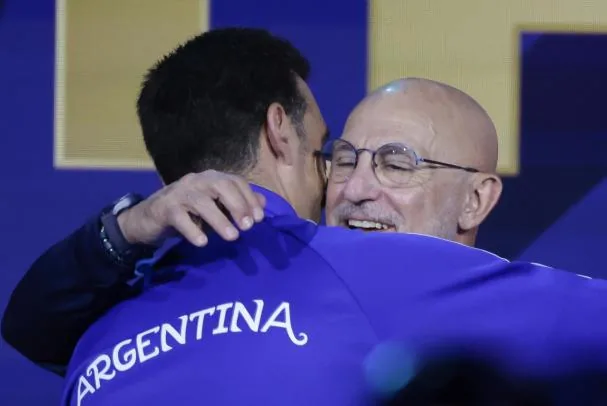
“When Messi boards the plane in Barcelona, his brother lands in Buenos Aires,” was one of the usual jabs in the form of a bad joke dedicated to him by a good sector of the Argentine press. Now he has turned the Gardel-Evita-Maradona trilogy into a tetralogy. Messi is the fourth vertex. Taking advantage of him is a primary matter for the Argentine national team, to which Spain has responded in this World Cup with an unparalleled exploitation of the collective idea of football.
Read more Leo Messi: the day of the goat
At this zenith moment of the star system – never before in this World Cup have stars been talked about so much, as corresponds with American culture – Spain has been undervalued due to the alleged absence of stars. Even Lamine Yamal, who has been decisive in the team’s journey, has been a victim of mistrust and criticism, incomprehensible in view of his perfect fit in the Cartesian Spanish model.
While the foam of praise grew in other World Cup chancelleries, Spain flew under the radar until it devoured France with one of the most subtle displays remembered. It was not the first time. It had won seven of the previous ten matches, including the last Euro semifinal and the two previous Nations League matches.
Five days before the final, the world discovered that the Spanish national team is a perfectly oiled machine that, behind its apparent delicacy, hides the firmness of Valyrian steel, highlighted by its coach, Luis de la Fuente, with the impeccable direction of an exceptional group of footballers, stars who long ago set aside ego problems in favor of well-done work.