









The least profitable airports and routes are becoming the first victims of the tensions airlines are facing these days. Despite having collectively increased scheduled seats for this summer by 6%, the companies themselves plan to cut capacity on connections where they obtain low margins, in search of efficiency amidst the kerosene crisis, according to sector sources.
Read more The year starts with the loss of 170,000 employed and the addition of 231,000 unemployed
Read also
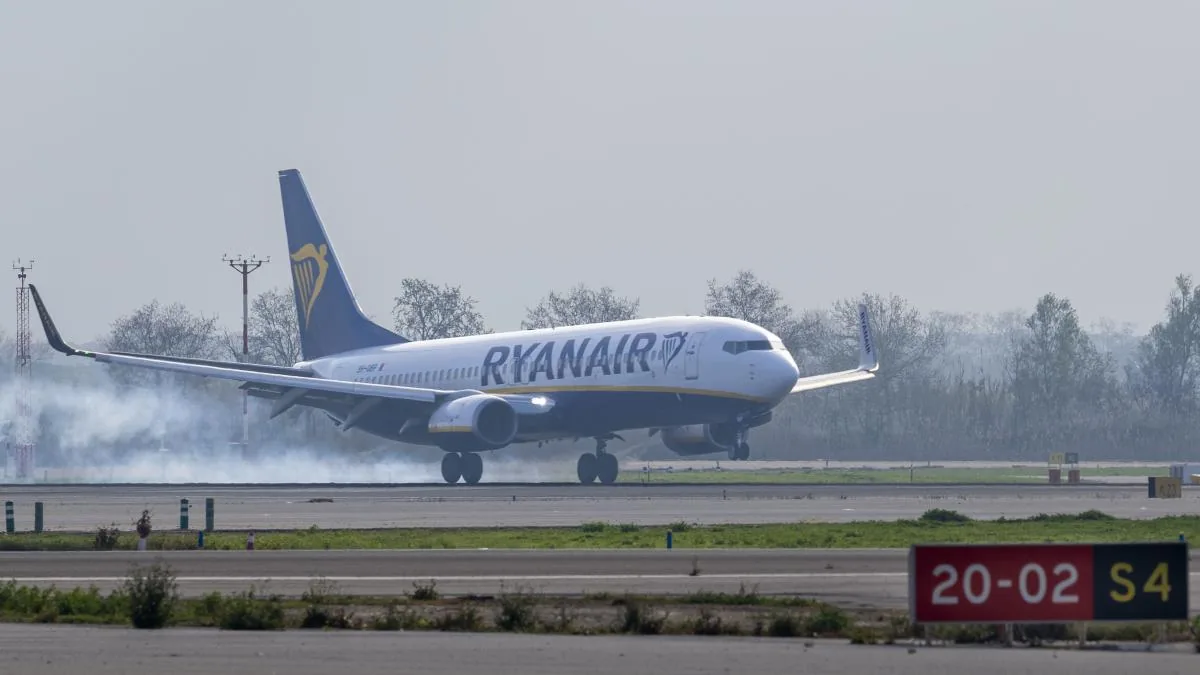
The main operator in Spain, Ryanair, announced yesterday an additional cut of 1.2 million seats at regional airports, where it has already reduced its offer by three million seats in just a year and a half. The Irish airline attributes the decision to Aena’s “monopoly” fees, as its CEO, Eddie Wilson, stated yesterday. But at the same time, it acknowledges the pressure that fuel costs generate on prices and demand. It has already reduced its operations to zero in Asturias, Valladolid, Jerez, Tenerife North, and Vigo, while significantly cutting them in Santiago, Zaragoza, and Santander. It has done so somewhat less in Girona, by 7%, the first Catalan airport to suffer Ryanair’s cuts, as reported by La Vanguardia .
Companies identify routes where cuts could be applied first
Sector sources explain that the current uncertainty is also causing a slowdown in capacity on less profitable routes for other airlines. In Vueling’s case, the company has frozen the increase in routes on some specific connections due to the uncertain situation regarding jet fuel prices. This has happened, for example, with the route connecting Barcelona and Istanbul. The low cost based in El Prat had planned to increase frequencies to the Turkish city in July, but for now, it has decided to maintain operations.
In Europe, Lufthansa already announced last week the cancellation of 20,000 flights to use fuel on routes with higher margins.
Read also
Iberia and Air Europa indicate that planned operations are being maintained and that cutting capacity is not in their plans for now, not even on previously scheduled increases. However, sector sources point out that companies have identified the routes on which they could first apply cuts to defend the most profitable ones.
Read more The PNV will abstain on the rental decree and further complicates its validation
The ALA airline association acknowledges that the distribution of the offer this summer will be “heterogeneous” and that activity will concentrate on the major hubs of Madrid and Barcelona, with increases of 8% and 7.6%, respectively. Another of the busiest airports, Alicante, expects to increase its offer by 14%, while capacity losses will occur in smaller ones.
In response to the rise in kerosene prices, some airports, such as Schiphol in Amsterdam, have already started temporarily lowering fees by 10%.
It is a measure that, despite the discontent with the increases defended by Aena, airlines are not directly proposing in Spain. Yesterday, Ryanair’s CEO expressed more support for a “structural” fee reduction. He also praised the country’s refining capacity and assured that, once the capacity cut is scheduled, Ryanair does not plan to address cancellations on already offered flights. “I give no guarantees, the only sure thing is that fares are going up,” he added.
Read more Conspiracy of former prime ministers in Israel to defeat Netanyahu