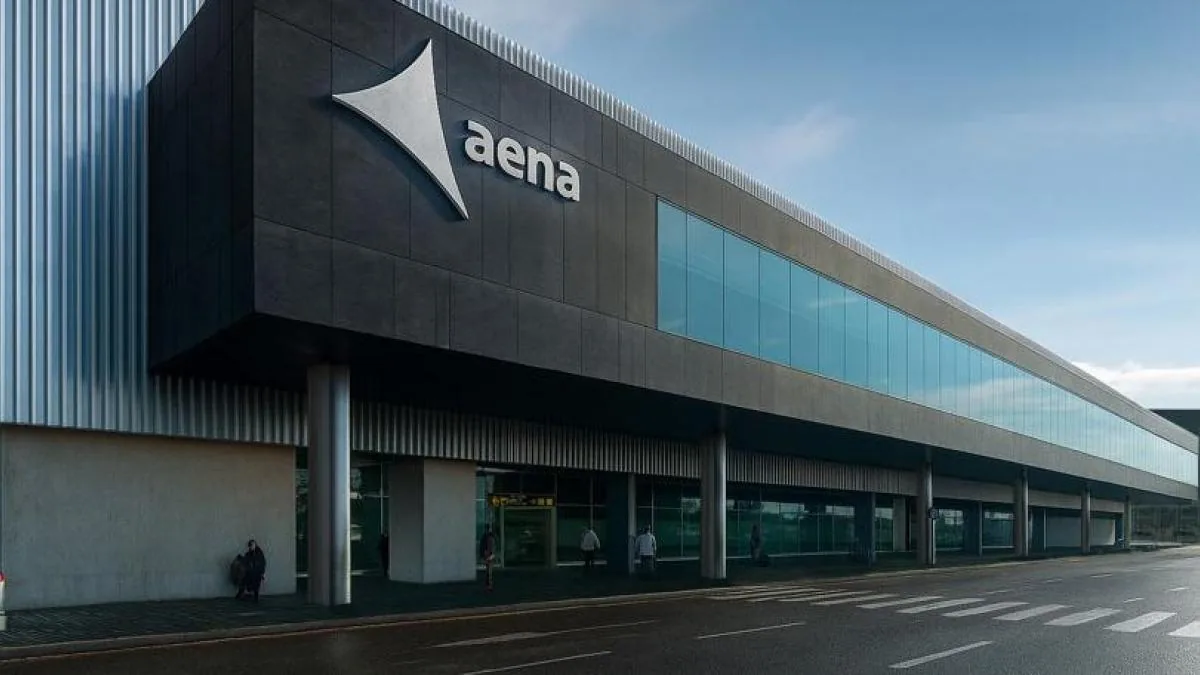
Aena has already started the long-awaited works on Terminal 2 of Barcelona airport. For now, these are purely technical works, invisible to the passenger, although in the coming months the first changes of a renovation that will be carried out in two phases and that Aena expects to have fully completed between 2031 and 2032 will begin to be noticed.
Read more End of the Japanese princesses’ elopement: imperial law reformed to guarantee succession
Seventeen years after T1 stole the spotlight, Barcelona-El Prat’s Terminal 2 will finally have its necessary comprehensive renovation. The airport director, Eva Valenzuela, presented this Friday the action plan for the oldest terminal of the complex, which since 2009 has been relying on maintenance and occasional investments without undergoing a thorough remodeling.
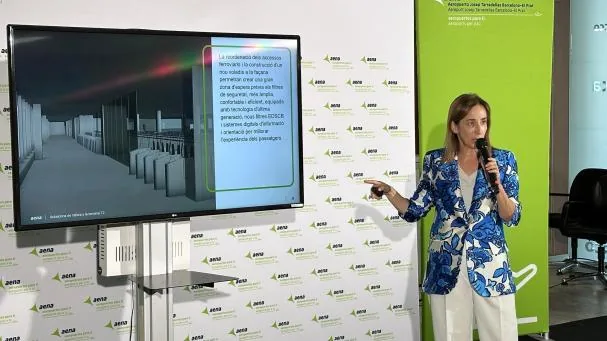
“The idea is to have a completely new terminal when the works are finished,” acknowledged Valenzuela, a Mallorcan aeronautical engineer who has been in charge of the airport since spring 2023. “The works we will carry out in the coming years will be the most important and profound to be done in the building since the times when the Olympic Games were being prepared.”
What Aena pursues, beyond updating the facilities, is to recover the unity of a complex that has grown in pieces, at the pace of traffic and the needs of each era, until the opening of T1 freed it from being the only air gateway to the city and, in the process, also eclipsed it. Because that is what happened to T2 at the beginning of the century: the new terminal took over the weight of a building that had been, for decades, the pride of the airport and the city.
Looking for easier-to-understand spaces and simplified routes
The work will focus on renewing electrical networks, air conditioning, and technical systems, as well as reorganizing interior spaces to gain operability in a terminal that today mainly hosts low-cost airlines. However, the goal goes beyond the purely technical: Aena, the facility manager, says it wants spaces that are easier to interpret, with simplified routes that eliminate the labyrinth feeling that T2 has carried since it was expanded in parts over more than half a century. The works will affect both the areas accessible to the public with passenger circulation and service areas, as well as the operational spaces on the airside and landside.
“The planned investment for all the works will be almost 154 million euros,” the director reported, who also recalled that airport activity will be fully compatible with the harmonization and coherence works of all the areas to be renovated in the building, which will recover several symbolic zones built by Ricardo Bofill’s Workshop in the late 80s and early 90s, then great novelties for air transport.
Also read
T2A, inoperative for 17 years after the opening of T1 (today only partially used for arrivals from outside the Schengen area), will recover its check-in and departures function, relieving pressure on the rest of the counters. On the airside, after security controls, the importance that La Rambla had will also be recovered, the large glazed corridor overlooking the runways and connecting all the modules: a comprehensive renovation that will reach the floor, signage, wayfinding, and furniture, giving the terminal a completely renewed look not seen since the last decade of the last century.
The renovation will also gain in intermodality, and it will do so notably. The station of the future R-Aeroport railway line and the metro stop will be integrated into the building itself, so access to the terminal will be made directly from both infrastructures, without the need for walkways or added journeys. Everything will be located in the basement of the check-in area that connects T2A and T2B, a space that underwent its last renovation in 2007.
“It was necessary to sew together all the pieces of a terminal that has grown in pieces at different times and that now handles 35% of the passengers arriving or departing from the airport,” explained Valenzuela. Passengers will also notice the renovation of the exterior facade, which will gain natural light without losing the style of the 60s: the metal carpentry of T2B, the original building, has not been touched since its inauguration in 1968.
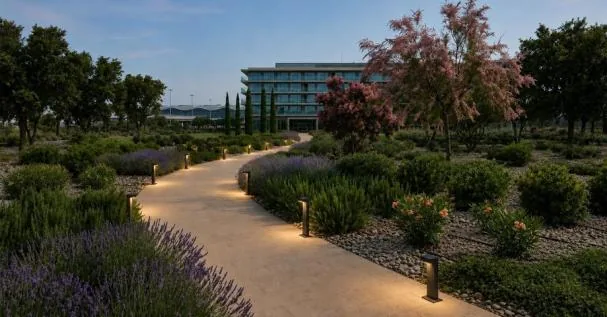
The most visible change for those arriving by car or coach may be another: the landscape transformation of the landside. Today, between the terminal building and the parking areas there are only asphalt roads, a functional space without any aesthetic vocation. Aena wants to turn that no-man’s land into a green area, conceived not as a cosmetic gesture but as a real transition between the parking lots, the future hotel, which will finally be built opposite T2A and operated by the Hyatt chain, and the large terminal building, which will thus recover part of the lost shine after the eclipse caused by the arrival of T1.
Also read
That shine also has a piece that no other terminal in the world can exhibit: the immense ceramic mural that Joan Miró installed together with Josep Artigas on its facade in 1970, an icon that has accompanied T2 for more than half a century and that distinguishes it from any other airport in the world. Aena plans to move that work to the new terminal someday, but the process itself, technical, heritage, and conservation, will take quite some time. So, paradoxically, the “new” T2 will debut renovated from top to bottom still displaying, on its landside facade, the same artwork that has seen generations of travelers pass since the building opened its doors.
The visit also coincides with the presentation this week of the 55th Air Traffic Observatory of the Barcelona Chamber of Commerce, which places El Prat as the second European airport in origin-destination traffic, only behind Heathrow, with the capacity scheduled for this summer 5.7% above that of last year. A context that partly explains the urgency of the plan: a terminal that handles more than a third of the airport’s passenger traffic cannot keep waiting.
Read more The Valencian government resolves aid for DANA victims: 80,000 euros per deceased