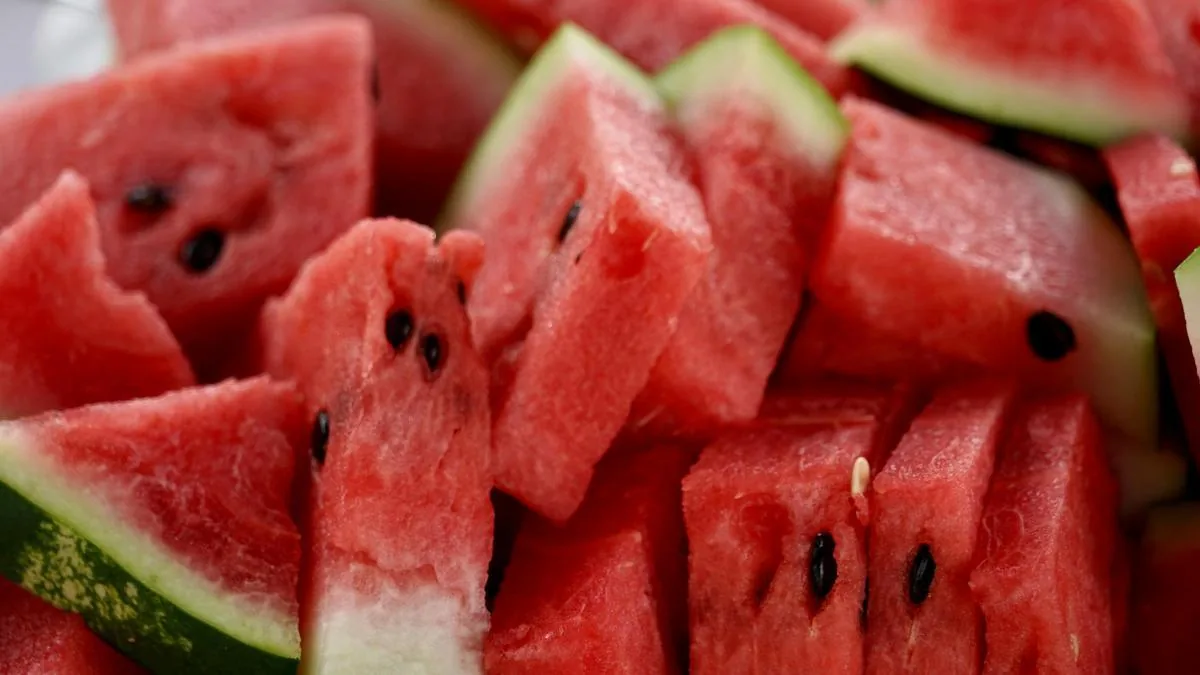
Watermelon has established itself as a must-have in homes during the summer. It is the centerpiece of shared moments at home, at the beach, or during any break of the day, whether as a traditional dessert, a healthy snack, or the star ingredient in sweet and savory recipes.
Read more What to do on summer nights in Barcelona: open-air cinema, theater, magic, or historical tours
However, although today we feel it so much ours, its journey to summer tables comes from far away. It originated in Egypt, where it began to be cultivated on the banks of the Nile River. Over time, its cultivation spread to the peoples of the Mediterranean, where its consumption quickly became popular thanks to its unmistakable texture and freshness, becoming a staple of warm and temperate climate regions.
Spain ranks among the world’s leading watermelon producers, with a local orchard ready to fill our refrigerators from June to September
Years after that first expansion, watermelon has conquered the world. Today, countries such as Spain, Italy, Turkey, Greece, China, and Japan have emerged as the main global producers. This global success reflects its consolidation as one of the most beloved fruits of the summer season, with local production adding color to our supermarkets, especially between June and September.
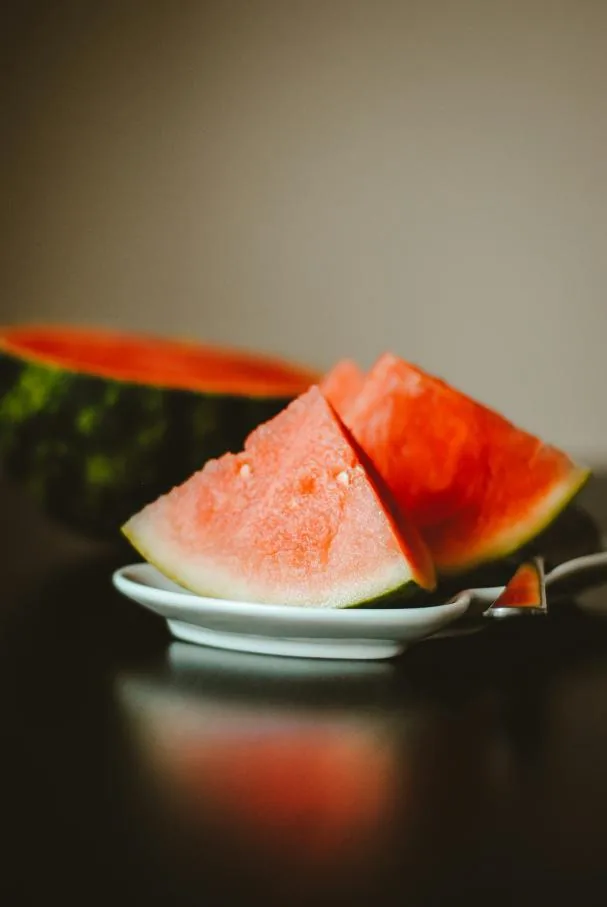
A large, juicy, and unmistakable fruit
It is impossible to go unnoticed when we go shopping. On the outside, it is protected by a hard and smooth rind, with shades ranging from dark green to mottled. Inside, its pulp surprises with its vividness — red, pink, or yellow — which usually contains its characteristic firm-textured seeds.
Although it is common to find pieces weighing between 3 and 8 kilos, some specimens can easily reach 15 kilos, making it one of the largest fruits on the market.
Of all tastes and colors
To suit all palates, there are currently more than fifty varieties of watermelon, classified according to the color of their pulp, their shape, or the presence of seeds. Among the most common are:
Seeded varieties:
- Sugar Baby: very popular throughout the Mediterranean area, from Spain to Italy and Greece. On the outside, it has a dark green rind; inside, it stands out for its great juiciness.
- Crimson Sweet: one of the sweetest options with a strong tradition in Almería’s crops. It is instantly recognized by its dark striped rind and its intensely red pulp.
- Resistent: similar to Crimson, this variety linked to the Valencian lands stands out for its balance between resistance and sweetness.
Seedless varieties:
- Fashion: one of the favorites on the Mediterranean coast. Traditional in appearance, dark rind, and excellent taste and preservation.
- Queen of Hearts: with a strong presence in Almería’s crops, it is easily identifiable thanks to its light green rind with dark veins and its bright red pulp. Inside, it is very sweet and juicy.
Natural hydration against the heat
Beyond shapes, colors, or varieties, if there is something to highlight about any watermelon, it is its good nutritional profile. Its great secret to combat high temperatures is that it contains about 93% water; the ideal proportion to prevent dehydration and care for the body.
But its advantages go much further. Being a fruit that barely provides carbohydrates, it is a fantastic option for people with diabetes. Also, since it practically contains no fats, its very high water content and great satiating power make it the ideal bite to take care of your diet without having to give up a sweet bite.
With 93% water inside, every bite is the sweetest, healthiest, and most natural way to stay hydrated when the heat hits
We must not forget its lycopene content, the powerful antioxidant responsible for that characteristic red color that brightens our hot days.
Culinary versatility
Precisely that lightness and subtle sweetness are what make it a surprisingly versatile ingredient. Watermelon goes far beyond the classic dessert, as it works wonderfully in fruit salads, refreshing salads, sorbets, juices, and homemade ice creams, combining perfectly in both pastry dishes and original savory recipes.
Did you know that in some Asian countries, even its seeds are used, consumed toasted and salted as a snack, or used to make flours and breads? A trend of zero-waste cooking that is slowly starting to cross borders.
Read more Jordi Roca dedicates an ice cream to Sopa de Cabra
Buying and home storage tips
To enjoy all this versatility at home, the first step is to know how to choose the perfect piece. At your Consum supermarket, you can find the specimen at its optimal ripeness by following these three small tricks:
- Look for the rind spot. It is the sign that it has ripened on the plant long enough. It should have a creamy yellow tone.
- The sound trick. When tapping it lightly with your knuckles, it should sound hollow.
- The skin test. When trying to gently scratch the rind with your nail on darker varieties, the skin should lift easily.
And for a more convenient option or for small households, it is also easy to find half pieces already cut. In this case, the secret is to check that the pulp is firm, compact, and shiny.
Once at home, a whole watermelon keeps perfectly for two to three weeks at room temperature in a cool place. Once cut, it is essential to store it in the refrigerator protected with cling film (making sure the temperature does not drop below 7-10 ºC) and consume it within a few days to enjoy all its freshness.
Three summer recipes to innovate with watermelon
Synonymous with good weather and moments of enjoyment, this natural, versatile, and hydrating gem fits any summer occasion. To prove it to you, we propose three very easy recipes to enrich your daily menu. They are healthy, refreshing, and full of color.

Refreshing watermelon granita
Ingredients:
Half a watermelon without rind or seeds
4 tablespoons of water
6 drops of sweetener or 2 tablespoons of sugar
Preparation:
1. Cut the watermelon into pieces and remove the seeds if necessary.
2. Place it in the blender jar.
3. Add the water and sweetener or sugar to taste.
4. Blend until you get a homogeneous mixture.
5. Pour the preparation into a freezer-safe container.
6. Freeze, stirring every so often to achieve the granita texture.
7. Take out a few minutes before serving and stir lightly.
8. Serve very cold and, if desired, add fresh mint leaves.
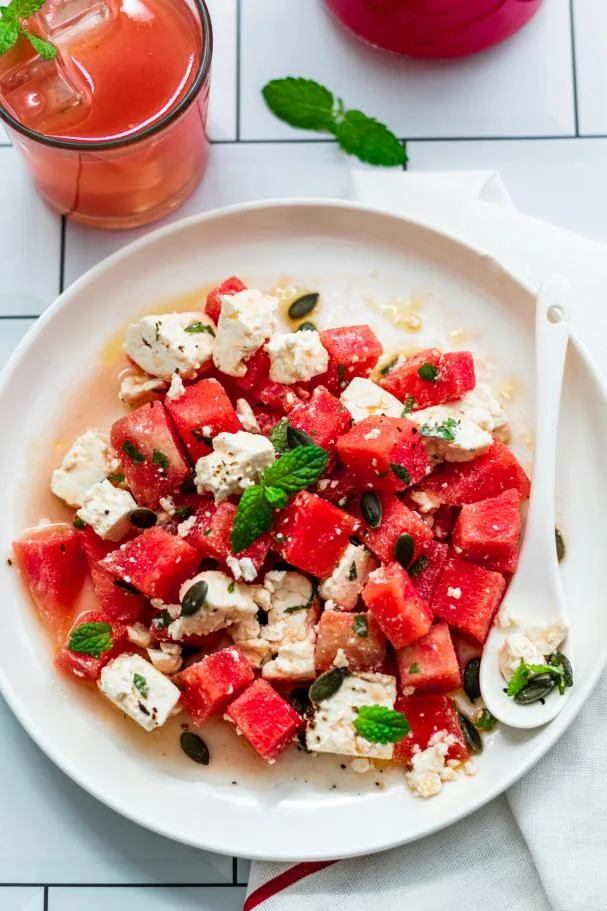
Watermelon, feta cheese, and mint salad
Ingredients:
Watermelon cut into cubes
Crumbled feta cheese
Fresh mint leaves
Thinly sliced red onion
Extra virgin olive oil
Balsamic vinegar
Salt
Pepper
Preparation:
1. Cut the watermelon into cubes and place it in a large bowl.
2. Add the crumbled feta cheese and thinly sliced red onion.
3. Incorporate the fresh mint leaves.
4. Dress with a drizzle of extra virgin olive oil and a few drops of reduced balsamic vinegar.
5. Season with salt and pepper to taste.
6. Gently mix all the ingredients.
7. Serve immediately, preferably cold to maintain its freshness.
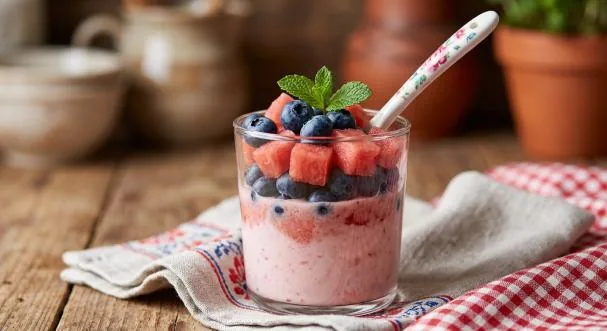
Creamy cup of yogurt, watermelon, and blueberries
Ingredients:
1 cup of watermelon
3 pieces of watermelon cut into cubes
1 cup of blueberries
1 container of Greek yogurt
Whipped cream or dessert syrup
Preparation:
1. Wash and prepare the fruit, cutting the watermelon into cubes.
2. In a glass or jar, place a first layer of blueberries.
3. Add a layer of Greek yogurt.
4. Incorporate a layer of watermelon cubes.
5. Repeat the layers if the container allows.
6. Finish with whipped cream or syrup to taste.
7. Decorate with the reserved watermelon pieces.
8. Serve well chilled.
Educational content for consumers and users funded by the Consum Cooperative Training and Promotion Fund.
Also read