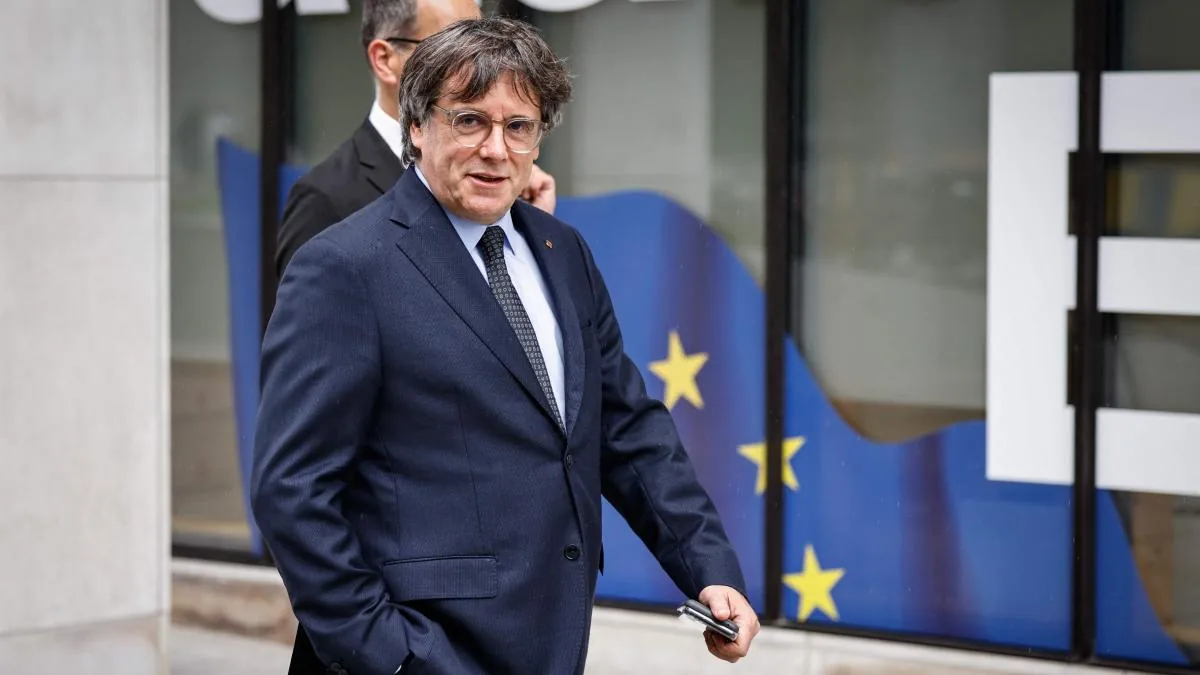
When the Amnesty law came into effect in June 2024, some jurists pointed out that certain judges would apply “delaying tactics” so that the promoters of the procés would not benefit before serving a large part of the disqualification imposed by the sentence, once the partial pardons had released them from prison. With the CJEU’s endorsement of the rule, it is more difficult for them. The return of president Carles Puigdemont is closer and the end of his disqualification and that of other political leaders as well. However, the sentence will not change anyone’s political positions one bit. In Catalonia, this is a crucial factor.
Read more CJEU, myths and truths
In 2017, despite the failure of the procés , Puigdemont settled in Belgium with a certain heroic aura to bend the Spanish institutions through the European courts. For nine years, this has been a tortuous path and the victory has not fully fallen to either side. But in the meantime, Catalonia has changed. In the fall of 2012, Aznar issued a warning that became famous and was repeated in various forums. “Catalonia cannot remain united if it does not remain Spanish.”
The relevant thing will be Puigdemont’s political action when he sees Catalonia
Catalonia, despite attempts from inside and outside, cracked but did not break thanks to the effort of many. Aznar’s prediction did not come true. Instead, Catalanism broke with the appearance of Aliança Catalana. A formation resulting from the arrival of new immigration and disenchantment with the procés . A detachment that reached its peak in 2023 with the pact between Puigdemont and the PSOE to facilitate Pedro Sánchez’s investiture. In exchange, precisely, for the Amnesty law, eliminating the deficits of self-government, and an international negotiation to resolve the Catalan issue.
Read more The points of a key sentence
At the end of October 2017, Puigdemont had a good diagnosis of the situation, but he did not want to appear as a traitor and defended the unilateral declaration of independence without social majority or tools. By making a pact with the PSOE, he already knew, however, that some of his own followers would label him a traitor for not maintaining a confrontational position. He took a risk, accusing ERC of not knowing how to negotiate with Moncloa. Less than three years later, the last vote of confidence given to him by voters is melting day by day in the polls.
It is not that Puigdemont is a bad negotiator for not getting Sánchez to fulfill everything agreed upon. It is simply that the transition established state mechanisms and autonomous counterpowers for the Catalan case that complicate certain pacts. Almost a decade later, the president will return. His return will be important for his family and supporters. For Catalanism, what matters will be his political action when he sees Catalonia, instead of having it told to him. And, above all, if he is able to convince those who now see him as a traitor that everything is more difficult and that every small space of self-government is a great victory. Because with the partition of Catalanism, the party is over.
Read more And after the amnesty sentence, what should happen?