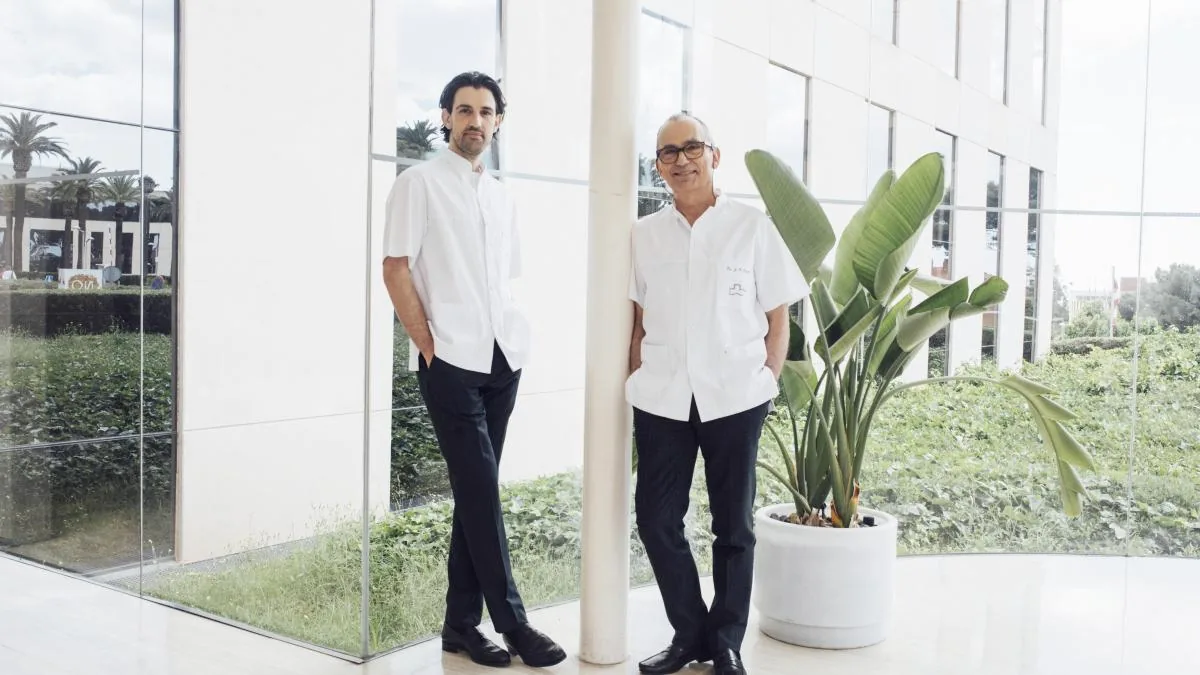
It is eight in the morning and the door of Dr. Joan Ramon Garcés at the Institut Dermatologia Garcés de la Teknon opens right on time. He prepares coffee. He is an empathetic, decisive, and cultured man who lives in peace and is comfortable with himself. He casually says that he always sleeps through the night. Healthy envy. His face and gestures answer the questions before his voice does.
Read more The spy story of Apple and OpenAI
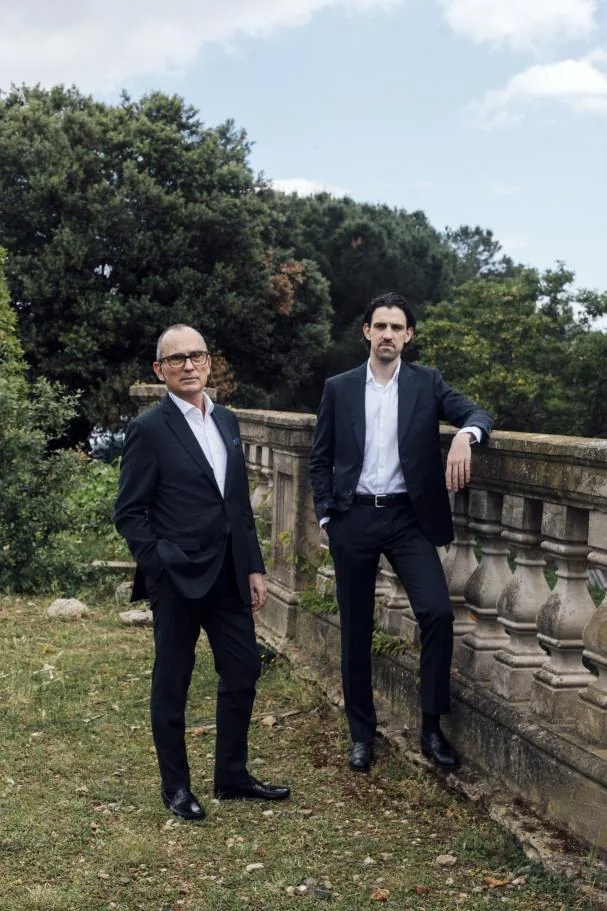
Dr. Joan Garcés, his son and colleague, arrives with coffee ready and radiating energy from every pore. The first is a specialist in medical and surgical dermatology focusing on the prevention, diagnosis, and treatment of skin cancer; the second is in the phase of absorbing everything and treating newborns, children, adults, hair, nails, skin cancer, performing surgeries… “I would like to follow in his footsteps,” he proudly comments.
Joan Garcés, his son They complement each other in discourse and in the optimistic vision of the future of dermatology with AI
They complement each other in discourse and in the optimistic vision of the future of dermatology with AI as a tool that, if well managed, will speed up diagnoses and add support. They discuss skin problems, skin cancer – so common it doesn’t appear in statistics – protection, and habits under a sun that must be respected but not demonized, cosmeticorexia already detected in girls as young as 11… The skin speaks and warns: “Any new lesion without a known cause, such as blisters, rashes, spots, crusts, or ulcers that do not heal, as well as moles or freckles that change in size, shape, color, or texture is a reason to consult,” they summarize.
Is there such a thing as healthy tanning?
Joan Ramon Garcés: No. Medically, any change in skin color is a sign of damage and a defense mechanism against ultraviolet (UV) radiation. Even a slow and progressive tan indicates damage, causing premature aging, spots, and risk of skin cancer.
Joan Garcés: Look at the inside of your arm: unexposed skin ages better. Protecting yourself from the sun is the best cosmetic.
Should we be afraid of the sun?
J.R.G. Not afraid, but we must have respect and caution regarding solar ultraviolet radiation. Exposing yourself to the sun without protection for 10-15 minutes daily is generally healthy to synthesize vitamin D, improve mood, and the immune system, but with common sense: considering skin phototype, time (better before 11 a.m. and after 6 p.m.), and the exposed area. The shadow rule helps to know when the sun is safer. You stand up, and if your shadow is longer than your height, the sun is more tangential and less harmful.
J.G. You have to be careful with social media and public figures who spread the myth of the “solar callus” during prime time, something that medically does not exist. Knowing how to play football does not make you an expert or a dermatologist.
Can a culture of sun protection curb the increase in skin cancer?
J.R.G: Yes, but not immediately or automatically. Experts predict that incidence will continue to rise in the short term due to the inheritance of past exposures. The skin has memory, and many cancers diagnosed today are the result of excesses and burns suffered 10, 20, or 30 years ago. But regular use of sunscreen can reduce the risk of melanoma by 50% and squamous cell carcinoma by 40%. Skin cancer detection is increasingly early, and the tools to treat it are better: you see it, remove it in time, and the issue is over. Most melanomas we see now are very early, and the vast majority are cured.
J.G: It should also be remembered that sunscreen is not an infallible armor nor an excuse to expose yourself to the sun for more hours; it should be combined with shade, hats, glasses, and appropriate clothing.
Regular use of sunscreen can reduce the risk of melanoma by 50% and squamous cell carcinoma by 40%”
Joan Ramon Garcés
What signs alert us?
J.R.G New moles, changes in size, shape, or color of existing ones, sores that do not heal, rough or bleeding areas, parts of the skin that become shiny, pearly, or reddish… It is detected through self-examination. It is very important to be attentive to these types of changes and consult an expert if they appear.
Should an annual check-up with a dermatologist be routine?
J.R.G: Yes, if there is a family or personal history of skin cancer.
Is surgery the best remedy for skin cancer?
J.R.G: Yes, because it seeks the total removal of the lesion. Mohs surgery is the technique of choice for cancers in critical areas (face, nose, eyelids, ears) that require preserving as much healthy tissue as possible, guaranteeing the highest cure rate. It is also the best option for premalignant or problematic benign lesions: removal of suspicious nevi (moles), cysts, lipomas, or actinic keratoses that do not respond to topical treatments.
Read more An intestinal parasite causes thousands of cases of «explosive» diarrhea in the United States
Aesthetic demand is also booming in dermatology…
J.G. It has grown exponentially and there is a lot of quackery. We also increasingly see in consultations how the use of cosmetics multiplies at early ages. Patients of 11 years old who apply four products in the morning and four at night. That was unprecedented before; now it even has a name: cosmeticorexia.
J.R.G. They buy cosmetics as if they were toys. The beauty standard has increased, and people are willing to do more and demand more from themselves for it. It is transversal, and dysmorphia is also common nowadays.
What short-term consequences can it have?
J.G: Using cosmetics without any criteria or with wrong criteria can cause multiple skin problems: eczema, irritation, pimples, skin oilier than normal, external blockage, folliculitis, comedonal acne, asphyxiated skin, allergies due to excessive and unnecessary use of actives like retinoic acid and derivatives…
Using cosmetics without any criteria or with wrong criteria can cause multiple skin problems”
Joan Garcés,
Is laser the dermatologist’s magic wand?
J.R.G: It is an extraordinary and versatile tool, considered one of the greatest advances for treating spots, wrinkles, scars, and vascular lesions. But it is not a “magic wand” by itself; its success depends on medical judgment, correct diagnosis, and the dermatologist’s skill.
J.G. And it is not infallible. Incorrect use can worsen spots or cause complications. Medical supervision is indispensable.
What have you learned from each other?
J.G. Not only techniques. He has taught me that the human part of medicine is very important. That is not taught in medical school nor asked in the MIR exam, but it is the missing piece of the puzzle. For me, it is fundamental.
J.R.G. I have learned a new, more inclusive perspective open to social changes. Joan is more up to date with studies, clinical trials, and new drugs (especially biologics) and infects me with the enthusiasm and energy typical of his generation. He keeps me updated on new technological tools and AI applied to diagnosis. He brings me a fresher vision and new ways to approach difficult cases or complex pathologies, often questioning established paradigms with an updated perspective.
What does it mean to be a humanistic doctor in the 21st century?
J.R.G: It means balancing very high technical and scientific specialization with deep human quality, compassion, and empathy, putting the person at the center of the medical act. I talk a lot with patients about literature, hobbies, anything. Someone said, “The doctor who only knows medicine, doesn’t even know medicine.” I agree: if you only know medicine, you are not a good doctor.
The door closes and the first patient is about to enter on time. I leave the consultation eager to reread The Tree of Knowledge, by Pío Baroja, a once mandatory reading that marked Dr. Joan Ramon Garcés. Now he has in hand a book his son gave him, Maniac, by Chilean writer Benjamín Labatut. Science and reason go, or should go, hand in hand.
Read more It’s a ghost and it’s addictive