I experienced a déjà-vu this weekend when Lionel Scaloni tried to downplay the historical tension of the semifinal between Argentina and England. I had a flashback to an interview I did 40 years ago with Diego Maradona before another Argentina-England World Cup match, the one of “the hand of God”.
Read more Kane and Bellingham, more dangerous than Pelé and Vavá
The Argentine coach was asked at a press conference on Sunday if the Falklands factor would affect the mood of his players. “It’s a football match, period,” Scaloni replied. “There’s nothing more to it.”
I asked Maradona the same question on the pitch of the Azteca stadium in Mexico in June 1986, 24 hours before the famous quarter-final match against England, four years after Argentina’s defeat in the Falklands War.
“No! Nooooo! Stop it, man!”, he answered me. “How are you journalists! Always the same, looking for trouble where there is none!”.
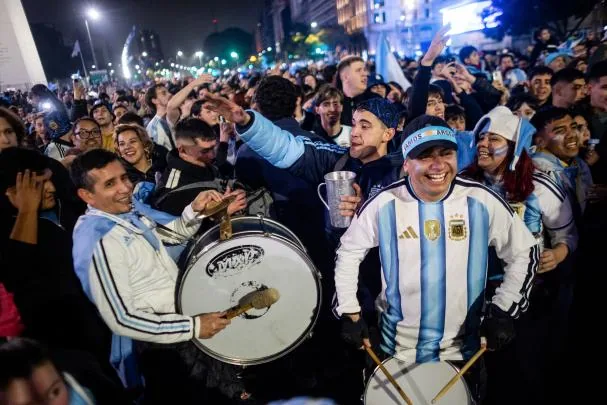
I knew Maradona was lying, just as I know Scaloni is lying today. In 1986 Argentina was burning for revenge. In 2026, well, it’s still burning. That the Falklands are British – or “English”, as they say there – is a fiery thorn stuck in the collective conscience of Argentines. I understand why.
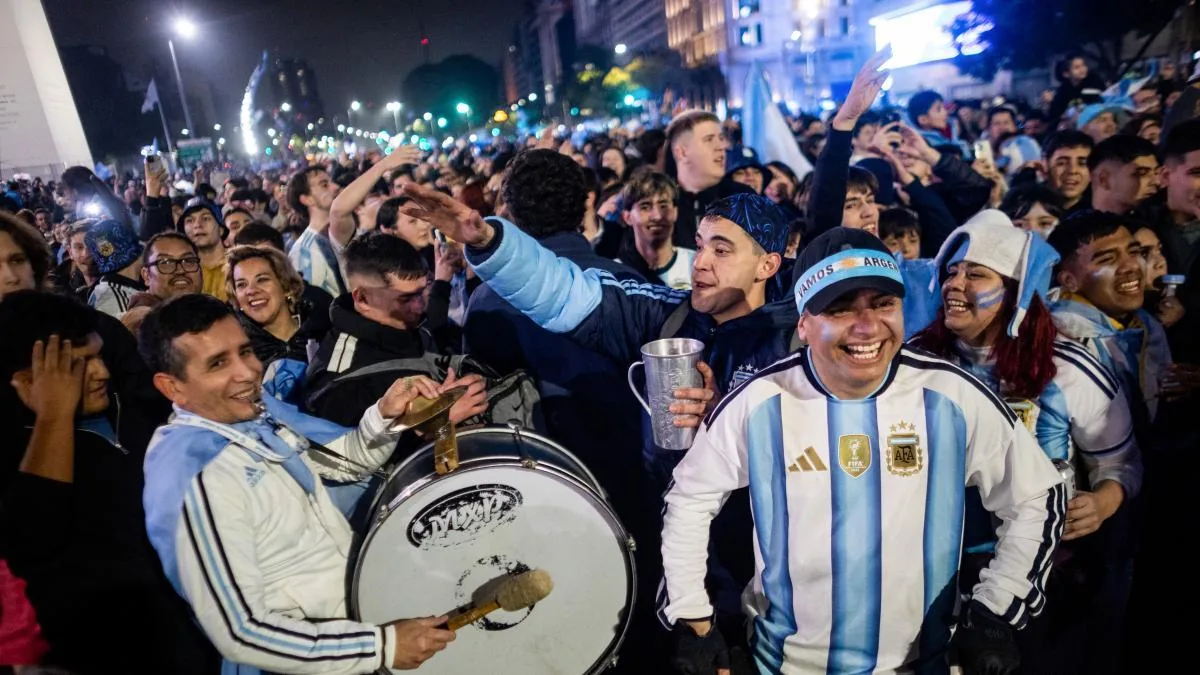
I lived in Buenos Aires as a child. At school, my teacher, Miss Cora, taught us that the Falklands were Argentine; the English, “pirates”. It was a kind of brainwashing to which Argentines were subjected and, I suppose, still are from a tender age. I suppose so because after qualifying on Saturday for the semifinal against England, the Argentine players remembered the Falklands and Maradona and started singing in the locker room about the beating they planned to give “the pirates”.
That the Falklands are British is a fiery thorn stuck
Argentina beat England in 1986 by 2 to 1 with two goals from Maradona, one the best in World Cup history, the other with the hand. I was at the Azteca that day. The 120,000 spectators in the stadium saw it was a handball, but the referee did not. I later spoke with César Luis Menotti, the legendary Argentine coach. “Better,” he told me. “Better that it was with the hand! That way it hurt more the sons of bitches of the English.”
The obsession with the Falklands dates back to the 1950s. President Juan Domingo Perón saw the opportunity to divert attention from his chaotic administration by appealing to nationalism, identifying an external enemy. He did a favor to the military junta that would take power shortly after his death. In early 1982, after six years of savage repression, people began to lose their fear of the junta.
Read more Messi, facing the challenge of the great symbol that England represents
Also read
In March, 30,000 people from Buenos Aires took to the streets shouting “The military dictatorship will end!”. I was there, at the beginning of my career as a journalist. On April 2, the troops of General Leopoldo Fortunato Galtieri invaded or, depending on the point of view, “recovered” the Falklands, starting the war that Argentina would lose two and a half months later. It started as a brilliant move. Desperate but brilliant. It triggered the desired Pavlovian reflex.
The same people who had protested against Galtieri a few days earlier appeared in front of the Casa Rosada, along with 70,000 compatriots more, to celebrate the glorious milestone.
To the Falklands issue, an anecdote for the English, is added another reason why Argentina-England is the classic intercontinental rivalry most fiercely contested in the world, the closest thing at the national team level to the historical resentment that fuels the flames of a Barça-Madrid.
No Argentine over a certain age forgets the quarter-final match between Argentina and England at Wembley in 1966. Argentina had a great team, a candidate to win what would have been their first World Cup. But their captain, Antonio el Caudillo Rattín, was sent off in the 35th minute. England won 1 to 0.
English fans call Argentines “Animals!”
It was the beginning of a bitter football rivalry, marked by dirty play and expulsions – not excluding David Beckham’s in 1998 thanks to a sly provocation from (who else?) Diego Simeone –. English fans got into the habit of calling Argentines “Animals!”; Argentines delighted in the chant that will be heard on Wednesday in Atlanta, “He who doesn’t jump is an Englishman!”.
Rattín died on Saturday. I spoke with him in Buenos Aires about 20 years ago. We remembered his famous expulsion. “The English,” he declared, “are the biggest hypocrites in the world. Look at their history: they are liars, cheaters, and thieves.” If the tragedy of an English victory happens today, and if once again in this World Cup the referee has something to do with it, a whole country will echo him.
Read more Deschamps points to the referee but surrenders to Spain: “They have forced us to defend”