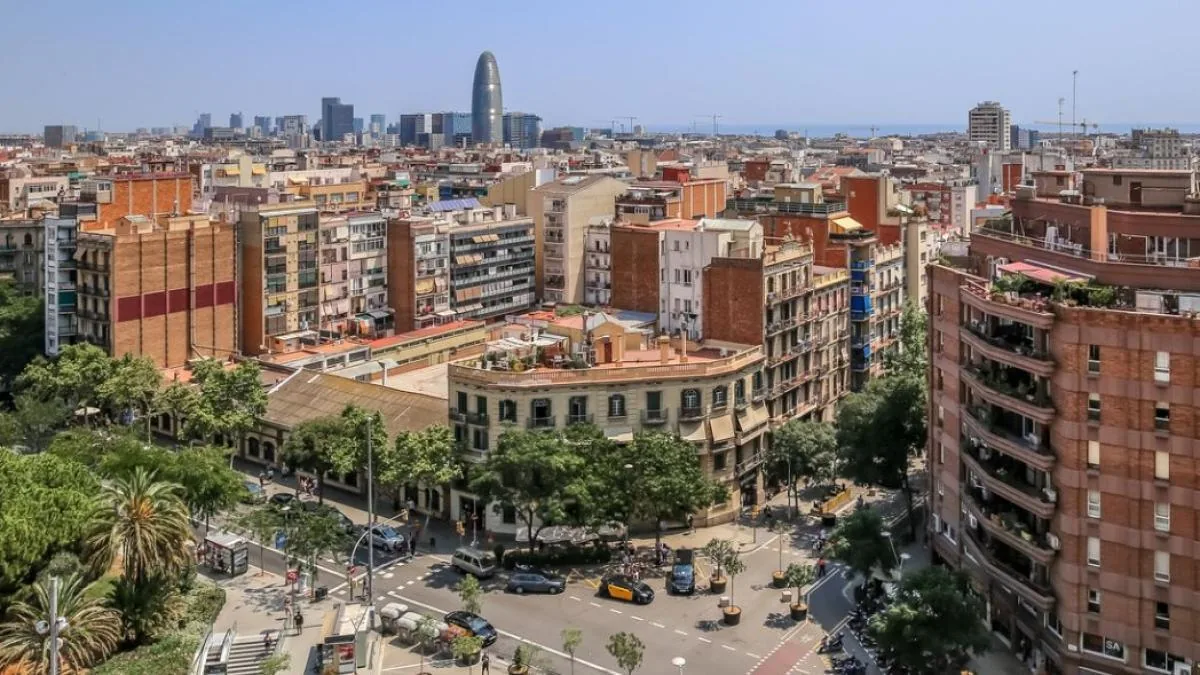
The sale of buildings is complex, whether it’s a single owner or multiple owners, as it presents different scenarios that advise making these types of decisions with prior expert advice.
Read more Two rescued bears take their first bath of the season at the Oregon Zoo
Before starting the process, it is advisable to be clear about some key points:
- If you need quick liquidity, selling the share or the building may be the most direct option
- If there are several owners, agreement or termination of co-ownership usually avoids major conflicts
- If there is no urgency, renovating or rehabilitating can increase the final value of the property
- If there is disagreement, legal action is possible, but it is usually slower and more costly
Some of these assumptions include inheritances, the need or not to rehabilitate before selling, or what is the best option in case of needing liquidity.
Table of contents
- Common sales scenarios
- Sale of inherited buildings
- What happens if an heir does not want to sell
- Costs of delaying the sale
- ITE and building sale
- Energy rehabilitation
- Sell or renovate
- Which option to choose according to your situation
- Keys to making the decision
- Frequently asked questions
Common sales scenarios in 2026
If we talk about non-inherited co-ownership, several sales possibilities arise, each with its own particularities.
Termination of co-ownership
It requires the agreement of all parties, as it puts an end to the co-ownership situation. One of the titleholders is awarded the entire property, financially compensating the other or others.
This is one of the most effective and advantageous ways to dissolve the co-ownership of a property among several people, as it is a faster option than selling to a third party, and it is more fiscally efficient, as it is not considered a purchase and sale.
Sale of the co-ownership share
One of the most direct options, especially if liquidity is needed, as it is not necessary to initiate legal proceedings. However, being a share in co-ownership, the sale may occur at a price lower than the market value.
Sale of a part (undivided)
Another alternative is for one of the owners to sell their percentage to another co-owner or to a third party without the need to dissolve the property.
Division of common property
Here, the division is judicially demanded, making it a forced exit and a slow and costly process. If the property is not divisible, it is sold at auction.
In Catalonia, civil law maintains the basic principle of freedom to exit co-ownership, and although voluntary agreements are favored, there is the possibility of forcing the division if there is no agreement.
Sale of inherited buildings: why it can generate conflicts
In the case of inherited buildings, opposing views may exist due to economic reasons or to preserve heritage, creating tension that can seriously affect family ties.
To avoid this, or at least try, in Catalonia and Spain, regulations reinforce the use of conciliation and mediation to reduce conflicts, preserve relationships, and avoid lengthy judicial procedures.
Economic differences among heirs can generate opposing positions: some cannot afford taxes or maintenance costs, while others want to preserve the heritage

Natàlia Manzana
Architect and mediator
These types of situations can hinder operations in a context where the real estate market in Barcelona maintains a significant investment volume, making the timing of the sale a strategic factor.
Furthermore, before initiating any procedure, it is advisable for the building to be horizontally divided to facilitate its distribution among heirs.
What happens if an heir does not want to sell
In these cases, there are three possible avenues:
- Negotiation and amicable agreement: reaching an agreement by financially compensating the heir who does not want to sell or by acquiring their share
- Termination of co-ownership: allows formalizing the distribution before a notary and avoiding judicial proceedings
- Judicial division of common property: if there is no agreement, a judge can order the sale of the building at auction
Experience shows that negotiated or mediated solutions usually reduce both economic cost and personal wear and tear.
The economic and emotional costs of delaying the sale
In an inheritance, time is a key factor. The longer the decision is delayed, the greater the consequences:
- Tax surcharges for delays in taxes such as Inheritance or Capital Gains
- Increase in capital gains the longer the time between inheritance and sale
- Legal and judicial costs in case of conflict
- Greater personal and family wear and tear
The longer it takes to resolve, the greater the personal and economic wear and tear
Natàlia Manzana
Architect and mediator
Selling a building with a pending or unfavorable ITE
In Barcelona, properties must undergo a mandatory technical inspection (ITE) after 45 years.
Can it be sold without an ITE?
Yes, it is possible to sell a building with a pending ITE, as there are legal mechanisms such as the exoneration clause, where the buyer accepts the situation before a notary.
What if the ITE is negative?
It can also be sold, but:
- The buyer must receive the technical report
- There may be pending special assessments or repairs
- Bank financing may be limited, reducing the number of buyers
Energy rehabilitation: impact on sales
Another key aspect is energy efficiency.
- As of January 2030, homes with an energy rating of F or G will not be able to be sold or rented
- Improving the energy rating can progressively revalue the property: according to a study by IESE, Tinsa by Accumin and Accumin Intelligence, each letter jump in the energy certificate can revalue a home by an average of 1% to 3.3%.
- There are public aids, such as those from the Barcelona Housing Consortium and European Next Generation funds, which subsidize part of the rehabilitation.
In addition, efficient buildings can access mortgages with better conditions, which expands the buyer profile.
Sell or renovate: two strategic decisions
Selling is not the only option, and before making a decision of this magnitude, it is advisable to evaluate other scenarios.
Renovate to revalue
As seen in the previous case, rehabilitating or renovating a building leads to higher sales or tax incentives, such as the reduction of VAT from 21% to 10% if it involves structural elements, facades, or roofs. In addition, direct subsidies received, such as Next Generation funds for energy rehabilitation, are usually exempt from income tax.
It should also be noted that a rehabilitated building can increase in value by 30% to 60%, according to the National Association of Rehabilitation and Renovation Companies. Consultants such as CBRE or JLL highlight that buying obsolete buildings to transform them generates capital gains that often exceed 65% of the original acquisition value, especially if there is a change of use.
Maintain the building
This is a suitable option if the property is in good condition and generates profitability. It allows for recurring long-term income.
In some cases, it is possible to opt for dividing the building into horizontal property, facilitating its management and allowing future partial sales.
Which option to choose according to your situation
Keys to making the decision
Before selling a building in Barcelona, it is advisable to analyze:
- The ownership situation (individual, co-ownership, or inheritance)
- The state of the property (ITE, energy efficiency, need for reforms)
- The urgency of liquidity
- The potential for revaluation
- The degree of agreement among owners
Making informed decisions and having specialized advice can make the difference between a blocked operation and an efficient sale in terms of time and value
Frequently asked questions about selling a building in Barcelona
Can an inherited building be sold if an heir does not want to?
Yes. Although the ideal is to reach an agreement, there are legal alternatives such as the termination of co-ownership or the judicial division of common property, which can end in auction if there is no consensus.
What is the termination of co-ownership and when is it advisable?
It is a procedure by which co-ownership is ended. It is usually the most recommended option when one or more owners want to keep the property and financially compensate the rest, as it avoids judicial processes and is more fiscally efficient.
Can a building be sold without the ITE?
Yes, it is possible through an exoneration clause in the deed of sale, where the buyer agrees to acquire the property without the certificate of aptitude.
What happens if the ITE is unfavorable?
The sale is still possible, but the seller must inform the buyer of the building’s condition. In addition, there may be pending special assessments and limitations on obtaining bank financing.
Is it better to sell or renovate a building before selling it?
It depends on the context. If there is no urgency, rehabilitation can increase the value of the property and improve its attractiveness. If immediate liquidity is needed, direct sale is usually the fastest option.
What taxes must be paid when selling an inherited building?
Mainly Inheritance Tax (if not settled), municipal capital gains tax, and, at the time of sale, a new capital gains tax generated since the inheritance.
How much can a building be revalued after a rehabilitation?
It depends on the type of renovation, but different studies place the revaluation between 30% and 60%, especially if energy efficiency is improved or the use of the property is adapted.
What happens if there is no agreement between co-owners?
Any owner can request the judicial division of common property. In that case, if the property is not divisible, it will be sold at public auction.
Do you want to sell your building in Barcelona obtaining the best possible price?
Renta Corporación offers you more than 30 years of experience in buying, rehabilitating, and selling buildings to help you make the best decision.
Click here and discover, without obligation, what options you have for your property.
Read more Miles-long queues in Girona to participate in an audition for a Disney movie