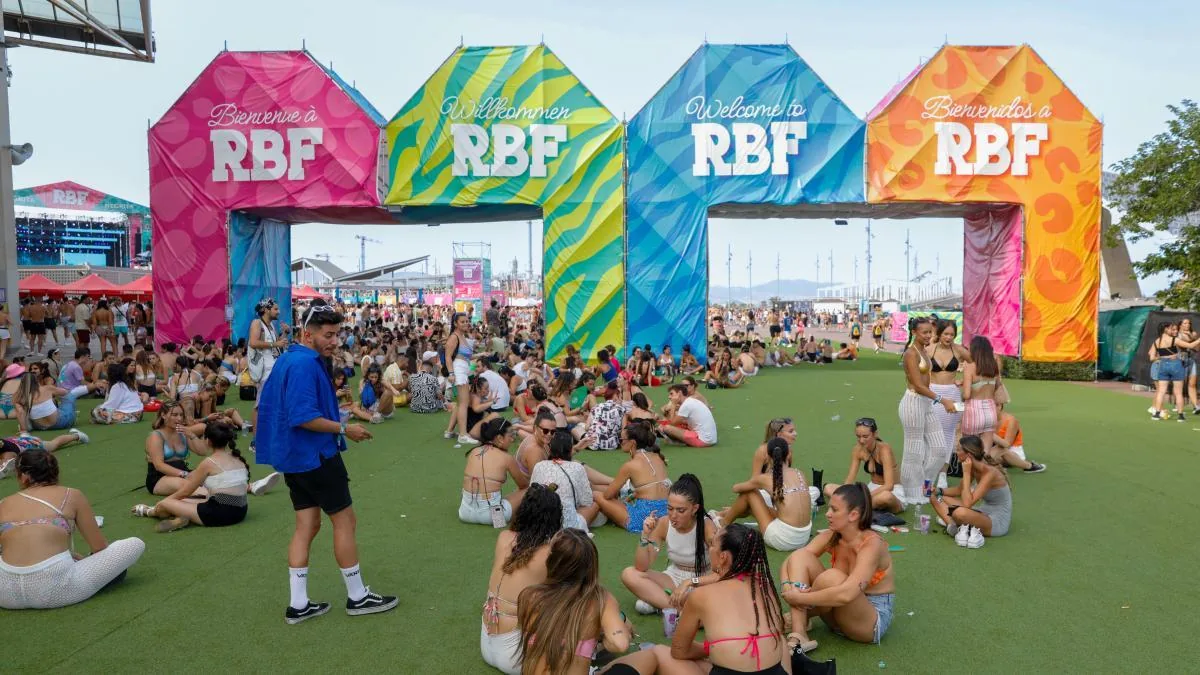
Few terms are as terrifying in this country as the bubble, whether it be the dot-com, real estate, or now the festival bubble in a time that boasts having a thousand of them spread across the geography. The trickle of cancellations in recent months, crowned by the disappearance of the massive Reggaeton Beach Festival, which gathered 600,000 people in 12 cities, has inflated the debate while solo artist tours increase and residencies arrive, such as those of Shakira or Bad Bunny, both in Madrid.
Read more Guess for Clovis or how to live the most evocative and exclusive Mediterranean
The Tomavistas in Madrid, which had ten editions, the Tsunami Xixón, or the Rockland festival in La Rioja are some of the twenty festivals that have announced the cancellation of their editions, some citing lack of sales as the reason, while others give more or less credible excuses and some, like the recent Festival de les Arts in Valencia, are forced to cancel by court order due to acoustic disturbances.
The number of cancellations, although high, must be measured in proportion to the nearly 1,000 festivals currently held. Specifically, the Statistics Yearbook of the Ministry of Culture estimated 889 music festivals held in 2024, almost double the 2010 figure, when around 450 were scheduled. Economically, the increase is even more pronounced, with revenue rising from 158 million euros in 2018 to 718 million in 2024 for the entire sector. Of this last figure, 398 million would correspond to macrofestivals and 320 million to popular music concerts.
“I wouldn’t talk about a bubble that has burst,” suggests Chema Fernández, festival director at the promoter Sonde3. “We are experiencing the natural readjustment of a sector that has undergone very significant growth, especially after the pandemic.”
“We are experiencing the natural readjustment of a sector that has experienced significant growth”
The person responsible for festivals like Río Babel or Son Rías Baixas detects an “enormous demand” to attend large festivals, although the audience has become much more selective. “Today it’s not enough to organize a festival and hope it works, you have to take care of the experience and provide a differential value” because the audience “chooses much better where they want to invest their money and time.”
Tito Ramoneda, head of the promoter The Project, is somewhat more critical, observing a certain fatigue among the public for multi-artist festivals “where you pilgrimage from one stage to another, don’t see your artist’s entire show, and suffer overcrowding in the services.” With experience both in organizing artist tours (the latest, Quevedo’s, with 16 dates only in Madrid and Barcelona) and festivals like Porta Ferrada, the Barcelona Jazz Festival, or Mar d’Estiu, Ramoneda believes the audience prefers to see the artist “with their show at full throttle, concentrated in Palau Sant Jordi, a stadium, or a venue.”
In this scenario, the viability of festivals depends on caring for their identity, initially betting on a unique lineup that distances them from the trend of festiguales that systematically program the same artists. “Since the pandemic, we have seen a boom of festivals that have appeared like mushrooms, in a disorderly way and with very similar lineups, but a festival brand is not made overnight,” recalls Ramoneda, who cites Canet Rock or Primavera Sound as examples, “a consolidated project despite having changed its stylistic trends, opening from original indie to urban music, reggaeton, or mainstream pop.” The Barcelona festival proudly embraces this fact, feeling fortunate “to have built a very loyal audience community that understands and identifies with our proposal.”
Having become the flagship of the major festivals on the peninsula, Primavera Sound does not perceive changes in its audience beyond some rejuvenation. “For years we have had an average age around 30, with quite consolidated percentages around 40% national audience and 60% international.”
“TikTok or YouTube are also competition for music, just like Ibai Llanos’ shows”
Fernández also talks about stability in the audience of his festivals, although he highlights changes in behaviors, “they value the overall experience much more, and in the case of younger audiences, we see lower consumption at bars than a few years ago,” he points out. “These are different habits that also respond to a different economic reality,” and affect one of the main sources of income for festivals: alcohol sales and sponsorships, while ticket sales at these events only represent 25% of income according to the Lin3s report.
Ticket prices are a touchstone for Ramoneda, who highlights the restraint of artists like Dani Martín or Quevedo. “Two years ago Quevedo set the most expensive ticket at 90 euros, and this year it’s 70. This price was the result of reflection by the artist himself with his management and with us. Would Quevedo have done 8 Sant Jordis and 8 Movistar Arenas with prices 5% higher? I’m convinced not, not everything goes.” In this regard, he recalls that it is the artist who decides the ticket price, “he asks for a price and the numbers have to add up, the promoter must know how far they can go, we give up many things because we believe we cannot.”
Read more Luis Goytisolo, a great European author
Price restraint is present in the minds of promoters and concert organizers like Primavera Sound. At the closing press conference of the last edition, a journalist from a foreign media outlet asked why ticket prices (245 euros in presale) were not raised to match festivals of their caliber like Glastonbury (434 euros) or Coachella (480 euros). “This is Barcelona,” replied director Alfonso Lanza, to remind that such a price increase would seriously undermine the festival’s local roots.
“We live in a society where we compete with everything, not just festivals and concerts, but with any form of entertainment,” warns Ramoneda. “TikTok or YouTube are also competition, just like Ibai Llanos’ shows,” and he looks to the future, when concerts may have to compete with virtual artists performing in our homes through immersive reality “and they won’t sell thousands of tickets, but millions.”
The increase in ticket prices is one of the dangers threatening the sector, but its control does not depend exclusively on those responsible, who must face the rising costs of all services. “In general terms, we are talking about expense increases that can reach around 150% compared to the years before the pandemic,” laments Fernández. “Transport, geopolitical causes, and the rise of events are factors,” specify Primavera Sound.
Harry Styles’ 12 nights at Wembley Stadium generated revenues of 1.228 billion euros
For his part, Ramoneda adds the increase in artists’ fees, especially in some festivals that hire them for amounts above the market because their profit does not only come from ticket sales but from consumptions, “you have 40,000 people eating and drinking for eight hours, that’s a lot of revenue.” Added to this is the rising cost of hotels due to tourism, or the lack of professionally trained staff caused by the increase in festivals. “All this raises production costs and ends up affecting ticket prices.”
In direct competition with festivals, solo artist tours are consolidating strongly, many of whom concentrate a good part of their dates in a single city forming the known residencies. According to a Barclays study, Harry Styles’ 12 nights at Wembley Stadium had an average cost per attendee of 1,137 euros, or in other words, 1.228 billion euros to be shared among the artist, promoter, venue, hotels, travel, meals, and more, with ticket sales of 250 million euros in a country that, since 2023, has seen 177 festivals disappear.
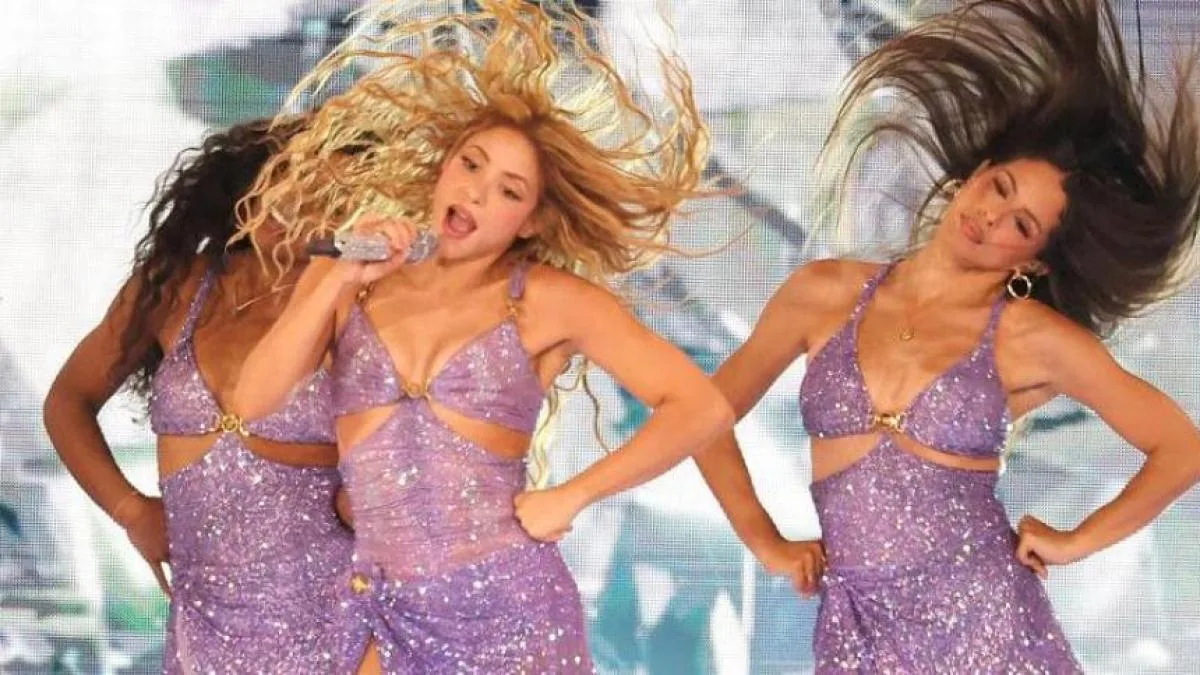
These dizzying figures explain why artists who can afford it bet on this model, as Adele or Bad Bunny have done, or Shakira will do in September in Madrid. “There is a type of artist who likes to be in the same city with a single setup and optimize resources, you save while connecting with the same city, the same venue, and you don’t have the fatigue of travel, which becomes a problem for the audience,” comments Ramoneda, who wonders if the audience responds the same way when the concert includes the experience of the city. “I don’t think so,” he answers, and recalls that other artists are reluctant to this format because “they need to be constantly touring, visiting and living different cultures with different audiences.”
“I think both formulas are perfectly compatible because they respond to different experiences,” reflects Fernández when comparing festivals and residencies. “Festivals still offer something that an individual concert cannot: discovering new artists and spending several days with friends enjoying what you love most. There is a social part that is hard to reproduce in other types of events.” Two ways of understanding music to tempt an audience that increasingly has less money in their pockets.
Heat forces festival cancellations
Music could be the next victim of climate change, as evidenced by the cancellation of several festivals in northern Europe, not accustomed to the heat so familiar to regulars of FIB or the Monegros festival. Defqon. 1, one of the main electronic festivals in the Netherlands attracting 50,000 people, announced its cancellation one day before the scheduled date, June 26, due to a heat alert activated by the country’s authorities despite the installation of canopies, air conditioners, and free sunscreen distribution. The same happened with the Scandal festival, also Dutch, as well as Garorock, held in the French region of Lot-et-Garonne, and the Solidays festival, held at the Parisian Longchamp racecourse, all canceled due to temperatures reaching 40 degrees.
Read more Europe recorded 10,000 excess deaths during the late June heatwave