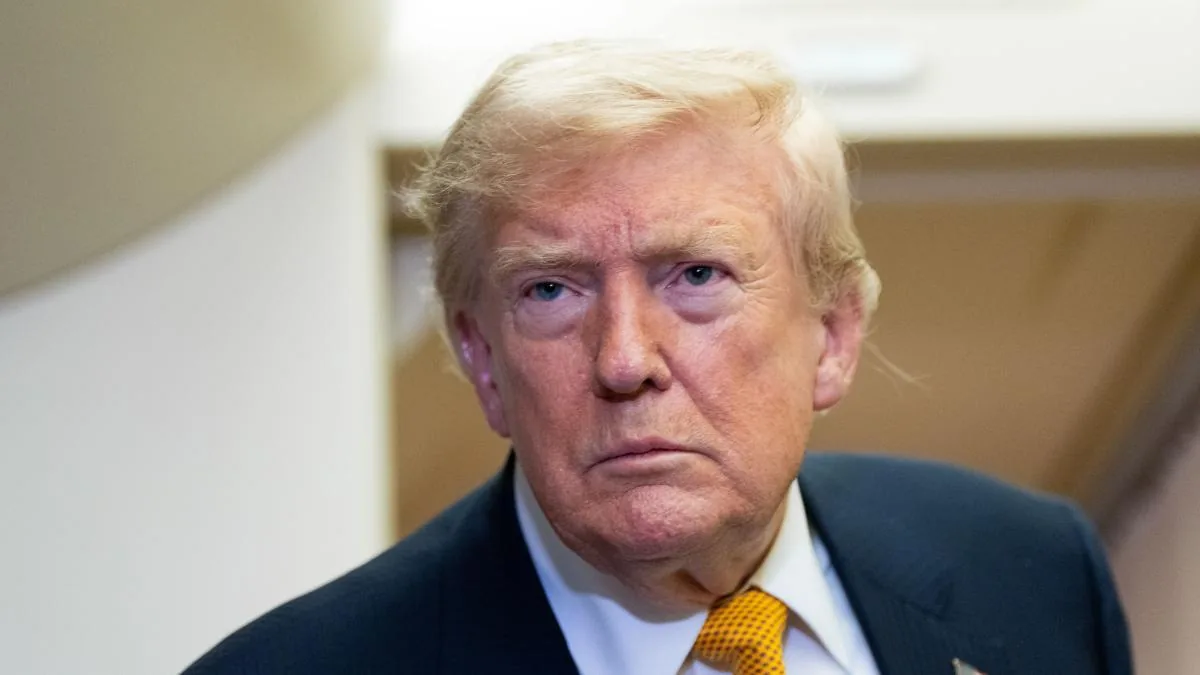
United States President Donald Trump stated on Monday that the United States will likely take control of the Strait of Hormuz and should be compensated financially for ensuring the security of this strategic maritime route. “We are going to hold the strait and probably manage it. We will become the guardians of the strait. We will protect it. And they will pay us to protect it. A lot of money,” Trump assured.
Read more French politics, including the far right, censors Rajoy’s comment about ‘les bleus’
“They will reimburse us, because the other countries are very rich. They are on our side and you can’t expect us to do this for free,” he insisted. “Maybe we will be called the guardian angel of the strait. And they should reimburse us for it,” he said in a phone interview with Fox & Friends on Fox News.
Hours later, the president formalized the announcement through his social network Truth Social, where he stated that the United States was reinstating the blockade on Iranian ports and would henceforth manage transit through the strait, charging 20% on the value of all cargo passing through it.
“The Strait of Hormuz is OPEN, and will remain OPEN, with or without Iran,” he wrote, in response to Tehran’s repeated contrary claims. “We are reinstating THE IRANIAN BLOCKADE, so called because it only prevents the entry or exit of Iranian ships or clients. The rest of the countries will have fair and open use of the strait,” he added.
We will protect it. And they will pay us to protect it. They can’t expect us to do this for free”

Donald Trump
President of the U.S.
Trump proclaimed that his country would henceforth be known as “THE GUARDIAN OF THE STRAIT OF HORMUZ” and that, “as a matter of justice,” it should be reimbursed for the costs of ensuring security in “this very volatile section of the world.” He did not specify who would bear that payment or whether the measure is practically viable.
Control of the Strait of Hormuz, an essential route for the global oil supply, has become one of the main theaters of conflict. The effective blockade of the passage by Iran has driven energy prices up and increased concerns about inflation worldwide.
After announcing the closure of the maritime route on Saturday following what he called an unauthorized transit, Tehran indicated on Sunday that the passage remained suspended and that navigation permits would only be granted when “stability and calm are restored.” “We had an agreement. It was a closed agreement and then they broke it. They always break it. We have signed ten agreements with these people, so we are going to hit them very hard,” Trump said, asserting that Iran had accepted an agreement on Saturday shortly before its forces attacked a Cyprus-flagged ship in the strait itself.
The Iranian Revolutionary Guard stated on Monday in a communiqué that the only way to restore normal maritime traffic through the strait is to end U.S. military interventions in the area. It also warned that “continued interference could cause more serious incidents in the global oil and gas sector.”
Its spokesperson, Hossein Mohebi, accused Washington of having “seriously endangered the security of the global oil and gas supply” and stated that Tehran “will continue exercising its sovereignty over the management of the Strait of Hormuz.” On the same Monday, the Revolutionary Guard also fired on two ships attempting to cross the passage “illegally,” according to Iranian state television.
U.S. and Iranian forces exchanged intense missile and drone attacks over the weekend and into Monday. Washington claimed to have attacked Iranian air defense systems, coastal radars, and missile and drone capabilities, while U.S. bombings caused at least two deaths and several injuries in the provinces of Khuzestan and Sistan and Baluchestan, in southwestern and eastern Iran, according to official Iranian media.
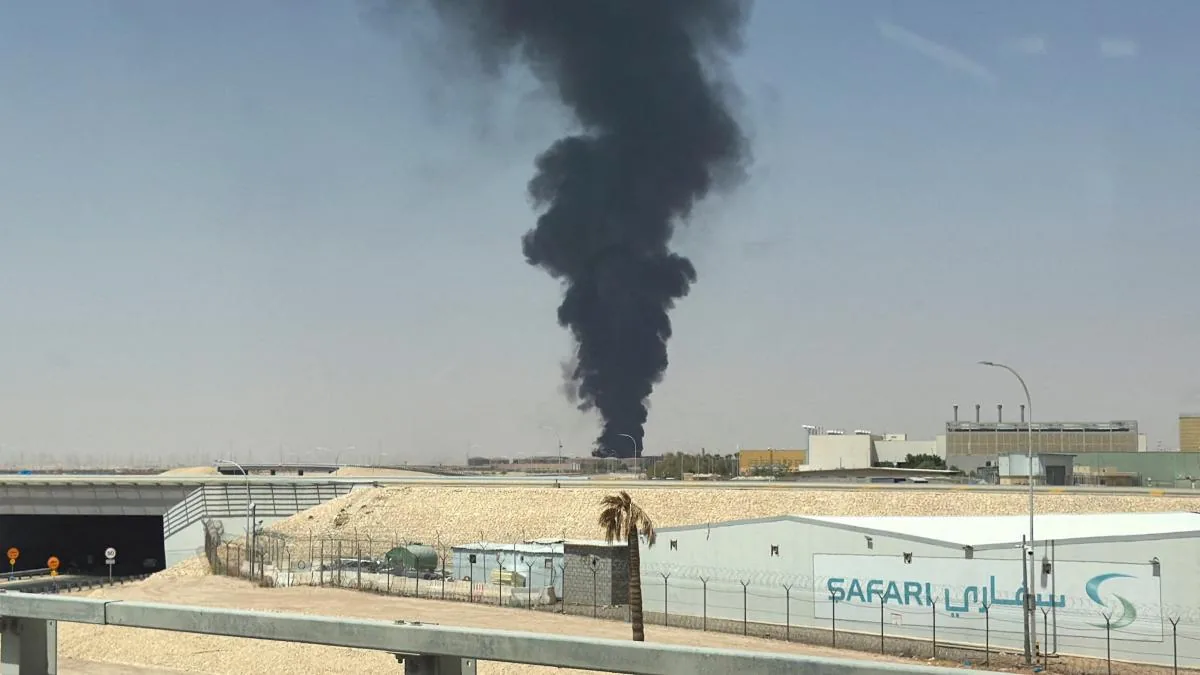
Tehran, for its part, claimed to have attacked U.S. military facilities in Bahrain and Kuwait, destroyed radar systems in Oman, and hit fuel and ammunition depots at an airbase in Jordan. Bahrain stated it intercepted several Iranian missiles and drones aimed at its territory, while Jordan said it shot down four projectiles without suffering damage.
The latest clashes represent a significant escalation both in intensity and geographic scope of the attacks recorded over the past week, and cast doubt on the viability of the provisional agreement between the United States and Iran signed last month to reopen the strait and suspend hostilities while both parties continued negotiations for another 60 days.
UN Secretary-General António Guterres warned that “a return to large-scale hostilities would have catastrophic consequences,” while Germany, France, and the United Kingdom condemned in a joint statement the Iranian attacks on merchant ships and on countries such as Qatar, Kuwait, Oman, and Jordan, and called for the restoration of the ceasefire. Despite the escalation, Israel has remained on the sidelines of the fighting, neither joining U.S. attacks nor becoming a target of Iranian reprisals.
Read more Catalonia faces another day of simultaneous fires in Aiguamúrcia and Lladurs