






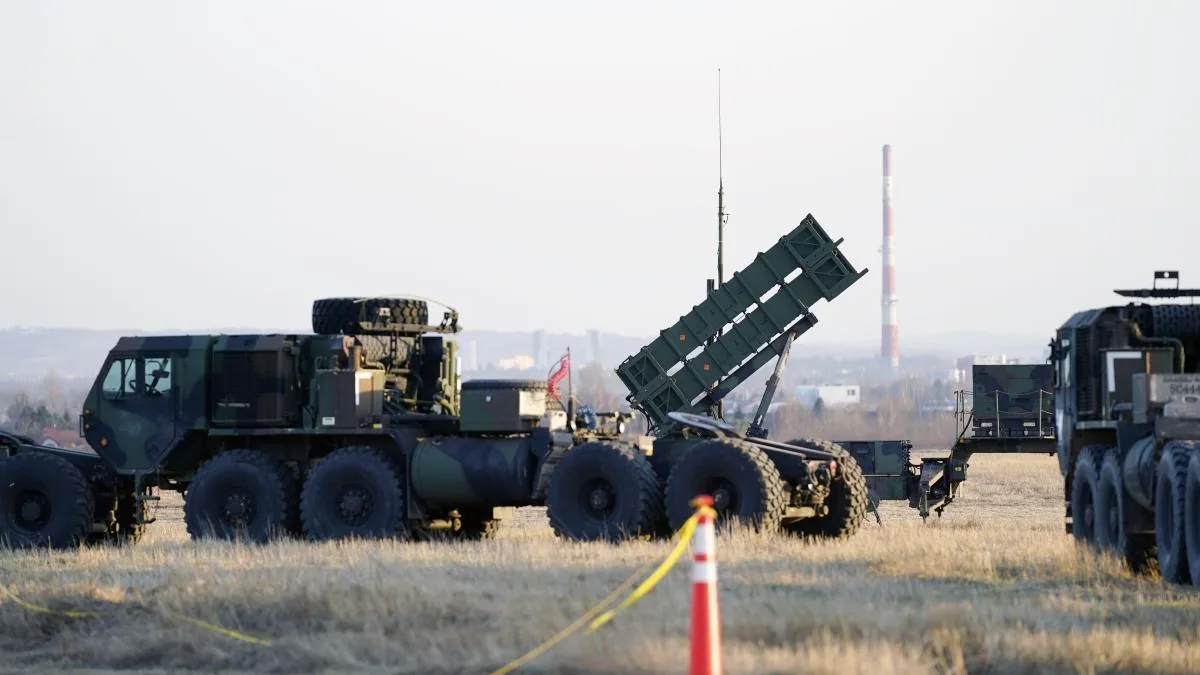
Europe took a new step this Monday to defend itself autonomously, without so much dependence on the United States. During a summit in Paris, ten countries, including Spain, launched “the coalition against ballistic missiles,” with a “purely defensive” vocation, aimed at jointly developing or at least coordinating efforts to equip themselves with systems that serve to protect against attacks like those carried out by Russia against Ukraine.
Read more Aitana and El Mago Pop buy the Aquitània theater in Barcelona
In a meeting prior to the Volunteer Coalition for Ukraine, aimed at guaranteeing a ceasefire as soon as it is signed, the leaders of Denmark, France, Germany, Italy, the Netherlands, Norway, Spain, Sweden, the United Kingdom, and Ukraine agreed to “work tirelessly to develop an anti-ballistic capability.”
The plan is not to give up systems that are already operational, such as the American Patriot missile batteries (which can be manufactured by other countries under license), but to complement and expand them with other European solutions, such as the Franco-Italian SAMP/T, already deployed in Ukraine and for which an improved version is being worked on. There is also another system designed in Germany. In all cases, the valuable experience and knowledge of Ukraine in the matter will be taken into account.
“We believe that the protection of Europe needs a global solution, in the form of an integrated missile defense architecture, in order to deter and neutralize future missile threats, developed through a collective effort, technological openness, and trusted industrial cooperation.” The ten signatories maintain that “this action is not directed against any people, but in defense of ours,” although obviously Putin’s aggressive Russia has been the trigger for the decision. The initial coalition declares itself “open to other nations that share its principles and objectives.”
Read more Catalonia faces another day of simultaneous fires in Aiguamúrcia and Lladurs
Days before this Paris summit, sources from the Élysée indicated that the momentum of Ukraine’s recent military successes against Russia (the continuous attacks on refineries and oil tankers) had to be seized, as well as the fact that, at the G-7 meeting in Évian-les-Bains and the NATO summit in Turkey, a “reconvergence” had occurred among the allies, especially a more cooperative attitude from Donald Trump.
Macron, who is in the final months of his term before leaving the Élysée, is accelerating the international agency and the effort in favor of Ukraine in particular, all in a context of strengthening the European pillar of the Alliance. Hence, for tomorrow’s parade, the motto “the European strategic awakening” has been chosen and 500 military personnel from partner countries have been invited, including a small but symbolic Ukrainian contingent.