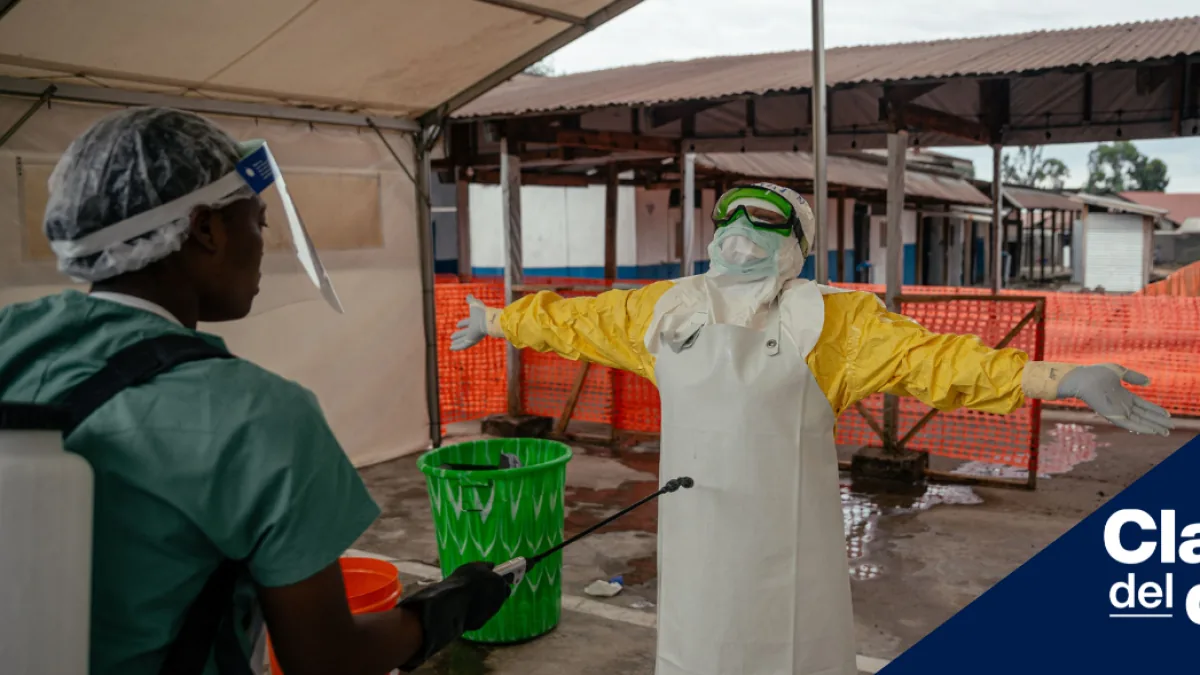
The new Ebola outbreak detected in the Democratic Republic of Congo has raised alarms among international health organizations. However, science and health journalist from La Vanguardia Josep Corbella sends a clear message: “This Ebola virus is not going to circulate in Europe, it is not going to circulate outside Africa due to the characteristics of the virus.” In his opinion, there is no risk of a global pandemic, but there is a risk of a health crisis of enormous proportions in the heart of the African continent.
Read more Bad Bunny has a problem in his ‘little house’
Corbella explained that the severity of the situation is due to a combination of especially unfavorable factors. The epidemic “was detected late, when it had probably been circulating for about two months,” and affects a variant of the virus against which “there are neither vaccines nor antiviral therapies.” Furthermore, the focus is about 1,700 kilometers from Kinshasa, in a remote and conflictive area controlled by militias, where fear and distrust towards health teams greatly hinder tracing and containment efforts. “If contacts move and there is no follow-up, this gives the virus opportunities to spread,” he warned.
The threat is different from the large epidemic recorded in West Africa in 2014. That one was caused by the Zaire variant, responsible for most historical outbreaks and for which vaccines and treatments exist. This time, the virus belongs to the Bundibugyo species, much less known. “It is a different species against which there are neither vaccines nor drugs,” Corbella noted, who compared the different Ebola varieties to different species within the same biological family.
Read more Illa challenges Rueda to present an alternative financing model
The specialist recalled that the virus is not transmitted through the air, a characteristic that greatly limits its capacity for international spread. Contagion occurs through contact with bodily fluids such as blood, saliva, vomit, or feces, as well as through contaminated surfaces. The greatest risks are concentrated in hospitals without sufficient protection for healthcare personnel and in certain traditional funeral rituals. “It is not a virus that spreads through respiratory means, and this is what gives us the guarantees that it will not circulate here in Europe,” he stated.
The first symptoms are often confused with other common diseases in the region, such as malaria or typhoid fever, which complicates early detection. Fever, headache, sore throat, muscle aches, and general malaise are some of the initial manifestations. In the most severe cases, the virus causes internal hemorrhages that can be fatal. Although Corbella does not rule out isolated cases in the West, he recalled that these are usually linked to healthcare personnel or aid workers deployed to the affected area. As an example, he cited the case of the nurse infected in Madrid during the 2014 outbreak or the recent transfer to Germany of a doctor infected in Congo. “It was a sporadic case produced in a hospital context; that does not mean that Ebola circulated among the population,” he concluded.
Read more The PP communities will boycott the Treasury in the meetings to reform regional financing