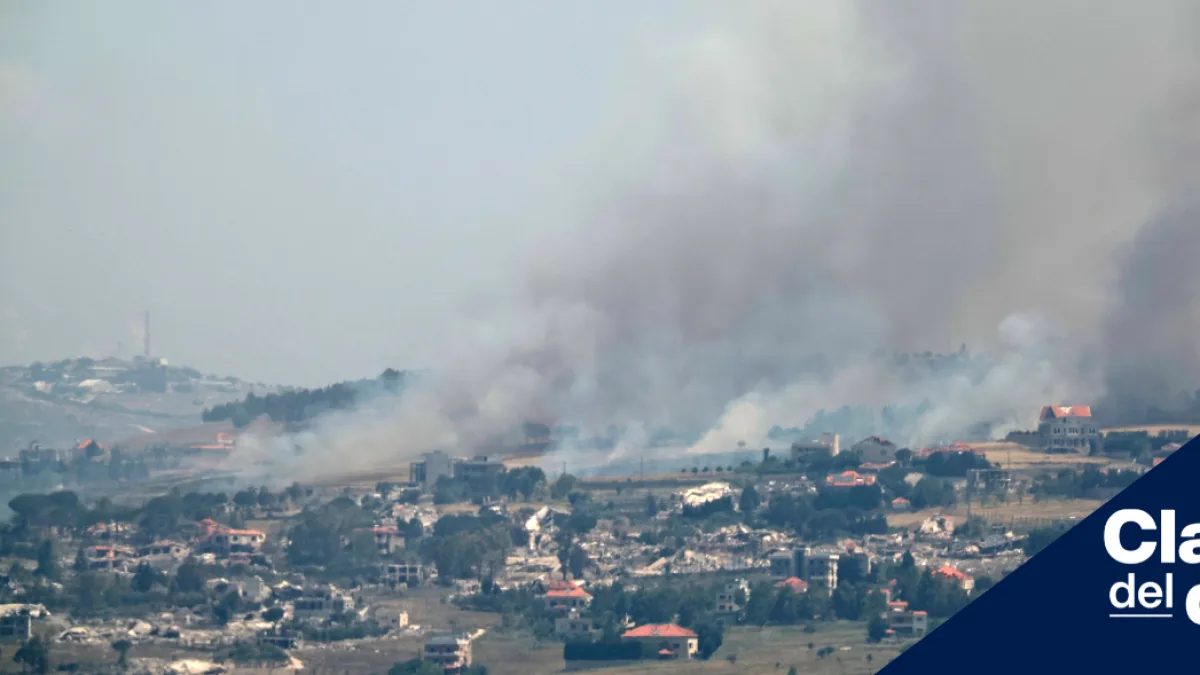
Benjamin Netanyahu’s decision to order new bombings over Beirut has once again raised tensions in the Middle East and tested the United States’ strategy in the region. According to the special envoy of La Vanguardia in Jerusalem, Helena Pelicano, this is “one more step in this military escalation in Lebanon” after a ceasefire signed last April that, in practice, “has not been honored by either side.” The journalist recalled that Israel maintains troops on Lebanese territory and that, until now, the capital had only been attacked once, following an explicit request from Donald Trump to avoid bombings over a densely populated city.
Read more Letizia, in white, and Charlene, in blue: a queen and a princess stroll through the garden
The offensive again highlights the differences between Washington and Jerusalem at a particularly delicate moment for the region. Pelicano emphasized that the talks between the United States and Iran are one of the central elements of the current geopolitical landscape and that Israel is following “a strategy that differs greatly from that of its American ally.” While the U.S. administration tries to advance negotiations with Tehran, Netanyahu keeps several fronts open simultaneously in Lebanon, Syria, and Gaza. “This move separates the strategies of both countries and could affect the coalition that until now had acted jointly against Iran,” she noted.
On the ground, both sides accuse each other of violating the truce. Pelicano explained that attacks with drones continue from Lebanese territory against northern Israel, a situation that keeps the population under constant air raid alerts. “The citizens of the north live practically with warnings every few hours and demand that the Israeli government guarantee their security,” she stated. Even so, the journalist considers it difficult to speak of a formal break of the ceasefire because “it was a truce that had never been fully implemented” and that, moreover, was agreed upon between Israel and the Lebanese government, without the direct participation of Hizbullah.
Read more Follow the event ‘QuèFem? en persona’ with Lax’n’Busto, streaming live here
One of the most worrying aspects of the new offensive is the return of bombings to the southern suburbs of Beirut, considered the main stronghold of Hizbullah. Pelicano recalled that this is an area of enormous symbolic and strategic value for the Shiite militia, where much of its power structures are concentrated. “It is also one of the most densely populated areas of the country,” she emphasized. The new evacuation orders issued by the Israeli army have caused thousands of people to leave their homes again just weeks after having returned following the previous fighting.
The escalation also threatens to have consequences far beyond Lebanon’s borders. Iran has already warned that there will be no progress in negotiations with Washington as long as hostilities in Lebanon and Gaza do not completely cease. At the same time, the Gulf countries continue to watch the crisis’s evolution with concern due to its impact on the Strait of Hormuz and the transport of oil and gas. From Jerusalem, Pelicano perceives a society that still largely supports the military campaign in Lebanon, although she also observes growing criticism of the government for the results obtained against Iran. “The feeling is that the conflict is not over and that many Israelis consider it will not end while the ayatollah regime remains in power,” she concluded.
Read more Albares calls for launching a European defense to avoid having to depend on external sources