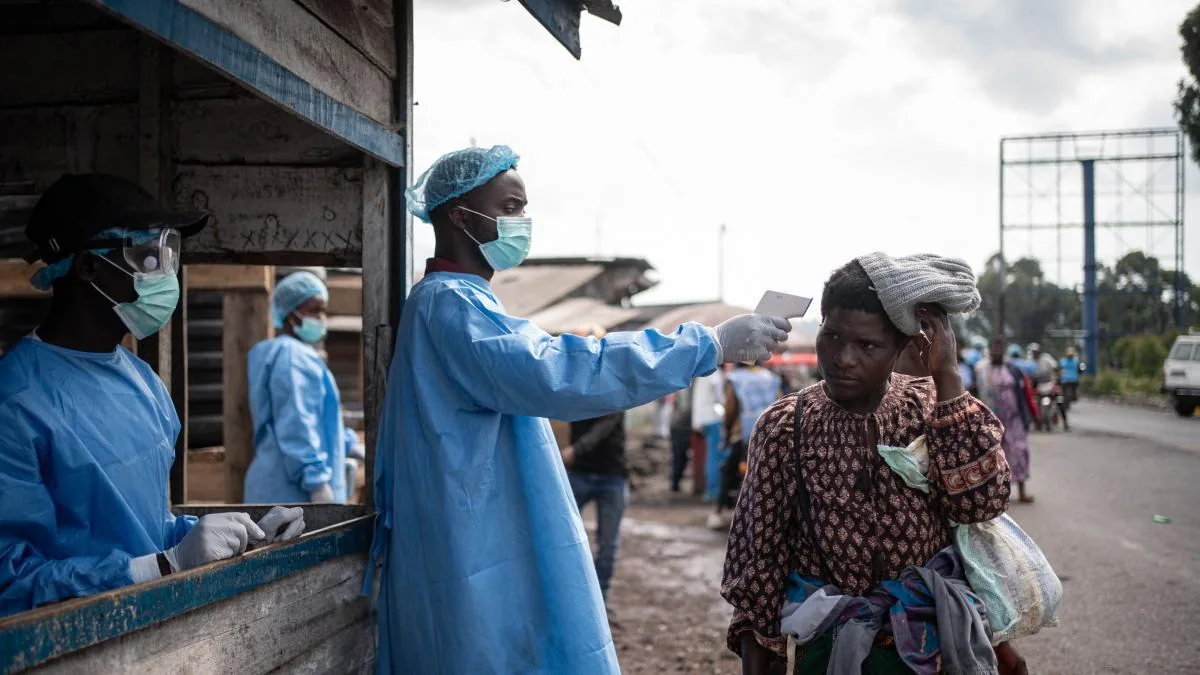
No one suspected anything. On April 24, a patient succumbed to a lethal mix of high fever, diarrhea, and hemorrhages at a medical center in Bunia, the capital of the Ituri region in northeastern Democratic Republic of Congo. In an area affected by tropical diseases, with the recurrent presence of cholera or malaria, that death did not raise too many suspicions.
Hours later the body was transported 70 kilometers to the deceased’s home in the mining town of Mongbwalu, where it was buried after a traditional ceremony, in which family and friends touched and even hugged the corpse.
None of those present were aware that they were witnessing the first recorded case of Ebola of what, according to experts, will be one of the worst emergencies of this virus in history.
That first case of Ebola also occurred in the worst possible place: a war-torn region dotted with dozens of armed militias.
The powder keg of eastern Congo
More than 120 armed militias operate in the three Congolese provinces that have registered confirmed cases of Ebola
In addition to the delay in detecting the first cases, the absence of vaccines for the Bundibugyo variant, and the difficulties in containing an epidemic that spreads faster than efforts to stop it, this time is added the impact of cuts in international aid and a context of insecurity and historic violence but unprecedented in its magnitude and extent, with the presence of more than 120 rebel groups in the area, most financed by artisanal mineral extraction.
Although many of them are small and disorganized militias, some are very active and powerful and pose a notable danger to the population or humanitarian workers such as the jihadist group Allied Democratic Forces, the local branch of the Islamic State, the Congo Development Cooperative (Codeco), or the Convention for the Popular Revolution (CRP), a rebel movement led by Thomas Lubanga, convicted as a war criminal and for child recruitment by the International Criminal Court. The three armed bands operate in the Ituri province, ground zero of the current crisis.
Risk to the local population and aid workers
Although there are disorganized militias, some pose a great danger such as the jihadist group Allied Democratic Forces, the local branch of the Islamic State
In the North Kivu and South Kivu provinces, where the disease has already spread with several confirmed cases in populated cities such as Goma, Bukavu, or Lwiro, there is also a context of several rebel groups of different kinds such as the Mai Mai or Raia Mutomboki, but above all an exceptional context for months that poses an obvious obstacle to aid coordination: if the Ituri region is under the control of the Congo Government, much of the two Kivus is controlled by the M23 group, backed by neighboring Rwanda, which has created a parallel administration and maintains constant fighting with the Congolese army or with a popular militia, Wazalendo, that supports Kinshasa’s interests.
Territories without Kinshasa government
In North Kivu and South Kivu, the rebel group M23 has created a parallel administration and rules in populated cities such as Goma or Bukavu
Although Congo has previously suffered up to 16 Ebola outbreaks and has experience dealing with the virus in war zones, the current context of violence worries the actors fighting the epidemic. The International Rescue Committee warned this week that the conflict “exacerbates the crisis and increases the risk of regional contagion. Widespread insecurity was one of the key reasons why the 2018-2020 outbreak (also in Congo) got so out of control. The situation now is even worse.”
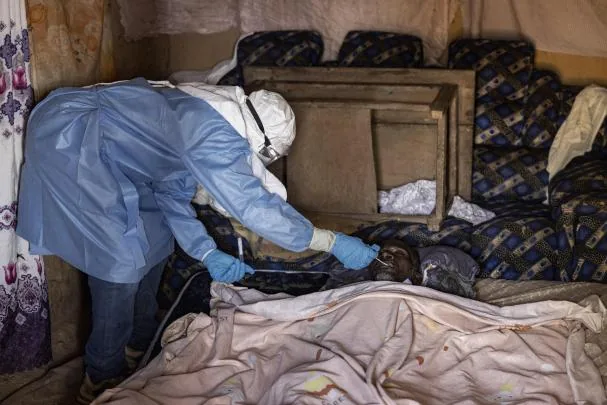
Besides having caused a million displaced people in recent months, the war and the presence of militias in affected areas hinder the movement of humanitarian bodies and organizations, complicate access to essential material for the protection of local health professionals, and put the safety of staff and patients at risk in epidemic containment zones.
“It is the perfect storm.” On the other end of the phone, Lucía Morera, operations manager for Congo at Doctors Without Borders, one of the actors with the most presence in the east of the country and a reference organization in the fight against Ebola in previous emergencies, sighs with anger analyzing the situation of a virus that spreads uncontrollably, with more than 1000 suspected and confirmed cases and 220 deaths in Congo, and that has already spread to neighboring Uganda, with seven confirmed cases.
It is the perfect storm (…) We often have to negotiate with armed groups to get permission to access areas that need our intervention, which due to insecurity for years have suffered massive population movements, destruction of health infrastructure, and where there is distrust towards authorities”
Lucía Morera
Operations manager for Congo at Doctors Without Borders
For Morera, the current challenge is huge. “The conflict context and the presence of militias increase the complexity of the emergency response. We often have to negotiate with armed groups to get permission to access areas that need our intervention, which due to insecurity for years have suffered massive population movements, destruction of health infrastructure, and where there is distrust towards authorities. The territorial division between areas under state administration and others controlled by M23, where airports in the two Kivus provinces are closed, complicates things even more. This also happens with very drastic cuts in humanitarian funds that further complicate the Ebola response.”
The impossibility of crossing territories under the control of opposing factions has forced NGOs to create up to three different bases for storing logistical and health material to contain the epidemic and entails a crucial loss of time to stop new infections, since several negotiations often have to be made to obtain passage with different militias, among which there is not always a clear hierarchy or where internal communication channels fail.
On Wednesday, the Director-General of the World Health Organization (WHO), Tedros Adhanom Ghebreyesus, called for an “immediate ceasefire” to contain the outbreak in the area. “We cannot build trust in communities nor isolate the sick while bombs are falling,” he insisted. At the end of his statement, the WHO chief added a warning that illustrates the chaos in the region. “Eastern Congo – he emphasized – faces a catastrophic collision between disease and conflict.”