Bellvitge Hospital has reduced the diagnosis time for pulmonary fibrosis from two years to six months thanks to a fast-track circuit with primary care centers. This model, extendable to the entire healthcare system, prevents the deterioration of lung function and allows for more therapeutic options.
Read more A paraglider saves her life after being run over by a plane mid-jump
Dry and persistent cough and difficulty breathing, especially during physical exertion, are two of the most evident symptoms of pulmonary fibrosis, a chronic disease that affects 33 people (20 men and 13 women) per 100,000 inhabitants in Spain.
The average survival in untreated pulmonary fibrosis ranges between 2 and 5 years
The problem is that these initial symptoms are often confused with other more common respiratory problems, a circumstance that delays the diagnosis of fibrosis, which causes progressive scarring of the lung that increasingly hinders blood oxygenation and proper ventilation.
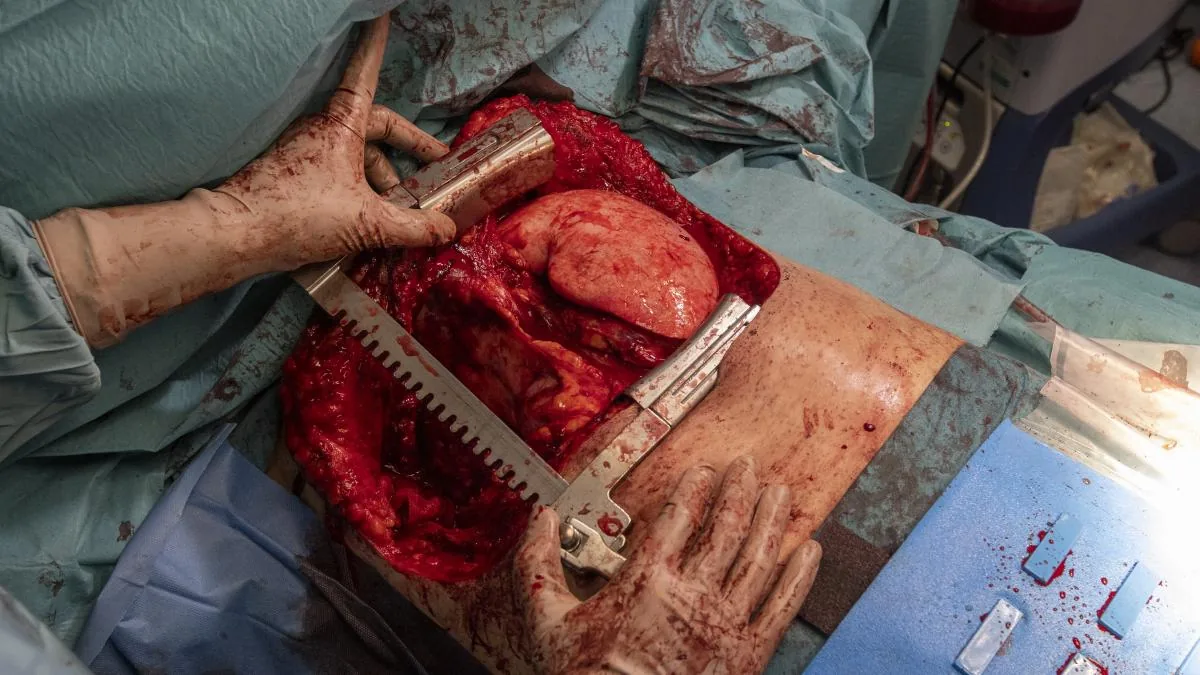
As the disease progresses, the feeling of breathlessness grows and the patient deteriorates until ultimately requiring a lung transplant, the only curative option. Without treatment, the average survival period ranges between two and five years.

Identifying the disease to start early treatment is essential. “Early diagnosis means changing the course of the disease,” says Maria Molina, head of the pulmonary interstitial functional unit at Bellvitge and of the pulmonology research group at Idibell. “An early diagnosis allows us to intervene in more treatable stages and improves the quality and life expectancy of the patients,” she adds.
In search of models to advance diagnosis as much as possible, researchers have devised and tested a fast referral circuit for patients from primary care centers to the specialized unit at Bellvitge Hospital. In this way, the diagnosis time for pulmonary fibrosis has been reduced from almost two years to six months.
Also read
The results have been published in npj Primary Care Respiratory Medicine, a journal from the Nature group. According to pulmonologist Lupe Bermudo in an interview with La Vanguardia, the coordination model between care levels significantly improves patient prognosis.
Read more Discover how to save 144 euros a month on your mortgage
In this regard, transplant-free survival at 7 years increases by 14%, from 43.6% of people referred through the usual circuit to 57.1% through the fast circuit. Likewise, patients preferentially referred arrive at the specialized unit with better lung capacity (89.6% versus 76.1%), a circumstance that facilitates earlier initiation of antifibrotic treatments and improves prognosis.
Researchers assure that the new model is extendable to other reference hospitals
“It is a little-known disease and many doctors confuse its symptoms because they are very nonspecific and coincide with those of much more widespread pathologies.” This is the starting point of Bellvitge’s work, points out Dr. Bermudo: “We try to make primary care doctors consider the possibility of pulmonary fibrosis.”
Hospital specialists provided training to one professional from each of the ten CAPs dependent on Bellvitge to identify warning signs, direct coordination was established between radiology and the pulmonary interstitial unit, and a preferential referral system was set up through a specific channel. The first hospital visit had to take place in less than a month.

The study has conducted at least 5 years of follow-up on 726 people referred between 2012 and 2015. Among them, 112 were identified and directly redirected from Primary Care through the fast circuit.
According to Lupe Bermudo, the model is perfectly replicable by other Catalan reference hospitals. It only requires, she states, the willingness of the hospital center and primary care centers, and coordination between both entities. The results, Bellvitge’s research maintains, well deserve taking the step.
Read more A small blue octopus discovered in the Ecuadorian Galápagos archipelago