A ghost is haunting the world: the ghost of Artificial Intelligence (AI). It will destroy jobs on an unprecedented scale. It will make wars more lethal and efficient (eliminating many more enemies and faster). It can destroy the Earth. And it will place a generation of billionaires at the pinnacle of power without any democratic control.
Read more The defense of Jonathan Andic will file the appeal against the detention order before Thursday
All four statements are debatable. But they help to understand the magnitude of the great transformation we are experiencing since the improvement of “deep learning” techniques with the use of neural networks and the new language models popularized in 2022.
Job loss is the threat that draws the most attention. Technology has always destroyed jobs and created others. But AI does it at a speed and intensity far greater, for example, than the first Industrial Revolution.
Big Tech engineers say there is no turning back. Economists are more skeptical. How will a society function in which (almost) everything is automated? Who will consume? The change, in any case, has already begun. Large consulting firms are already hiring more young people specialized in AI than auditors. And three days ago, at the University of Arizona graduation speech, Eric Schmidt, former CEO of Google, was booed every time he mentioned AI.
Fear of AI is unpredictable because it feeds what tech giants fear most: regulation, someone controlling and supervising what they do. The first signs of AI anxiety that reached Silicon Valley sparked two types of reactions. The most virulent are led by acceleration supporters, figures like Marc Andriessen, Elon Musk, or Peter Thiel. For them, slowing technological change for humanistic reasons would be an unforgivable waste of time. The most furious of all is Peter Thiel, who has identified progressivism fueling AI rejection as the Antichrist and has declared the Catholic thought represented by Leo XIV as an enemy.
A ghost is haunting the world: it takes the form of massive unemployment and unchecked power
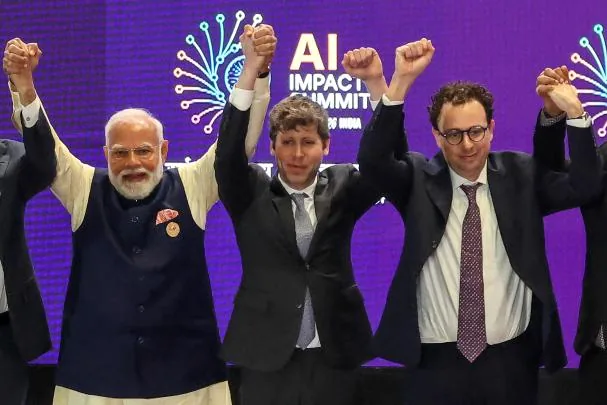
The second type of reaction has been more subtle. It is that of entrepreneurs like Sam Altman (Open AI) and Darío Amodei (Anthropic). Both talk about the risk of social collapse, suggest the need to achieve a New Deal, and outline the need for a minimum wage for the excluded and more taxes for the very rich.
The founders of Open AI and Anthropic act out of the same commercial interests as Musk and Thiel. But they are less ideologized and think a frontal clash could harm them. By the end of 2026, all of them will have taken their companies public and will be immensely rich. They do not want to be the center of the anger of the most harmed.
Read more The UDEF accuses Zapatero’s daughters of hiding bribes with fake invoices
The Anthropic saga is the most interesting of all. Dario and his sister Daniela Amodei founded Anthropic in 2021. Born in San Francisco, of Italian Jewish origin, they left Open AI due to ethical and security differences with Sam Altman. Today they would be the closest thing to the responsible face of the sector. They have confronted the Pentagon for not handing over their algorithms for military programs (Donald Trump has labeled them leftists and “wokes”). They are the most openly supportive of regulation and have created programs like Claude or the feared Mythos.
In the Early Middle Ages, in what was then the center of the world, from Rome to Byzantium and Jerusalem, the different Churches competed with governments for earthly power. Their opinion and strength were decisive in legitimizing government decisions, and when these ignored them, they excommunicated them or launched crusades and holy wars.
In the 21st century, Pope Leo XIV attacks the legitimacy of the conflict between the United States, the foremost earthly power, and Iran, which senior White House officials like to call a holy war.
Anthropic increasingly stands out as the “responsible” face of AI
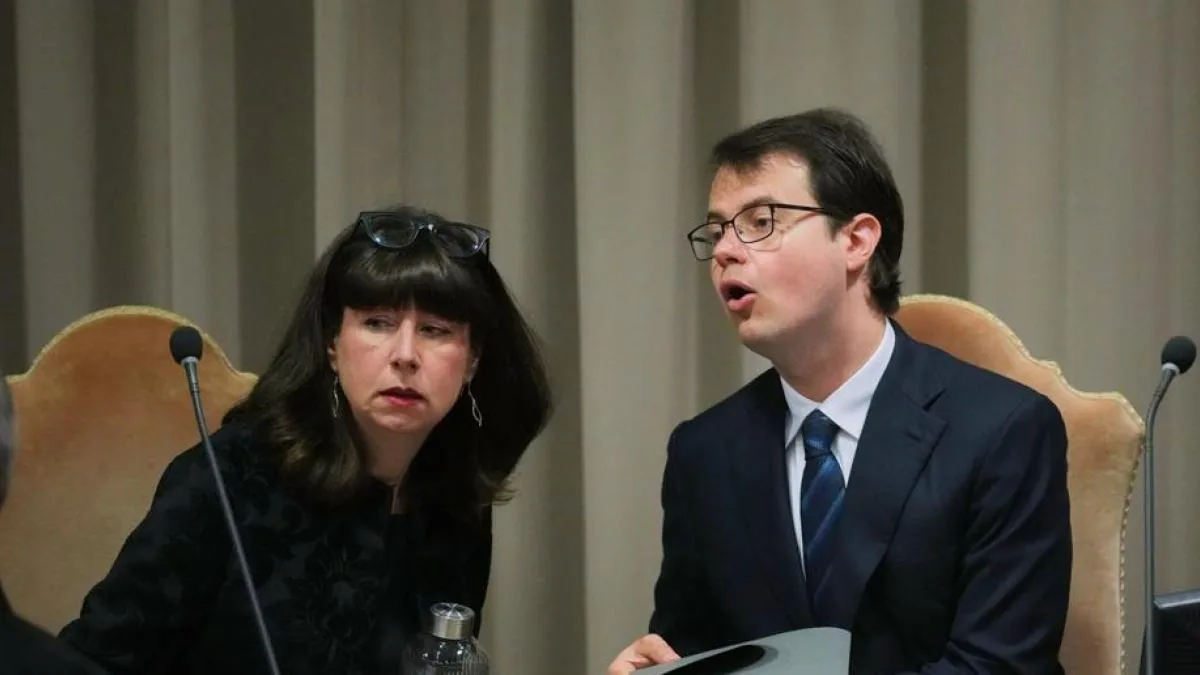
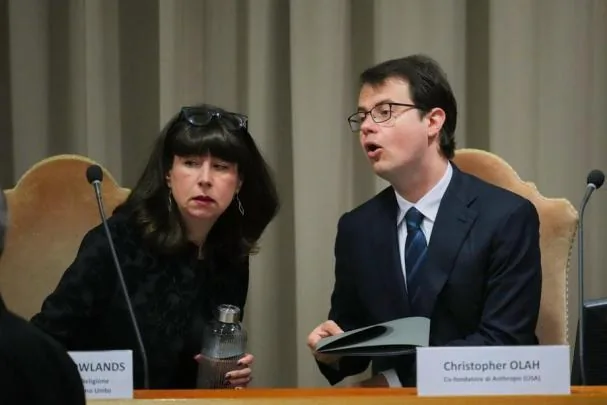
On Monday, he presented an Encyclical calling to rein in a technological revolution that touches the very core of human existence and, surprisingly, about which governments remain silent. Prevost presented the encyclical in person at a conference where he was accompanied by Christopher Olah, one of the founders of Anthropic, a pioneer in AI “interpretability” (how the new language models work internally).
Olah said AI companies face commercial, geopolitical, and personal pressures that may conflict with general interests. “There is a risk that things go wrong, and it is our responsibility to drive it in the right direction,” he said. On Monday, at the Vatican, an alliance of uncertain future was launched, and Peter Thiel’s breakfast did not sit well.
Read more Part of the Plus Ultra bailout was transferred “immediately” to opaque accounts of the gold business