After nearly 70 years of Castroist rule in Cuba, the White House is sending strong signals that Washington is willing to do anything to bring the regime founded by the bearded men to its final stretch. In addition to economic and social pressure with the oil blockade, the United States seems to be preparing or arranging the elements to justify a potential military intervention on the island.
In a rampant intensification of pressure, the saber-rattling was heard with the extraordinary indictment for murder of the last great leader, Raúl Castro, former president, brother of the legendary Fidel and de facto head of the country. U.S. justice presented this accusation on Wednesday for Castro’s order in 1996, while he was Minister of Defense, to shoot down two planes participating in a so-called humanitarian operation that left four dead.
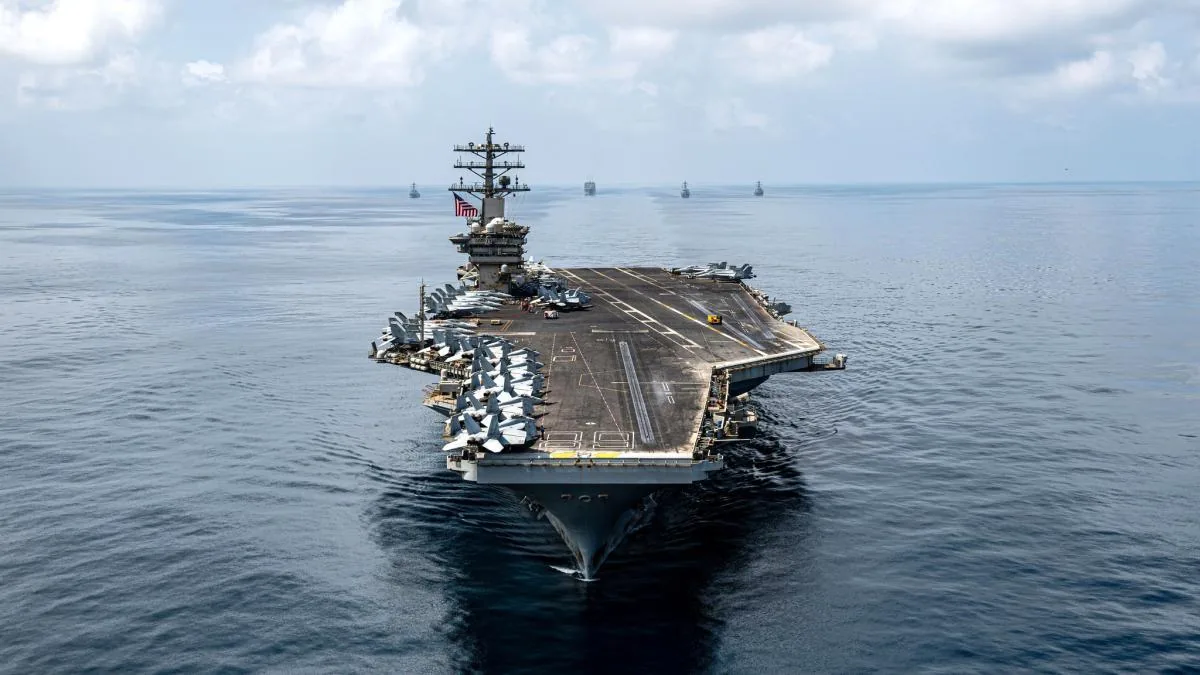
“No, not at all,” President Donald Trump responded on Thursday in the Oval Office when a journalist asked if the nuclear-powered aircraft carrier USS Nimitz, which arrived in Caribbean waters, had been sent to intimidate the Havana executive.
Trump’s response is no guarantee of anything, given his characteristic evasive behavior. The echo of the Nicolás Maduro case, who was kidnapped in his Caracas home last January and went from president of Venezuela to prisoner in New York awaiting trial for narco-terrorism, resonates again with the possible repetition of a lightning operation.
Maria Elvira Salazar, a Republican legislator of Cuban origin, replied that she saw no other purpose for the Nimitz’s presence than a military incursion. “I would like a quick intervention to extract Castro like Maduro,” she acknowledged.
Once the news of the historic indictment broke, Trump limited himself to responding “I don’t want to talk about that” when reminded of the capture of the Venezuelan leader, which only fueled the armed alternative that Havana leaders have already condemned. President Miguel Díaz-Canel called the U.S. criminal initiative “illegal and provocative,” which “only seeks to bolster the argument to justify the folly of a military aggression.”
Cuba does not extradite, especially not in a matter affecting one of its most relevant leaders. “This is not a show accusation,” said U.S. acting Attorney General Todd Blanche. “We expect him to appear here voluntarily or otherwise,” he added, in an obvious threat to resort to the military.
Experts on this issue considered that it is now quite clear that something big is coming for Cuba. You don’t send the head of espionage to Havana and then accuse the symbolic leader of the country on a whim.
Trump has been saying all year that the island is on his list of interventions, although on Wednesday he ruled out “an escalation” and on Thursday said that Cuba is a “failed country” that needs help. “We are going to help them,” although he mainly referred to the path of the regime sinking and Cuban Americans being able to return and invest in the island.
Read more The King is ‘Flip’ again in his return to Lakefield College where he studied COU
“The president’s preference is always the negotiation of a peaceful agreement and remains our preference, although this possibility is not high, dealing with whom we are dealing with,” acknowledged Marco Rubio, Secretary of State, on Thursday.
“The president always has the option to do whatever is necessary to protect the national security of the United States and has already demonstrated his ability to identify a threat. He not only has the right to face that threat, but he is obligated,” he insisted.
So he also did not rule out a Maduro-style assault to bring Castro before the South Florida court. “Well, I’m not going to talk about how we would bring him if we were trying to bring him. Why would I tell the media what our plans are on this? The point is that he has become a fugitive from U.S. justice,” he emphasized.
Marco, of Cuban roots, considered that beyond the oil blockade established by the U.S. on the island and the daily power outages, the blame for the disaster lies in internal management. “They had major blackouts last year and were still receiving free Venezuelan oil, but they didn’t spend a cent repairing their energy production. The money went into the pockets of the private military company called Gaesa,” he proclaimed, another key element to sow discontent and encourage mobilizations within the country that lead to undermining the regime.
He also said that Cuba has accepted 100 million in aid, but qualified that it remains to be resolved how it is distributed among citizens, because they do not want Gaesa to intervene.
In reality, according to experts, the most dominant entity in Cuba is not the Communist Party, but Gaesa, a secret business conglomerate controlled by the Cuban army, at the administrative top of which is Raúl Castro. It is considered one of the most powerful economic structures in the country. It manages much of the sectors that generate foreign currency and has more money than the government. It is like a state within the state.
Originally established by Raúl Castro after the fall of the Soviet Union in 1991, its main ally, with the aim of strengthening Cuba’s defense sector, that company evolved into a commercial empire. Several of its leaders and officials are on the U.S. sanctions list.
Read more The Real Madrid presidential elections are scheduled for June 7