The first time a politician was convicted of influence peddling in Spain was 31 years ago. The historic socialist mayor of L’Hospitalet de Llobregat, Juan Ignacio Pujana, was sentenced to six years of disqualification, one month of arrest, and a fine. The Barcelona Court considered that he had facilitated an award for the construction and concession of several underground parking lots to a company that in turn had to subcontract the works to a construction company owned by a friend of his. The judges coined the term “chain influence peddling.” The mayor, using his position, pressured municipal technicians and officials. He did so, initially, out of friendship, since the sentence considered that he did not receive money in return, and he was acquitted of the charges of bribery and forgery. Evidently, Pujana disappeared from the public radar. Since then, it has been clear that the crime of influence peddling is one of the most difficult to discern, since it is necessary to prove pressure on a public official or officer and also to have the authority to carry out that coercion. Politicians who are already former, that is, who have left their government positions, often maintain a significant capacity for influence in those administrations, so they are often recruited by consultancies and companies to open the doors of the public sector for them. Is this the case of José Luis Rodríguez Zapatero?
Read more Shoemaker, the ghost
The judge has been gathering data for a year based on police investigations and has collected some indications that still do not allow knowing to what extent Zapatero may have engaged in influence peddling and money laundering. What stands out most in the judicial indictment order is the extensive network of companies involved in the scheme, and it will be the instructor’s task to unravel the degree of knowledge and participation of the former president in that web, which all points to not being clean given the eagerness to conceal that usually accompanies the creation of merely instrumental companies, without real activity, generally to hinder the trail of money. The reading of the order offers a very different image of Zapatero than that of a mere former ruler who charges for mere advice. Solid indications are reported, but they must be proven. From now on, the judicial path has a life of its own and will determine if there is a crime, but on the political level, a more relevant consequence has already occurred: the loss of innocence for the left and, especially, for Pedro Sánchez before his electorate. That is the real turning point for the PSOE leader. The Zapatero case dilutes the strategy that the Prime Minister had maintained until now of distinguishing between those investigated whom he has little doubt fell into corruption and those he is convinced are the object of a tortuous judicial persecution. Where does he place Zapatero?
When the case of José Luis Ábalos and Santos Cerdán broke out, Sánchez’s reaction was to build a wall. Neither presumption of innocence nor half measures. He confessed to being deceived and sentenced them politically guilty. Without a doubt, the reading of the police reports on them and the revelations of the summary embarrass anyone. Although they were two highly trusted party officials, Sánchez managed to encapsulate to some extent the toxic radiation of their alleged misdeeds. The president thus distinguished between those cases and those affecting his family, which he attributes to the political maneuvers of the right to open cases with the help of some judges, the famous lawfare that independentist politicians and Podemos, among others, have complained about so much. The trial of his brother is scheduled to begin next week in Badajoz. David Sánchez is accused of influence peddling and malfeasance. What most mortals call “a hookup” for which the Badajoz Provincial Council allegedly created a position designed for him, bypassing merit, capacity, and free competition conditions. At Moncloa, they are convinced of his innocence but also that he will be convicted.
Nor do they harbor any doubt that the same will happen with the president’s wife. It is true that in this case Judge Peinado’s actions have been more widely debated, but Sánchez assumes that Begoña Gómez will sit on the bench, probably in a trial with a popular jury, and in this case, her circle has not held back in reproaching the instructor for his actions, starting with the statements on the matter by the Minister of Justice, Félix Bolaños. The president is mentally prepared that there will also be a conviction in this case and that everything will be prolonged with appeals before the Supreme Court. Regarding his family sphere, Sánchez had gained the understanding and even the support of many PSOE militants. With Ábalos and Cerdán, those socialist bases and especially their voters suffered the first great disappointment. With the cases against Sánchez’s family, they were imbued with indignation. The blow from Zapatero is devastating.
Read more The judge points to the senior officials with whom Zapatero’s network contacted for the bailout
In the PSOE they are sure there is no irregular party financing, but they fear the judge will end up indicting them
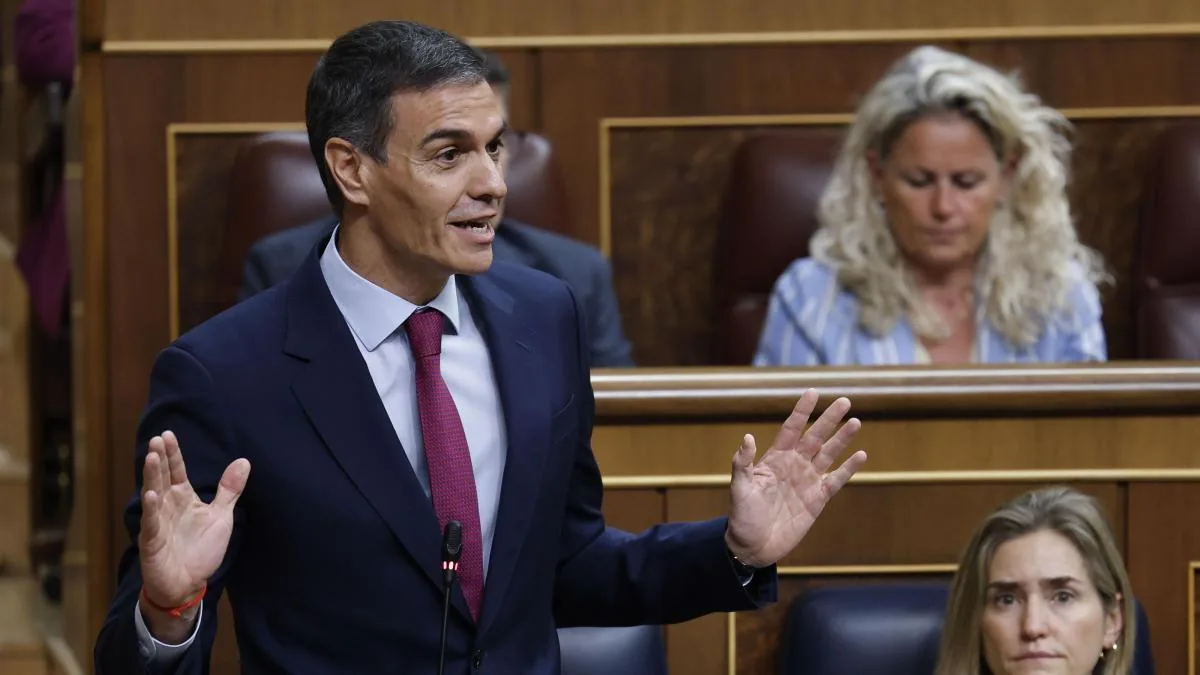
Sánchez has not included the former president in the first group and has come out to defend his presumption of innocence, but he has also been especially careful not to attribute his indictment to a case of lawfare. In other words, the PSOE leader considers that he has no reason to doubt the judge investigating Zapatero, but he does denounce what he considers an injustice, which is that special zeal is used to probe the activities of that former socialist president, the one who has most supported this Government and has worked to maintain the support of its parliamentary allies, while the same is not done with others like Felipe González, José María Aznar, or Mariano Rajoy when the former have been billing for consultancy work for years and there were indications that the latter knew about the PP’s illegal financing. In his speech yesterday in Congress, Sánchez left the Zapatero case in that ambiguity, although he appealed to the presumption of innocence and the recognition of his legacy as a ruler.
The president wanted to make clear yesterday that he will not call early elections, but he knows that in the year left until the general elections this will not be the last blow. At Moncloa, they fear that the separate case of Ábalos-Koldo, for which a judicial investigation into PSOE financing has been opened, will take shape in the coming months and end in the formal indictment of the party. They assure in the PSOE that there is nothing irregular in their accounts, which they have reviewed thoroughly, but the impression is settling in that the cleanliness of PSOE financing will be questioned, and it should not be forgotten that this is a red line expressed by almost all of Sánchez’s parliamentary allies. Just yesterday, the ERC spokesperson in Congress, Gabriel Rufián, advocated maintaining their support for the Government as long as a “socialist Gürtel” is not proven.
Zapatero’s indictment leaves socialist voters with a question mark hanging over what may come in the coming months regarding other open judicial cases. The big question is how far voters will be willing to trust that Sánchez is a victim of a concerted political-media-judicial harassment, beyond the Ábalos-Cerdán cases. In short, will voters put all the cases in the same bag? Will they hold the president directly responsible? Trust in the cleanliness of a ruler is the greatest treasure a politician can have before their electorate. When the cup overflows and they lose innocence before the one who has been their political reference, they break the contract.
Read more An English local radio station mistakenly announces the death of King Charles III