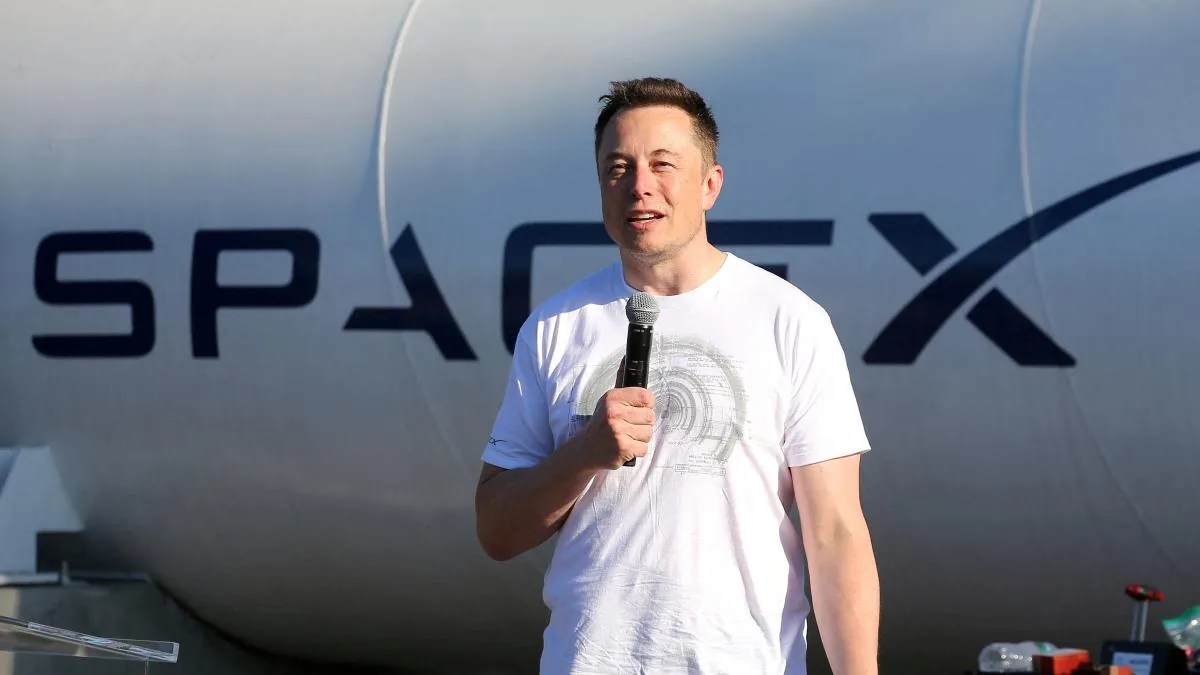
SpaceX, the rocket and satellite company led by Elon Musk, filed on Wednesday for an initial public offering (IPO), paving the way for one of the most anticipated stock market debuts of the year and expected to raise a record amount.
Read more Government and Generalitat accelerate Catalan self-government to safeguard Illa’s budgets
The IPO would raise new funds for the Texas-based firm, which also oversees Musk’s ambitions in the growing artificial intelligence industry. The move would subject the company, until now private, to new scrutiny by public investors and regulators, as well as requiring ongoing financial reporting.
This company of the richest man in the world aims to raise 80 billion dollars or more. This would easily make it the largest initial public offering in history, surpassing Saudi Aramco, which raised 26 billion dollars when it went public in 2019.
It will go public next month with the goal of reaching an approximate valuation of 1.75 trillion dollars (it was 1.25 trillion in February). This figure would place it ninth on the list of the largest companies in the world by market capitalization. Tesla, another company led by Musk, has a market capitalization of approximately 1.4 trillion dollars and ranks as the tenth largest.
SpaceX indicated that it plans to trade under the ticker symbol SPCX on Nasdaq. The company confidentially filed its application with the U.S. Securities and Exchange Commission (SEC) in April and last week announced it intends to start a promotional tour to market the offering beginning June 8.
The IPO is a test of investors’ appetite for Musk, after years in which he has tried to balance his business empire with his far-right politics and white supremacy conspiracy theories. Just a year ago, Musk faced nationwide protests at Tesla dealerships due to his management, in which he “wielded a chainsaw,” as head of President Donald Trump’s Government Efficiency Department.
The billionaire entrepreneur has always been financially secretive about the reality of his accounts. But given the IPO filing, he had to reveal how lucrative his aerospace and satellite internet businesses have been. SpaceX lost more than 4.9 billion dollars last year, compared to a profit of 791 million dollars in 2024, based on company documentation in a mandatory filing for companies seeking to go public.
The company’s capital expenditures nearly doubled to 20.7 billion dollars in 2025, up from 11.2 billion the previous year, as it heavily invested in artificial intelligence development. However, revenues soared to 18.7 billion dollars in 2025, 33% higher than the previous year.
Read more Rufián, «willing» to be a candidate for a new left-wing space and sets conditions for ERC
Musk founded this company in 2002 to develop and operate reusable rockets. SpaceX has become NASA’s largest launch partner since the government agency ended its space shuttle program in 2011.
In addition to its huge aerospace and defense contracts, SpaceX also operates the Starlink satellite internet service and a constellation of around 10,000 satellites, as well as the artificial intelligence unit xAI, which previously acquired X, the social network formerly known as Twitter.
The space company merged in February with xAI, a platform from which Musk offers a chatbot, Grok, competing with others like OpenAI’s ChatGPT and Google’s Gemini.
SpaceX highlighted that merger as a key step in its plan to launch a fleet of orbital data centers, satellites designed to provide computing capacity, similar to their terrestrial counterparts, according to the company’s website.
The company described the project as a way to address the high energy demand of AI infrastructure, which has put pressure on the U.S. power grid and generated opposition in numerous local communities. The IPO will allow SpaceX to raise tens of billions of dollars to help the conglomerate advance its AI ambitions.
The IPO filing comes just two days after a federal court in San Francisco ruled against Musk in his case against OpenAI and its CEO, Sam Altman. Musk, co-founder of OpenAI, accused the company of abandoning its public benefit mission by moving toward a for-profit structure.
Altman’s lawyers argued that Musk was motivated by a desire for control over OpenAI. The nine-person advisory jury determined that the claims against OpenAI and Altman were time-barred due to the statute of limitations. Judge Yvonne González Rogers accepted the determination and dismissed the claims. In a post on X, Musk promised to appeal the decision, calling it a “matter of procedural timing.”