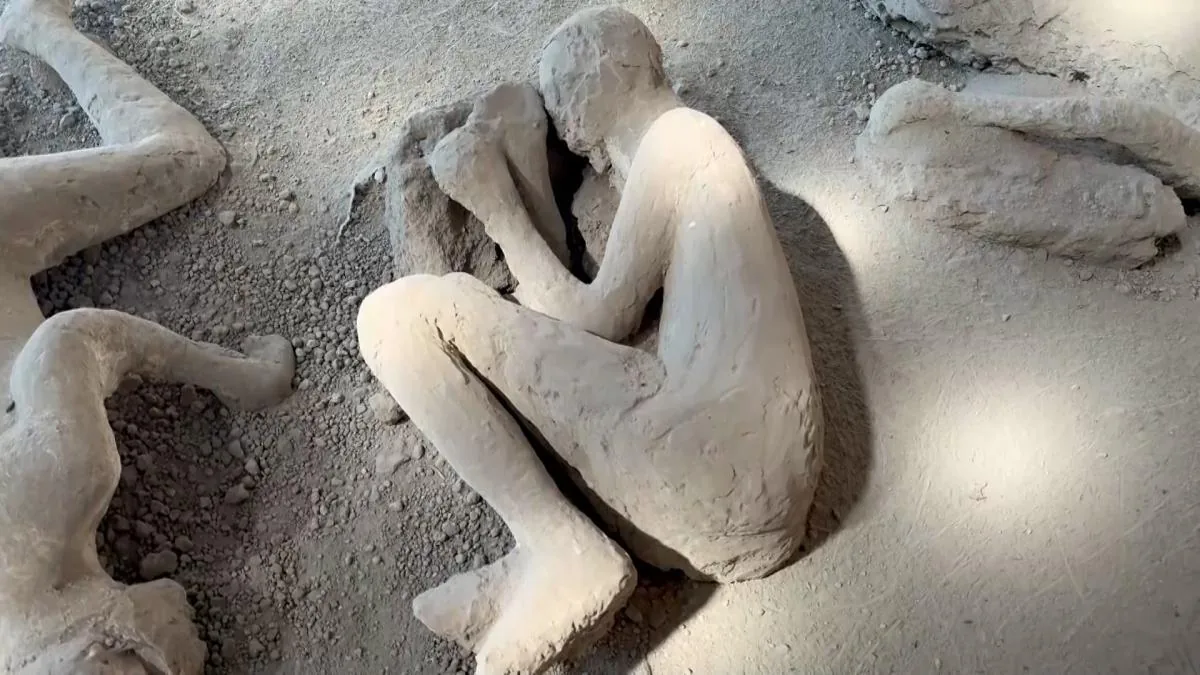
More than sixty years after the excavations in the so-called Garden of the Fugitives in Pompeii, the city devastated by the eruption of Vesuvius in 79 AD, the profession of one of the victims has been identified: he was probably a doctor who died while trying to escape carrying some of the tools of his trade.
Read more Who will win Eurovision? Finland and Australia, favorites in the bets, with Israel in fourth place
The discovery was made from the study of a small box hidden inside the plaster of the human mold found during the investigations led by Amedeo Maiuri in 1961, according to a statement from the Pompeii Archaeological Area released this Friday.
In that area, which was later called the Garden of the Fugitives and then occupied a vineyard, the molds of fourteen people who had been trapped in the pyroclastic cloud in a desperate attempt to save themselves were identified.
The discovery was possible with new studies on the small box, which had remained unanalyzed until now and made of organic material with metallic elements, along with a cloth bag containing bronze and silver coins, and a series of instruments compatible with a medical kit.
Read more The complex metamorphosis of El Molino
Diagnostic tests, carried out by X-rays and computed tomography, revealed a small slate slab inside the case, used for the preparation of medical or cosmetic substances, and small metal instruments interpreted as surgical instruments.
The use of advanced diagnostic technologies, such as AI-assisted computed tomography and 3D reconstructions, allowed the analysis of the mold’s content without compromising its integrity.
Read more All plots go through Onlyfans