









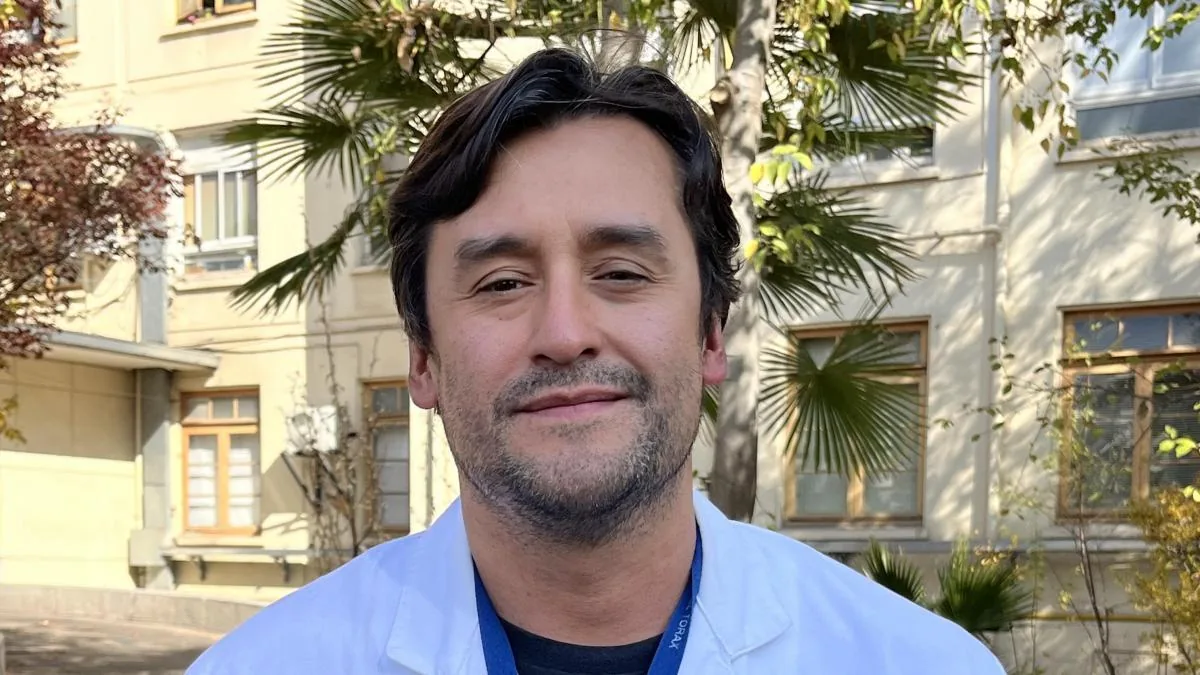
For more than 30 years, hantavirus has been present in Chile, the second country with the most infections after Argentina. In 2025, 44 cases were reported and this year there are 39 accumulated, with 13 deaths. Ricardo Fritz Garrido (Concepción, Chile, 1978), pulmonologist at the National Thorax Institute of Chile, a national reference center for this virus and where all patients who develop cardiopulmonary syndrome from hantavirus, the most severe form of the infection, are treated, is one of the main specialists and leads the ECMO teams (extracorporeal respiration for critical patients) at the center.
Read more Israel lashes out at Lamine Yamal for waving the Palestinian flag in the street for the League
How do you manage hantavirus cases in Chile?
We have had a protocol since the year 2000, with a national early detection plan. A patient with high fever who is or comes from an endemic area, the central and southern zone of the country, must be quickly reported and the relevant laboratory tests must be performed, which are PCR tests. The symptoms are similar to the flu, with cough, general discomfort, vomiting, even diarrhea.
We have very little reliable information about person-to-person transmission”
Is it a seasonal infection like the flu?
The main reservoir is a wild mouse (Poligorisomys longicaudatus) that feeds on seeds about 60%. In October, the seeds of quila [a species of bamboo endemic to southern Chile and Argentina] bloom, where they feed and grow in population. Then the first cases appear, and until February, which is the period when most people go on vacation and move to the southern area to enjoy the outdoors. We recommend that if you go to the countryside, leave food and utensils hanging to avoid infection, because the virus is transmitted through the saliva and feces of the mouse.
Is there always contact with feces or urine?
That is what we have confirmed so far. We have many studies on mouse-to-person transmission, but very little reliable information on person-to-person transmission. There is one case from a party in Argentina of Andes hantavirus, but it is almost anecdotal. What we do know for sure is that the mouse is always involved. Not all people are susceptible to infection; they can have a mild or asymptomatic infection. In severe cases, the lungs fill with fluid and progress with respiratory failure. It also affects the heart. And the progression is very rapid, sometimes in 12 or 8 hours pulmonary and cardiac function is compromised. In these cases, all we can do is assist the patient.
Also read
Is there no therapy?
There are several studies in development, but nothing proven that helps us. We have an ECMO program that has greatly helped survival. In the 90s and 2000s, patients with cardiopulmonary syndrome, which is the most severe presentation, died between 67 and 80%. Currently, we have approached 15% and we have realized that what most determines lethality is that patients have not been urgently transferred to centers connected [with ECMO devices].
Is the focus of the Hondius infection on the ship or does it come from outside?
The theory that people were visiting some places and were probably in the prodromal phase – which is between 1 and 7 days and in some patients can last up to 3 weeks, even 40 days as described in the most extreme cases – is the first possibility. And the second is that there were rodents on the ship. But I am more in favor of the first, that patients were exposed somewhere on land and unfortunately later developed the virus symptoms during the voyage.
I am in favor of the theory that the ‘Hondius’ patients were exposed on land”
If the outbreak was caused by person-to-person transmission, could it be the largest known episode?
That is why it is interesting to follow it and see how it behaves, because, as I mentioned, what we have well documented is mouse-to-person transmission. The 10 or 11 cases of transmission we know are of people who were inside the ship. All of them. There is no case infected outside, at least not yet, despite the fact that people inside the ship have had various contacts with others. It seems very local, very localized on the ship.
Read more Real Madrid calls elections and publishes the dates to submit candidacies
Do you apply a 42-day quarantine as recommended by the WHO?
More than quarantine, monitoring. Monitoring is done of people who were in contact with the infected, direct family, those who slept under the same roof or traveled on the same plane or bus. But not quarantine.
In southern Chile, 15% of the population has antibodies against hantavirus”
Do you think Europe is exaggerating in handling this case?
I think we are at a moment where we do not know well what will happen, how viruses behave with climate change. In Europe, it is also not very well known. I presented at the Euro Virology congress in Barcelona, in 2022, about hantavirus and it drew a lot of attention because the progression of cardiopulmonary failure was quite interesting to them. I think it is appropriate to keep the ship under observation and monitor the people. Studies have shown that in southern Chile 15% of the population has antibodies against hantavirus. That is, we would have, in quotes, certain defenses.
Are there asymptomatic cases?
Yes. The important thing is that anyone who visits endemic areas, if upon returning they have a fever or difficulty breathing for a few days, knows that there is a possibility they have the virus.
And that they could infect others?
I think, in the case of the Hondius, it is important to wait for progression to confirm this hypothesis. I would consider it something that should not be ruled out, but I would not confirm it a priori. I experienced the case of a police officer who, without ever having traveled to southern Chile, got infected. He was the person who cleaned the clothes of the police officers who were on an operation in the south, in the Araucanía area. He took the clothes out of the bags without protection and it turned out there were mouse urine residues. He got infected without ever being in the south. Unfortunately, he died in two days. In my opinion, a deeper investigation is needed to know the true origin of what is happening on the ship.
More investigation is needed to know the true origin of what is happening on the ship”
If it were proven that transmission was person-to-person, would your protocols be questioned?
Of course. Here a hantavirus patient is transferred with a simple surgical mask. Those who transfer him wear an FFP2 mask. If he arrives at an institution like ours, we do not have isolation, we put him in a shared room with another person keeping one meter distance. It is treated like the flu, like a respiratory disease, nothing more. In the case of person-to-person transmission, we would also have to reconsider quarantines.
Read more Florentino Pérez and the denied reality