The Department of National Security (DSN) has warned in its latest annual report that last year disinformation campaigns have established themselves as “a prominent vector” of instability for Spain. The body that advises the Prime Minister on National Security matters has identified Russia as the main actor from which campaigns seeking to influence political processes, erode trust in institutions, shape public opinion, and weaken international cooperation originated.
Read more Carlos III opens the legislature at the most critical moment of Prime Minister Starmer
Added to this is that, for the first time, the DSN acknowledges that disinformation from the Kremlin environment is impacting “the operational capacity” of the Armed Forces. The DSN categorizes five key threats in this regard: denial of the threat, distrust in military capability, illegitimacy of missions abroad, and the perception of weakness and radicalization.
Last year, the State Security Forces and Corps and the Armed Forces deployed more than 19,601 uniformed personnel abroad to support the promotion of the security sector of friendly countries, facilitate the projection of international stability, or address deterrence against external threats, always within the framework established by the fundamental strategic lines in the field of Defense and framed within operations of international organizations (UN, NATO, and EU), bilateral activities, or coalitions that respond to the requests of those countries where they operate.
Regarding these missions, the detected campaigns attacked the legitimacy of the mandate, questioned operational capacity, and sought to fracture political-social support. “The Armed Forces continue to develop their capacity for identification, analysis, and coordinated response to disinformation campaigns that may affect, among others, their ongoing operations,” assures the DSN.
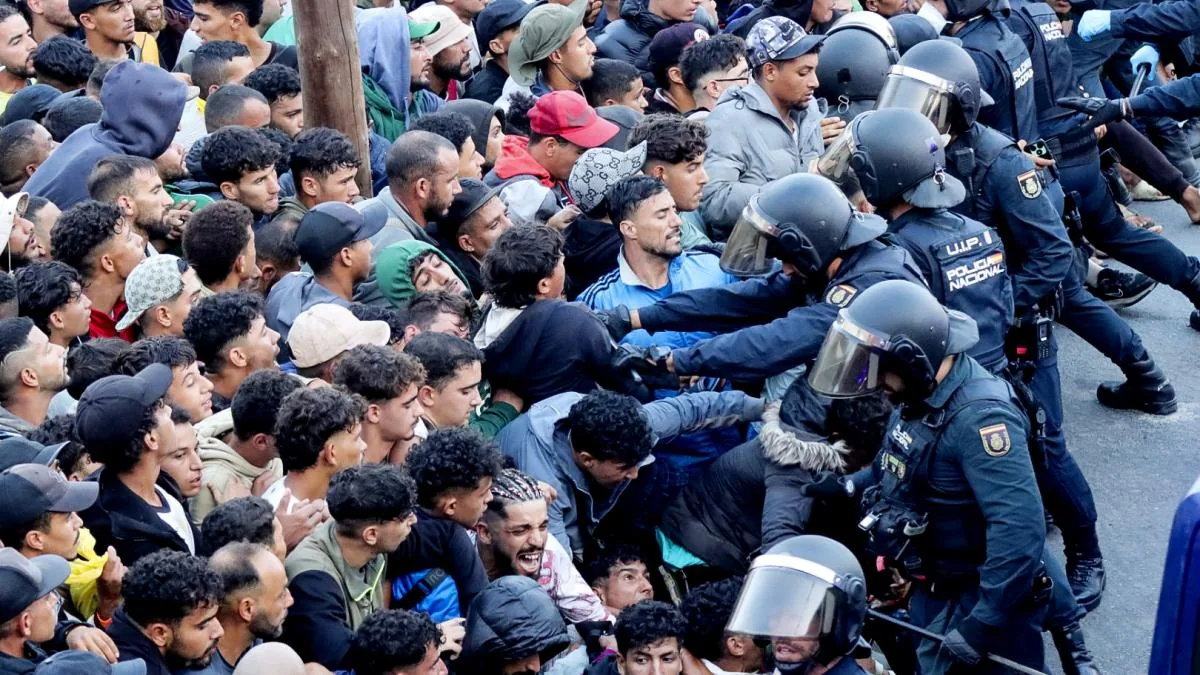
In domestic politics, the DSN cites as an example the wave of xenophobia experienced in Torre Pacheco last summer, which evidenced the capacity of disinformation to transcend dimensions. During those weeks, there was an increase in digital activity about irregular immigration where the narrative intensity preceded the escalation of physical violence, “establishing a direct correlation between cognitive saturation on networks and the materialization of risks to public security.”
Read more US intelligence acknowledges that Iran still retains much of its military capabilities
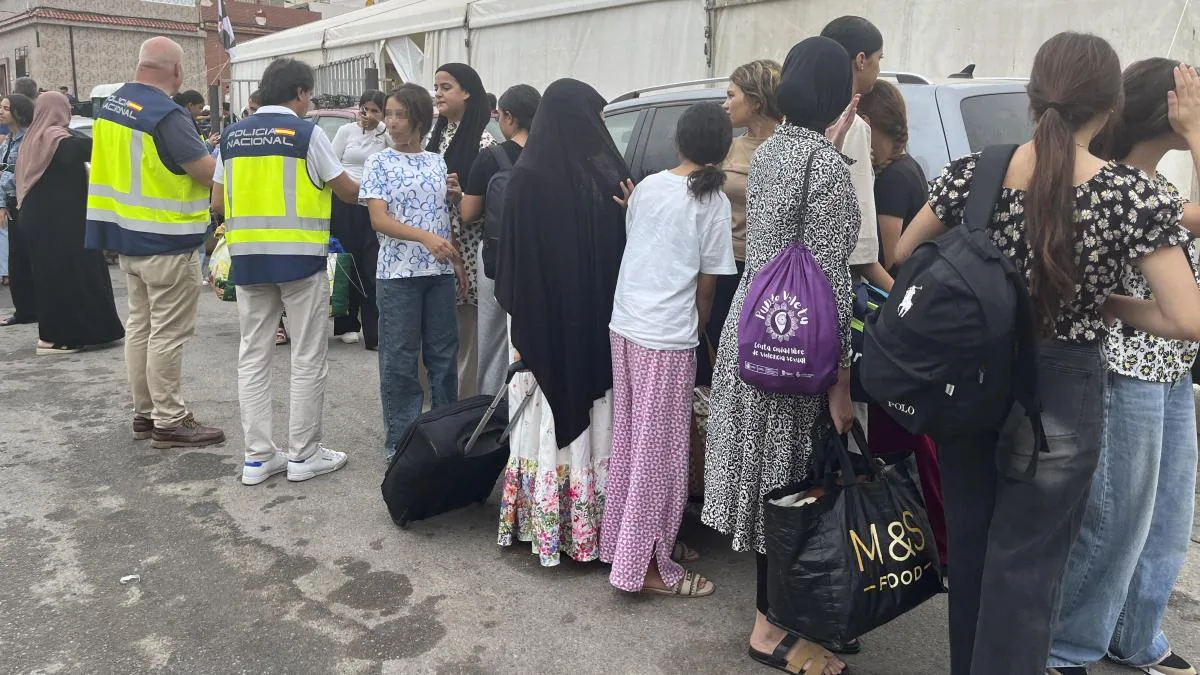
The link between immigration and insecurity is one of the most repeated narratives in the disinformation campaigns detected by the DSN. In 2025, “geographical and symbolic friction poles” were consolidated, as the report calls Ceuta and Melilla, where the narrative about immigration intertwines with insecurity, instrumentalizing episodes of social conflicts “to project a deterioration of public security.”
Emergency and disaster management is another breeding ground for disinformation campaigns, as the DSN clearly states. “Information gaps are systematically exploited,” warns the body. The crisis experience of recent years, which Moncloa has accumulated several, has shown that the pro-Kremlin ecosystem acts opportunistically, activating disinformation campaigns with the aim “of deepening unrest, aggravating social discontent, and attacking State institutions. Sometimes, with specific mentions to the Monarchy and the State Security Forces and Corps.
The previous report, from 2024, already denounced that Russia took advantage of the DANA that devastated the Valencian Community to launch one of its fake news campaigns. The idea to spread is simple: political leaders do not rescue their citizens in emergency situations, while diverting resources to support Ukraine against the Russian invasion.
Read more Xi Jinping takes Trump to the sacred belly button of Beijing