In the midst of the debate about the use of AI, there are situations where it is undeniable that its applications and technology in general represent a step forward in quality of life. A clear example is people with visual disabilities, for whom apps or AI glasses allow a broader perception of the world: they serve to read food product labels or describe specific situations when the blind person is alone and needs help. That is why, from ONCE, which these days celebrates Social Group Week, technology is claimed as a tool to approach equality.
Read more The error of the crime reaction manual
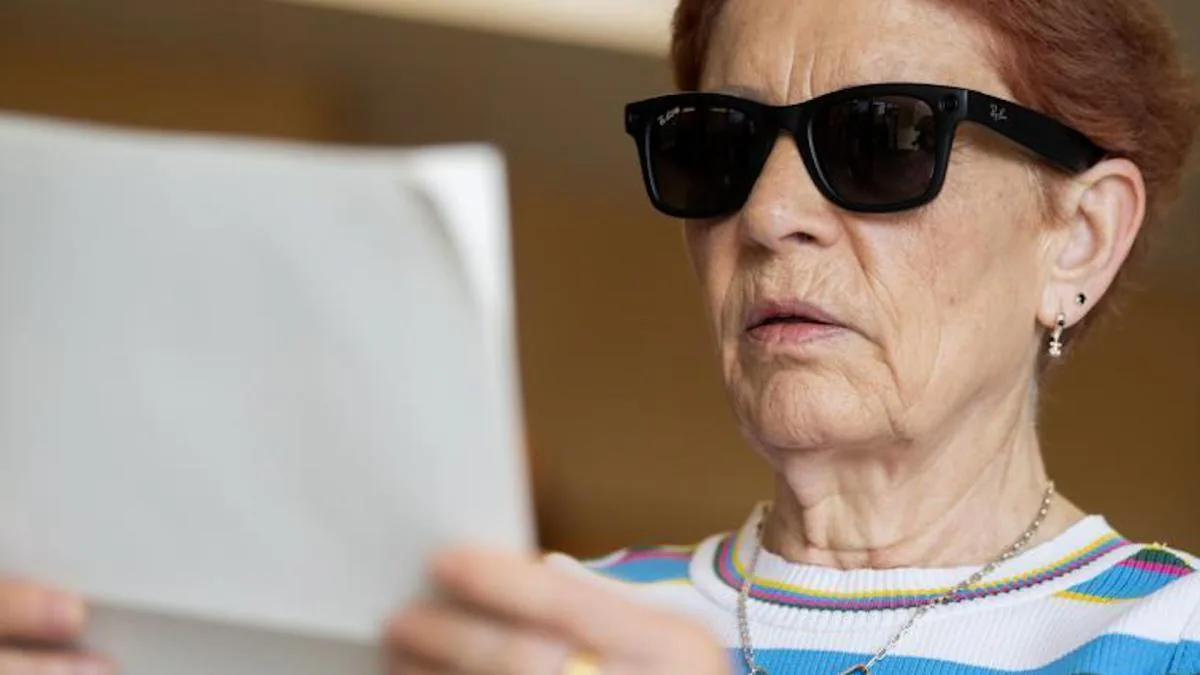
Marisol Bilbao is 71 years old and has been totally blind for 20 years due to a genetic disease (retinitis pigmentosa). The diagnosis came when she was 30, and before completely losing her sight, she used to drive and could also read. But as she lost her vision, she developed other skills, such as memory when she worked at a hotel in Andorra where she recalls exercising it to remember the countless phone numbers she could not read in the directory. Given the vitality, enthusiasm, and energy she conveys while telling her story, it is hard to believe that it was not always like this. Because, understandably, when she lost her sight, she had a very hard time. At home, she managed well, but going out on the street was a totally different matter. “I didn’t want to leave the house, I felt useless for everything.” That is why, when she discovered Meta’s AI glasses, a whole new world opened up, she explains. And she dived right in, being a technology lover as she is.
“It’s not the first time I’ve made myself a coffee with broth,” jokes Bilbao, who since last August has had these glasses that allow her to make sure if the tetra pack in her hands contains milk or to discover if the sweater she wants to wear has red or yellow stripes. For this woman who lives alone, this technology also allows her to be autonomous in everyday things like reading a bill or a letter, something she used to do by scanning. They are not glasses exclusively for blind people, she points out, but “we take advantage of technology,” she jokes. On the street, they help her know where the containers are, but she emphasizes that between construction works, scooters, and people with their phones, the experience on public roads is not easy. In her bag, while explaining the benefits of the glasses to journalists, the cane is never missing. With a blindfold on, Bilbao lends her glasses to anyone who wants to experience how it feels that, in a blackout world, a voice describes what you have in front of or behind the window. “Hey, Meta, what do I have in my hands?” is the phrase she repeats the most.
BeMyEyes
A specific app for blind people allows AI to describe an image
Technology is a plus, but Braille and guide dogs are “indispensable” and learning is “essential,” says Enric Botí, ONCE delegate in Catalonia and totally blind. Botí demonstrated the BeMyEyes App, created specifically for blind people a couple of years ago. “I take a photo and AI processes it and gives me a description,” says Botí, who acknowledges that technological supports are an “important help and allow us to make decisions with more confidence because they give us more complete information.” Botí uses it for specific situations because he clarifies that, if possible, he prefers human support. But he recognizes the autonomy that technologies provide him, for example, to know the content of a package that arrives at home. “It is an example that AI, if we use it well, empowers people.”

AI glasses allow integration with BeMyEyes, with which you can make video calls and then “the person you call sees what you are seeing,” says Vanesa Ruiz, technology instructor at ONCE. Ruiz, accompanied by her guide dog Butter Cup, demonstrates how blind people use computers. She explains that they do not use the mouse but the keyboard, which spells out what they are typing. That is why typing is essential for them. She also says that the voices used for adaptations tend to be metallic and synthetic because they are faster than human voices. And she shows how the Braille line, connected to the computer, has modernized the reading and writing system. More than 2,000 people were trained in technology last year by ONCE, details its delegate in Catalonia, Enric Botí.
Technology helps in daily life, in practical matters, but also allows for a social life. Marisol Bilbao, for example, enjoys the museum, since thanks to the BeMyEyes application, linked to the glasses, it describes, for example, what she sees in the painting. Also, if she drops something on the floor, a video call connects visually impaired people with sighted volunteers through a live video call to help.
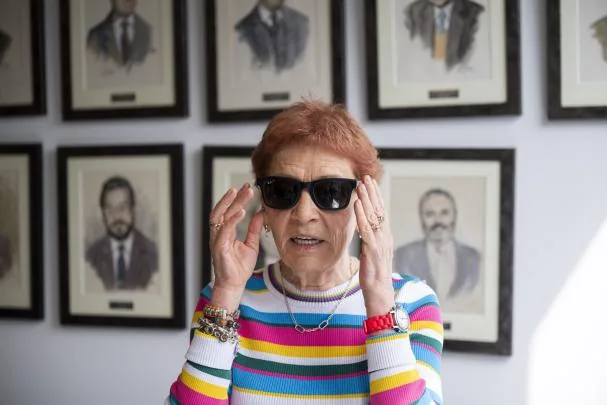
Despite everything, technology is not infallible and is not always available. So sometimes it is about survival. “Since I have been blind, I don’t beat myself up, and if one day I eat lentils instead of chickpeas because I grabbed the wrong can, it’s no big deal,” jokes Marisol Bilbao.
Read more The rearmament of the European Union clashes with its greatest weakness: fragmentation