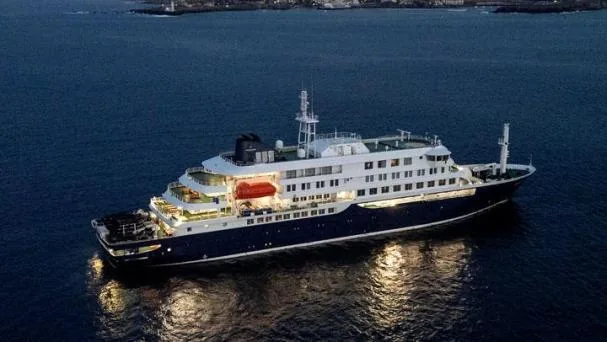
In just 24 hours, Spain faces a complex international operation from the island of Tenerife to evacuate with all health guarantees the occupants of the MV Hondius cruise ship, affected by a hantavirus outbreak and carrying 14 Spaniards who will quarantine at the Gómez Ulla Hospital in Madrid.
All eyes will be on Tenerife, but without losing sight of the Alicante hospital, awaiting the result this weekend of the PCR test performed on the 32-year-old woman admitted for a possible virus infection, after traveling on the same plane as the deceased Dutch woman.
The woman shows mild respiratory symptoms, mainly cough, and has arrived at the room on the third floor where she is admitted through a safe and isolated circuit from the rest of the patients and professionals.
In addition to this woman, there are two other asymptomatic contacts identified who traveled on the same plane. One of them is a South African woman who spent a week in Barcelona before returning to her country, and another woman who lives in Catalonia.
The complexity of the operation is evidenced by the fact that the Minister of Health, Mónica García, the Interior Minister, Fernando Grande-Marlaska, and the Director-General of the World Health Organization (WHO), Tedros Adhanom Ghebreyesus, are traveling this Saturday to Tenerife to coordinate the operation.
The operation has been deployed five days after this organization asked Spain to host in the Canary Islands the ship affected by an outbreak of the Andes variant of this virus, which has caused three deaths, one of whom remains on board.
Hantavirus
The ship will anchor at dawn and evacuation will take place around noon
The ship’s arrival was scheduled for Sunday at noon but everything points to it being moved forward and positioned off the coast of Tenerife at dawn, between 3:00 and 5:00 a.m., and as soon as it dawns, it will anchor inside the port of Granadilla, where a command post will be set up to monitor the protocol.
The evacuation is organized for Sunday at noon, in broad daylight, taking advantage of the good sea conditions, which are expected to worsen on Monday. To follow this plan, the planes that will repatriate the ship’s occupants must be ready at Tenerife South airport early the next morning.
To ensure safety, the cruise ship will not dock and the cruisers will be disembarked by boats to the port, to be transferred in bubble vehicles to the nearby airport – just 10 minutes away – without any contact with the population, and with all precautions for the workers involved.
A Spanish plane will transfer the 14 national passengers to the Torrejón de Ardoz base, where they will quarantine at the Gómez Ulla General Defense Hospital, where everything is prepared to monitor possible symptoms, as early medical care is essential to treat the infection of a virus that has no specific treatment.
Hantavirus
The Gómez Ulla hospital is fully prepared to receive the 14 Spaniards
In fact, the Spanish Society of Intensive, Critical Medicine and Coronary Units (SEMICYUC) has issued a statement after the latest epidemiological and clinical data became known, recommending that patients be treated in the so-called High-Level Isolation and Treatment Units (UATAN), spaces better equipped than Intensive Care Units for this type of outbreak.
Health authorities have located two asymptomatic contacts who were on the same plane as the Dutch woman who died from hantavirus and the woman admitted in Alicante.
One is a South African woman who is in her country and whose location was important because she later spent a week in Barcelona, although she stayed alone in a hotel and had no close contacts, according to Health.
The other contact is also a woman, who lives in Catalonia – where she will quarantine. She was not located due to a seat change on the plane.
Likewise, the Government of Navarra has specified that the Navarrese who traveled on the MV Hondius cruise were not in contact with the passengers infected by hantavirus.
Hantavirus
The Spanish Medical Association (OMC) has called for calm and prudence
The concern caused by this outbreak after the recent coronavirus pandemic has prompted messages of reassurance, such as that of the Spanish Medical Association (OMC), which has called for calm and prudence because the situation is not comparable to that experienced during COVID: “The public needs clear, proportional information based on medical and scientific criteria, avoiding sterile debates,” said its president, Tomás Cobo.
And that concern seems to have reached the 14 Spaniards who, through the Ministry of Health, have wanted to convey to the public that they do not pose any “risk to their health” and that they have “a certain feeling of fear due to some of the manifestations that may have been made against their arrival.”