The Ministry of Health, with Mónica García, wanted to make it clear yesterday that the law supports the Government in imposing a mandatory quarantine on the 14 Spaniards (13 passengers and one crew member) traveling on the cruise ship Hondius affected by a hantavirus outbreak. This was in response to what the Minister of Defense, Margarita Robles, said the day before, who spoke of a “voluntary” confinement at the Gómez Ulla hospital in Madrid.
Read more The judge of the dana reiterates that the alert was sent late and poorly without justified reasons

Given the possibility that some passenger may refuse to be confined in the Madrid hospital, Health is preparing a legal report to legally support the imposition of quarantine if necessary, in which the decisions taken are reasonably explained.
The ministry hopes that passengers will agree to isolate voluntarily for several weeks
The outbreak has so far affected eight people, three of whom have died. In five cases, hantavirus infection has been confirmed, and in the other three it is suspected due to their clinical symptoms and close contact with confirmed patients.
The ship departed from Cape Verde on Wednesday at 19:15 (Spanish peninsular time) and headed for Tenerife, where it is expected to arrive Sunday morning, according to Oceanwide Expeditions, the company operating the cruise. It carries about 150 people on board, including passengers and crew, including four doctors who boarded the ship in Cape Verde. None of the people on the ship showed symptoms of hantavirus infection yesterday, the World Health Organization (WHO) reported. Passengers have been asked to stay in their cabins and wear masks when leaving them. They will isolate if they develop infection symptoms.
“Our priorities are to ensure that patients receive care, that other passengers are treated with dignity, and to prevent the spread of the virus” outside the ship, said Tedros Adhanom Ghebreyesus, WHO Director-General, at a press conference yesterday.
Also read
Once the ship arrives in Tenerife, if passengers and crew continue to show no signs of infection, they will be repatriated to their countries of origin. In the case of the fourteen Spaniards on board, Health has decided to confine them in the Gómez Ulla military hospital in Madrid, where they will arrive from Tenerife on a military plane. The duration of the confinement has not been reported, but the incubation period for hantavirus infection can be up to six weeks.
Mandatory quarantine for contacts of positive hantavirus infection cases is not endorsed by the World Health Organization (WHO) nor by the European Centre for Disease Prevention and Control (ECDC), although these organizations do not explicitly reject it either. In a report published Wednesday on the cruise outbreak, the ECDC argues that “passengers who disembark should receive clear instructions and recommendations until their diagnosis is confirmed or ruled out” but refrains from advocating mandatory isolation. The report only mentions “isolation measures” for “passengers or crew with symptoms.”
Along the same lines, “the WHO recommends isolation of confirmed cases and active monitoring of contacts. The meaning of active monitoring depends on each country,” said Abdirahman Mahamud, director of the WHO Department of Coordination of Alerts and Responses to Health Emergencies, at yesterday’s press conference.
Read more Aitana Forcen, the Valencian trapped on the ‘Hondius’: “I am fine”
For Anaïs Legand, WHO researcher specializing in hemorrhagic fevers such as those caused by hantavirus, “contacts should monitor their health symptoms for six weeks” to receive prompt care and prevent transmission to others if they become ill.
The Ministry of Health hopes it will not be necessary to resort to mandatory confinement and that the fourteen affected people will agree to isolate voluntarily. But if necessary, it could impose quarantine, experts consulted by La Vanguardia explain. Organic Law 3/1986 on Special Measures in Public Health (amended in 2020 due to the covid pandemic) specifies in its article 2 that “competent health authorities may adopt measures of recognition, treatment, hospitalization, or control when there are reasonable indications to suppose the existence of danger to the health of the population due to the specific health situation of a person or group of persons or due to the sanitary conditions in which an activity is carried out.”
Doing the quarantine in the hospital, and not at home, “has a reasonable health explanation; they will be monitored by professionals and, if symptoms appear, they will be treated immediately,” says epidemiologist and former WHO advisor Daniel López Acuña.
“This is not the start of an epidemic”
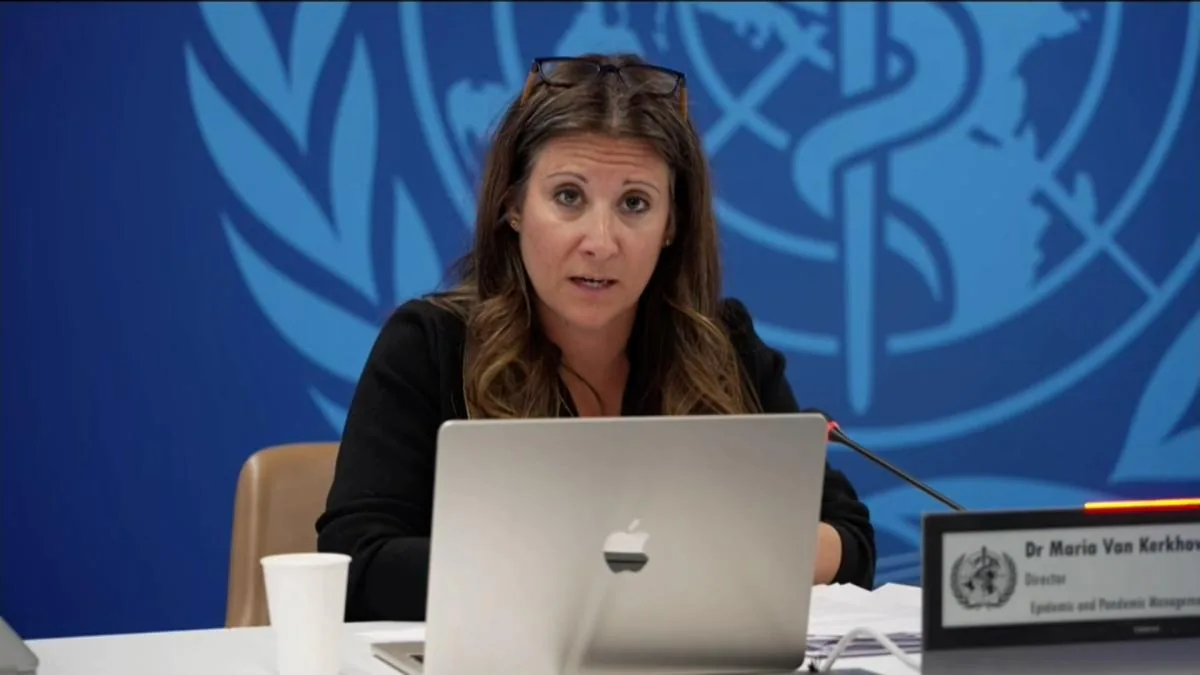
“This is not the start of an epidemic; this is not the start of a pandemic,” Maria Van Kerkhove, Director of Epidemic and Pandemic Prevention and Preparedness at the World Health Organization (WHO), said at a press conference yesterday. “This is not covid, it is an outbreak on a ship. We know this virus. It is not transmitted in the same way. The situation is not the same as six years ago” when the covid virus appeared, which was a new and much more contagious virus.
“We think that [the hantavirus outbreak on the cruise] will be limited. We do not expect a large epidemic. If public health measures are applied and countries show solidarity, we can cut transmission chains,” was echoed by Abdirahman Mahamud, head of Alert and Response Operations for Health Emergencies at the WHO. Van Kerkhove, who played a central role in coordinating the international response during the pandemic, warned yesterday that “we may see more reported cases” of hantavirus infection in the coming days. “If that happens, it will mean that monitoring is working.”
The Gómez Ulla hospital has the appropriate equipment and professionals in the High-Level Isolation Unit, with eight rooms designed for patients affected by nuclear, radiological, biological, or chemical incidents. Passengers of the Hondius will be able to stay in individual rooms and, if any show symptoms, be immediately transferred to the maximum isolation level rooms.
Minister Mónica García appeals “to the common sense and responsibility” of the Spanish passengers so that it is not necessary to resort to obligations. The General Health Law establishes that measures adopted in the face of an imminent and extraordinary risk situation must be proportionate to their purposes and may only be maintained for the strictly necessary time. The same regulation adds that preference should be given to the voluntary cooperation of citizens with health authorities and that mandatory measures that entail risk to life may not be imposed and that, among the available options, those that least affect the free movement of people and goods should be adopted.
Asked about the situation on board the ship, WHO executive Maria Van Kerkhove said yesterday that “morale has improved after the ship started moving; this is not just a matter of medical care; it is also a matter of mental health care.”
Read more The mother sought advice on Google to protect her baby from the father’s abuse